—— An all-region integrated solution covering Europe's Allegro, South America's Mercado Libre, and Southeast Asia's Shopee/Tokopedia
In the wave of global expansion in cross-border e-commerce, sellers now operate far beyond any single market—from Amazon Europe and Shopee/Lazada across Southeast Asia to leading local platforms such as Poland's Allegro and South America's Mercado Libre. But this brings the "growing pains of globalization": fragmented multi-platform operations, chaotic multi-warehouse management, complex multi-currency settlement, and hard-to-implement localized compliance—missed shipments, inventory overselling, European VAT filing errors, high COD rejection rates in Southeast Asia, exchange-rate erosion of profits in South America, and financial reconciliation in complete disarray... The "data silos" created by traditional Excel and scattered SaaS tools are severely eating into profits and constraining growth.
Especially for cross-border teams deeply rooted in the three core markets of Europe, South America, and Southeast Asia, an Odoo ERP system that connects globally, adapts locally, and unifies management is no longer optional—it is essential for reducing costs, improving efficiency, ensuring compliance, and achieving scalable growth. With its core advantages of open-source flexibility, modular architecture, full-domain integration, and deep localization, Odoo gives cross-border sellers a digital foundation to "manage global inventory as one pool and connect the entire business with one system," putting an end to the chaos of multi-platform operations.
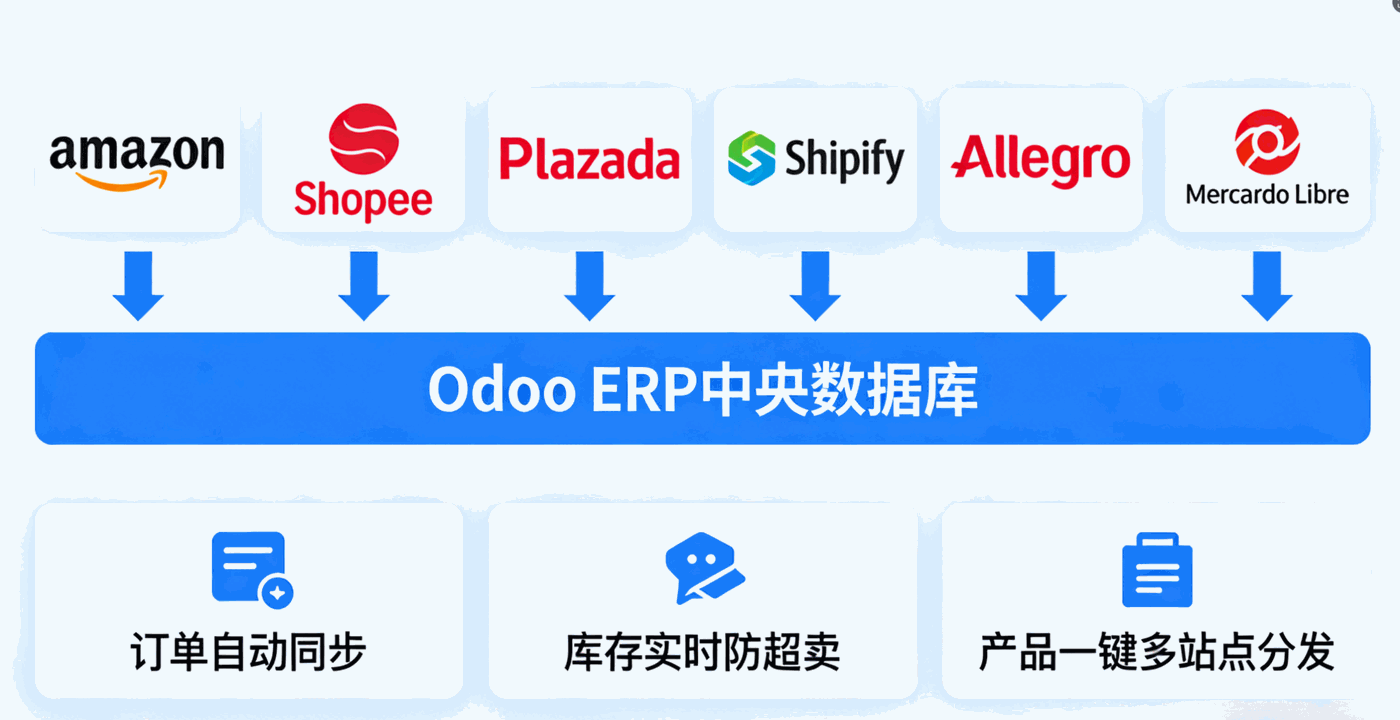
1. Breaking Down Global Platform Barriers: Unified Management of Multi-Site Orders, Inventory, and Products
The core pain point of multi-platform, multi-store, and multi-region operations is the loss of management control caused by fragmented data. With its powerful integration capabilities, Odoo ERP connects to the interfaces of major global platforms such as Amazon, Shopee, Lazada, Allegro, Mercado Libre, Tokopedia, and Shopify, enabling full-chain automated control:
· Automated order synchronization: Orders from Germany and France in Europe, Thailand, Vietnam, and the Philippines in Southeast Asia, and Brazil and Mexico in South America are collected into a central database in real time, automatically merging orders from the same buyer and intelligently matching logistics rules, completely eliminating manual order import errors;
· Real-time inventory overselling prevention: When an item sells on any platform, total inventory is deducted instantly and the storefront inventory of all shops is updated in sync, fundamentally avoiding account performance penalties caused by overselling;
· One-click global product distribution: Maintain just one set of multilingual, multi-currency product information and publish it to all global sites with one click, greatly improving listing efficiency and unifying brand information standards.
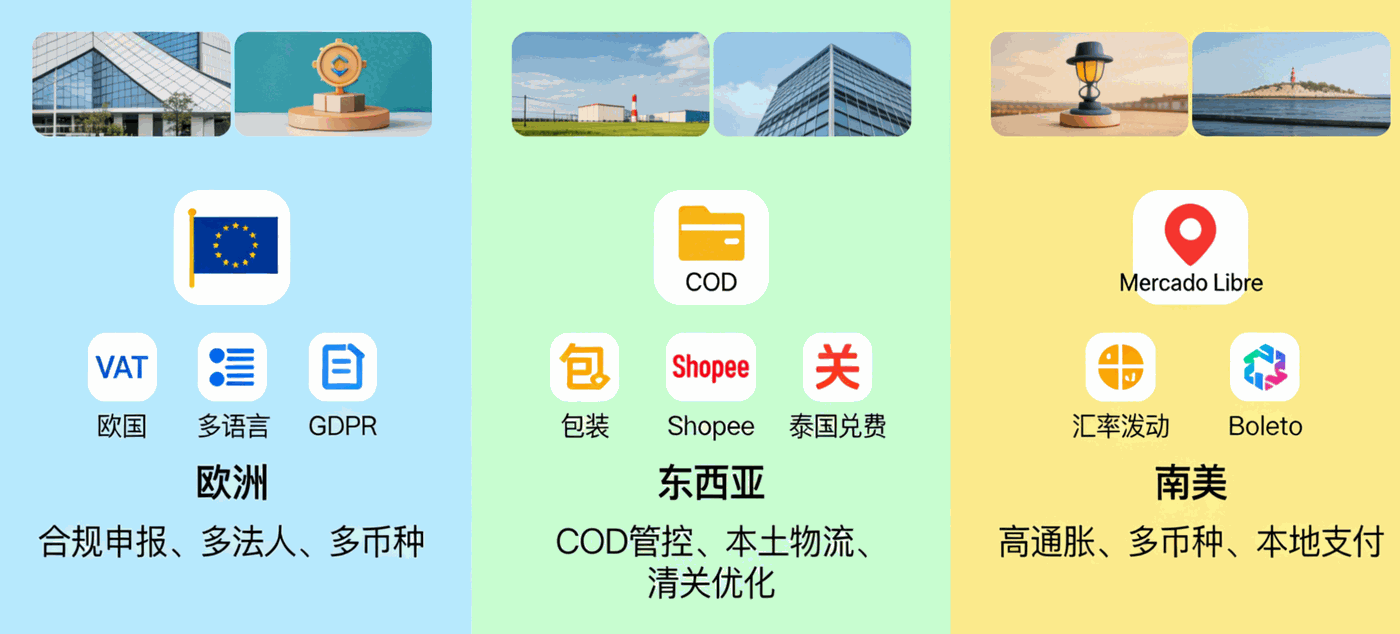
II. Targeted Breakthroughs in Three Core Regions: Precisely Solving Localization Challenges in Europe, South America, and Southeast Asia
E-commerce ecosystems, compliance requirements, payment and logistics, and consumer habits vary greatly across regions, making it difficult for a generic ERP to adapt. Leveraging its modular architecture and localized community support, Odoo provides customized solutions for the pain points of the three major markets:
1. European Market: Solving VAT Compliance + Multilingual + Multi-Entity Fine-Grained Management Challenges
Covered platforms: Amazon Europe, Allegro (Poland), Zalando (Germany), Wildberries (Russia) Core challenges: strict VAT filing, multilingual operations, exchange rate fluctuations, multi-country legal entity compliance Odoo solutions:
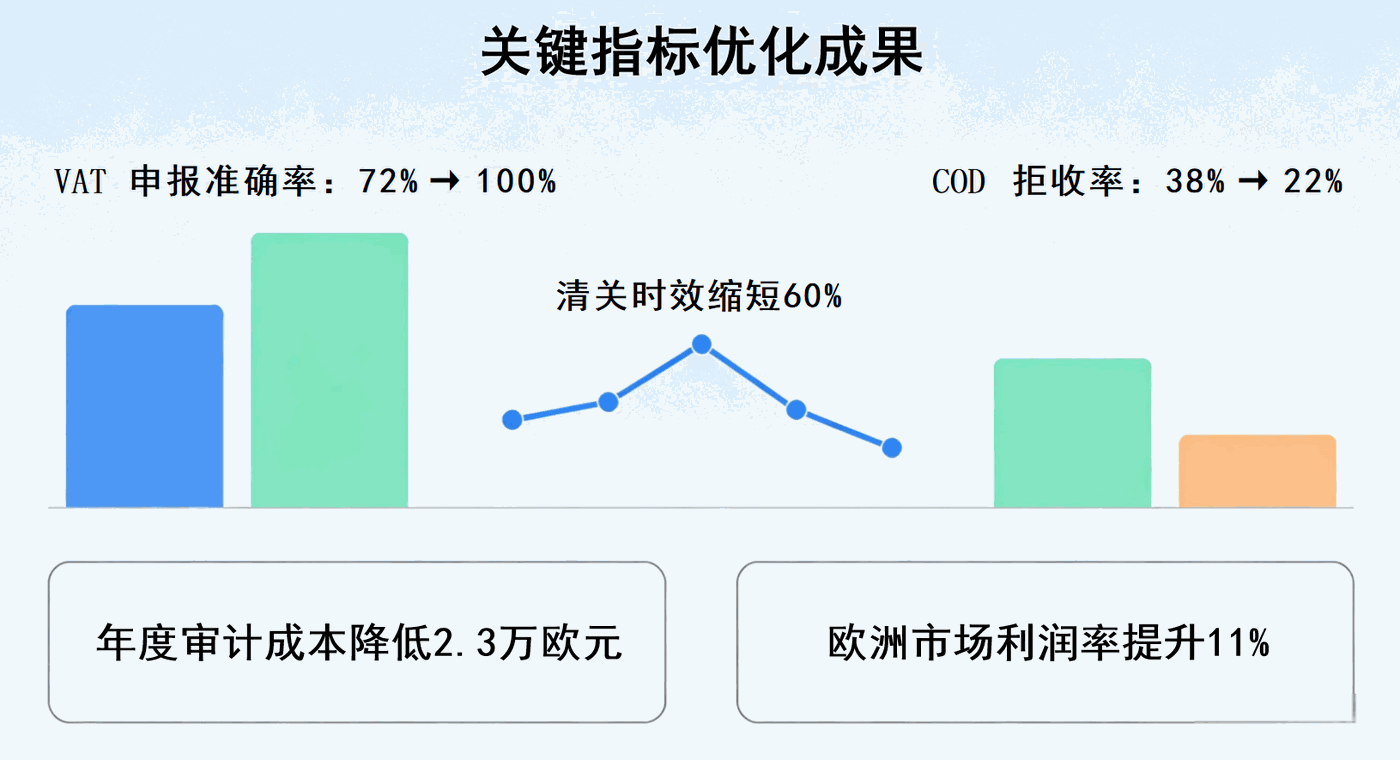
· EU VAT automation: Native integration with the VAT MOSS filing system, automatically matches the tax rate of the country to which each order belongs, 100% filing accuracy, and avoids penalty risks;
· Multilingual support: supports German, French, Polish, and Cyrillic scripts; the CMS module enables one-click language switching on product detail pages;
· Multi-company architecture: supports independent legal entity operations in each country, with unified group-level visibility into financial data, suited to expansion needs in Eastern and Southern Europe;
· Real-time exchange rate settlement: integrated with the European Central Bank API to automatically handle EUR and RUB exchange rate conversions, reducing foreign exchange losses.
2. Southeast Asia market: integrate fragmented platforms + optimize COD fulfillment + localized customs clearance
Covered platforms: Shopee/Lazada (Malaysia, Indonesia, Thailand, Philippines, Vietnam), Tokopedia (Indonesia), Sendo/Tiki (Vietnam)Key challenges: fragmented platforms, extremely high COD share, high rejection rates, different customs rules in each country, strict platform data binding requirementsOdoo solutions:
· Deep full-platform integration: full coverage of leading Southeast Asian marketplaces, adapted to Indonesia's island logistics and Vietnam's high-COD characteristics;
· Smart COD control: automatically prints dedicated shipping labels, integrates with local couriers such as Flash Express and J&T, blocks high-risk orders, and reduces rejection rates;
· Localized customs clearance: integrates with the Thai Customs API to automatically generate ABC-category declaration forms, improving clearance efficiency;
· Platform compliance adaptation: built-in Shopee exam question bank, automatically linked with ERP data for verification, meeting platform operation requirements;
· Multilingual support: system interface and communication templates cover Thai, Vietnamese, and Indonesian for barrier-free operations.
3. South American market: addressing high inflation + multiple currencies + local payment and logistics challenges
Covered platforms: Mercado Libre (Brazil, Mexico), Americanas (Brazil), OLX (Argentina) Core challenges: severe exchange rate fluctuations, COD accounting for over 60%, high rejection rates, Black Friday logistics congestion, complex local payments Odoo solutions:
· Real-time multi-currency accounting: automatically updates exchange rates for the Brazilian real, Mexican peso, and Argentine peso, and accurately calculates exchange gains and losses;
· Local payment integration: connects to Boleto and Mercado Pago gateways, supports installment payments, and automatically reconciles orders;
· Smart warehouse and distribution management: monitor inventory in regional warehouses such as São Paulo and Buenos Aires, allocate inventory in advance for Black Friday, and optimize delivery times;
· COD risk control optimization: automatically handle rejection and reshipment and refund processes, significantly reducing bad debt losses.
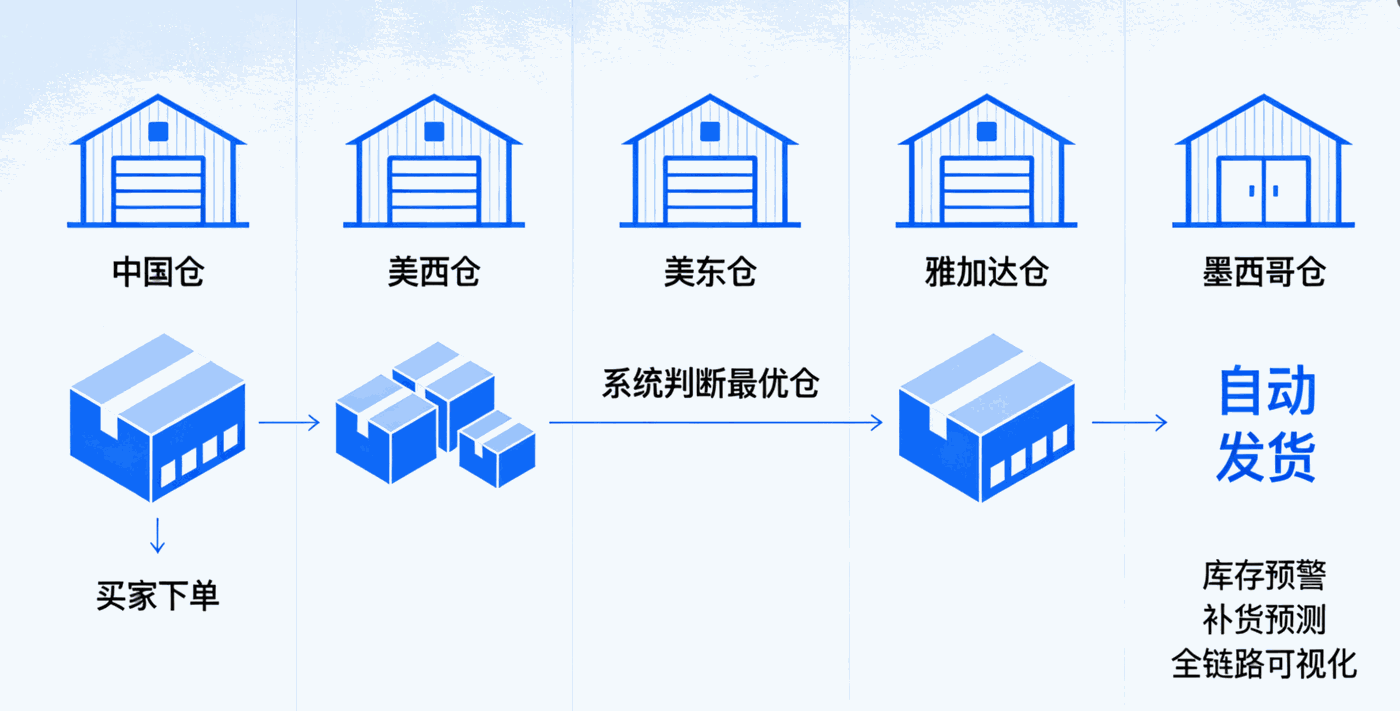
III. Full-chain supply chain optimization: multi-warehouse collaboration, from blind stocking to smart allocation
For cross-border multi-warehouse operations (domestic warehouses, overseas warehouses, 3PL third-party warehouses), Odoo achieves full supply chain visibility:
· Smart routing fulfillment: Automatically select the fulfillment warehouse based on inventory levels and logistics costs (US West out of stock → transfer from US East → ship from China warehouse);
· Accurate replenishment forecasting: Combines regional market characteristics and peak/off-season sales data to generate scientific purchasing recommendations and prevent stockouts in long supply chain markets;
· End-to-end overseas warehouse management: APIs provide real-time monitoring of first-leg ocean shipping, customs clearance, inbound receiving, and last-mile delivery, keeping the entire process under control.
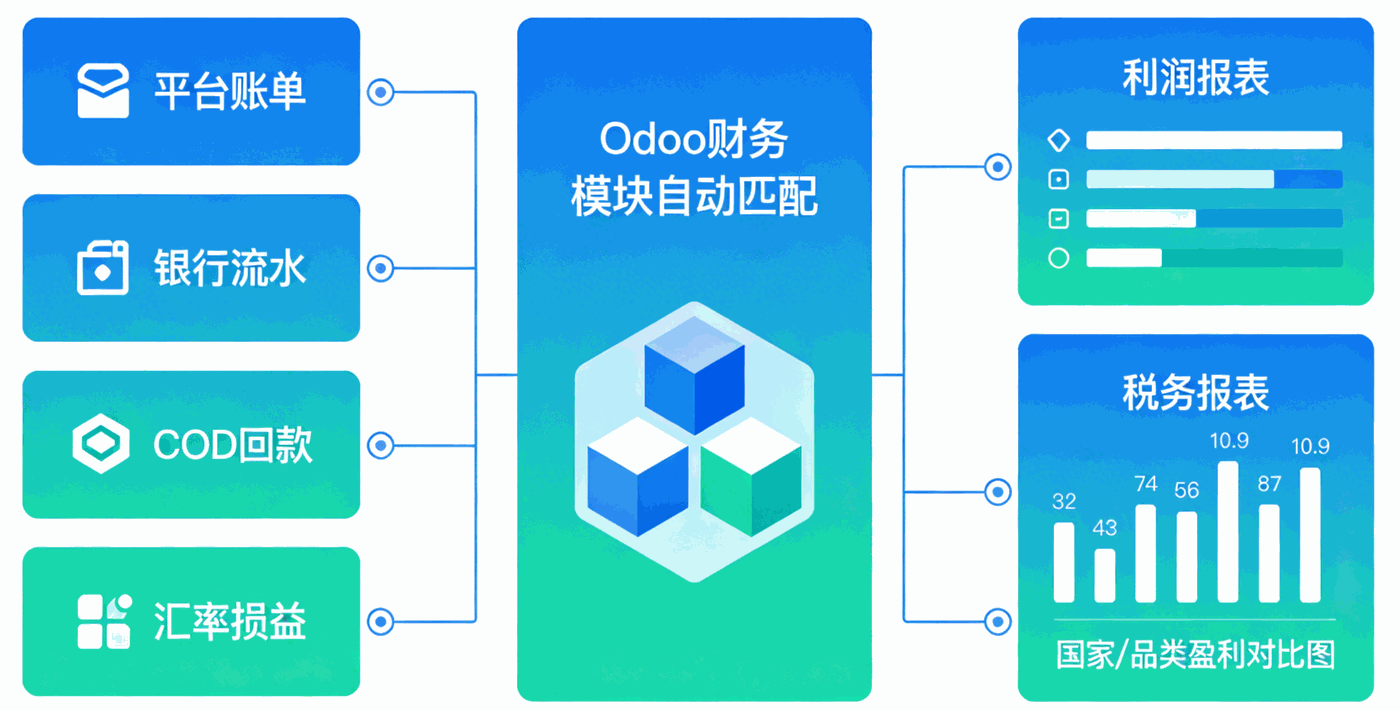
IV. Financial integration: ending the challenges of multi-currency, multi-tax, and multi-platform reconciliation
Odoo provides a one-stop solution for the most troublesome cross-border financial issues such as platform commissions, advertising fees, warehousing fees, return losses, multinational taxes, and exchange rate differences:
· Automated reconciliation and write-off: Import settlement reports from each platform, automatically match orders with bank transactions, and clearly identify every fee;
· Multi-dimensional profit reports: Generate profit analysis by country, platform, and category to precisely identify high-profit markets;
· Global tax compliance: Adapts to European IOSS, Southeast Asian VAT, and South American local tax rules, and automatically generates compliance reports;
· Data Privacy Compliance: Meets EU GDPR, Thailand PDPA, and Latin American data localization storage requirements.
V. Practical results of top sellers: Regional implementation yields significant results
· Poland Allegro top seller: Achieved 12 months with zero tax penalties and an 11% increase in European profit margin through the Odoo VAT module;
· Indonesian Tokopedia seller: COD rejection rate dropped from 38% to 22%, recovering US$12,000 in losses per month;
· Thai cosmetics seller: share of Category A customs-cleared parcels rose from 30% to 75%, and customs clearance time was cut by 60%;
· German home furnishings brand: 100% VAT filing accuracy, annual audit costs reduced by €23,000.
Conclusion: Building a Global Cross-Border Digital Foundation, from Chaos to Lean Growth
Cross-border e-commerce has now entered the second half of "intensive cultivation," and the era of relying on manual labor and fragmented tools to manage global business is over. Odoo ERP, with its global unified foundation + regional customized modules, perfectly adapts to core needs such as European compliance, Southeast Asian fulfillment, and South American payment and logistics, truly achieving integrated management of the entire chain of "orders, inventory, supply chain, finance, and compliance."
Whether you focus on the high-end European market, deeply cultivate the Southeast Asian blue ocean, or explore the potential of South America, Odoo can help you break down data silos, say goodbye to multi-platform chaos, and achieve data-driven decision-making, making operations more efficient, management more transparent, and profits more stable. Now is the best time to upgrade your cross-border digital system.