The Hainan independent customs operation is not simply a "duty-free island," but a major institutional reform that requires enterprises to deeply integrate, actively adapt, and possess forward-looking strategic vision to fully grasp its opportunities. For well-prepared enterprises, Hainan is expected to become an important strategic fulcrum for their global layout; for those inadequately prepared, they may face higher compliance risks and competitive pressure.
As a highly flexible and modular open-source ERP system, Odoo is widely used in the import and export industry. The import and export industry's particular concerns—import and export tax rebates, how to handle customs clearance delays, overseas warehouses, L/C payments, bonded warehouse storage, foreign trade letter of credit risk avoidance, and multi-currency and multi-language collaboration—can all be effectively solved through Odoo, which supports flexible customization of localized functions.
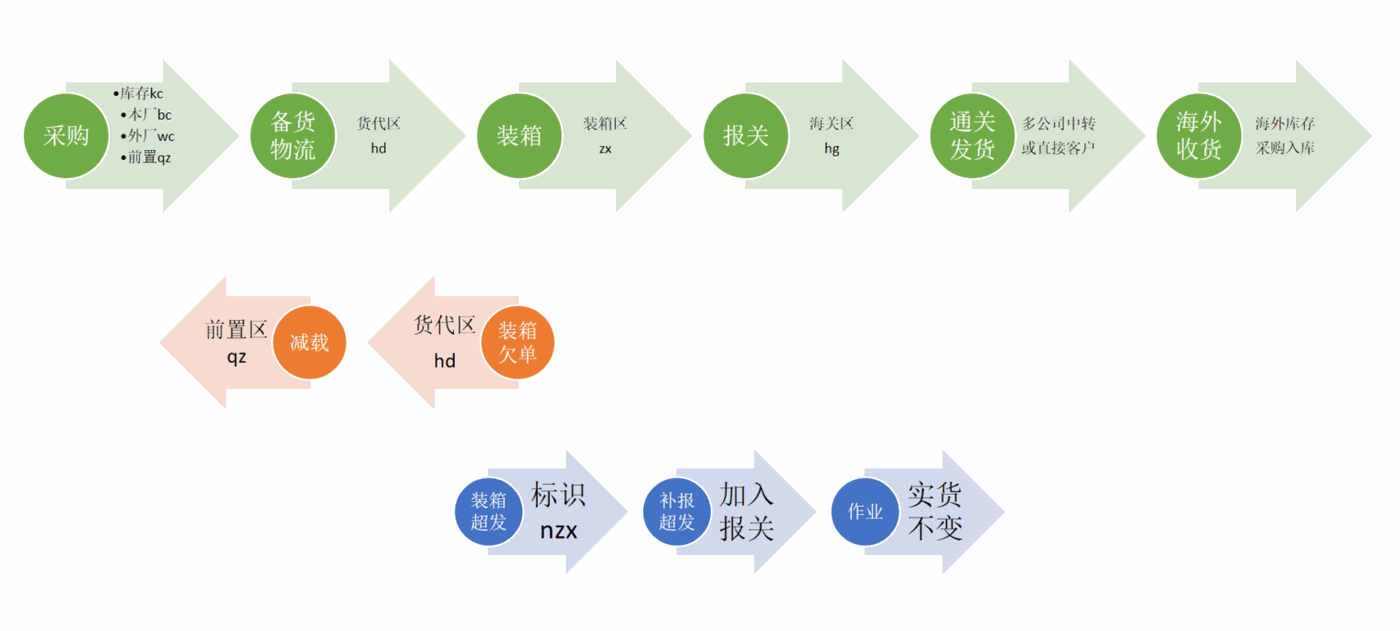
I. Implementation of Odoo 18's Unique Features for Import and Export Enterprises
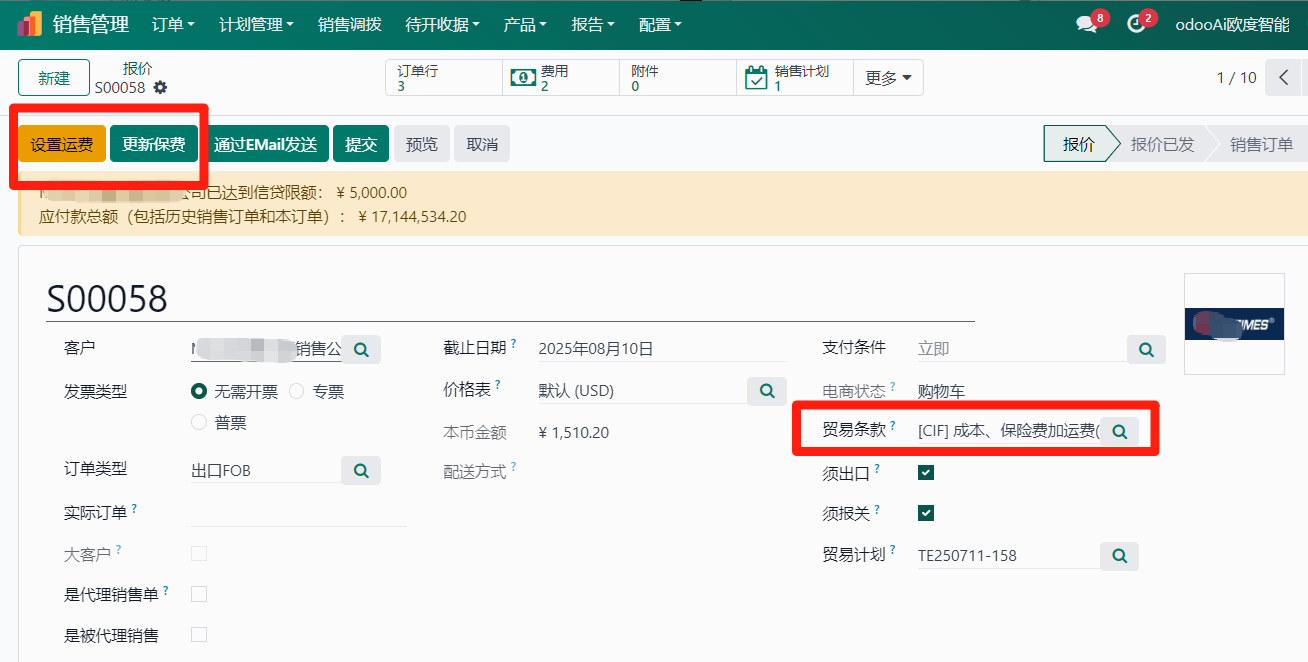
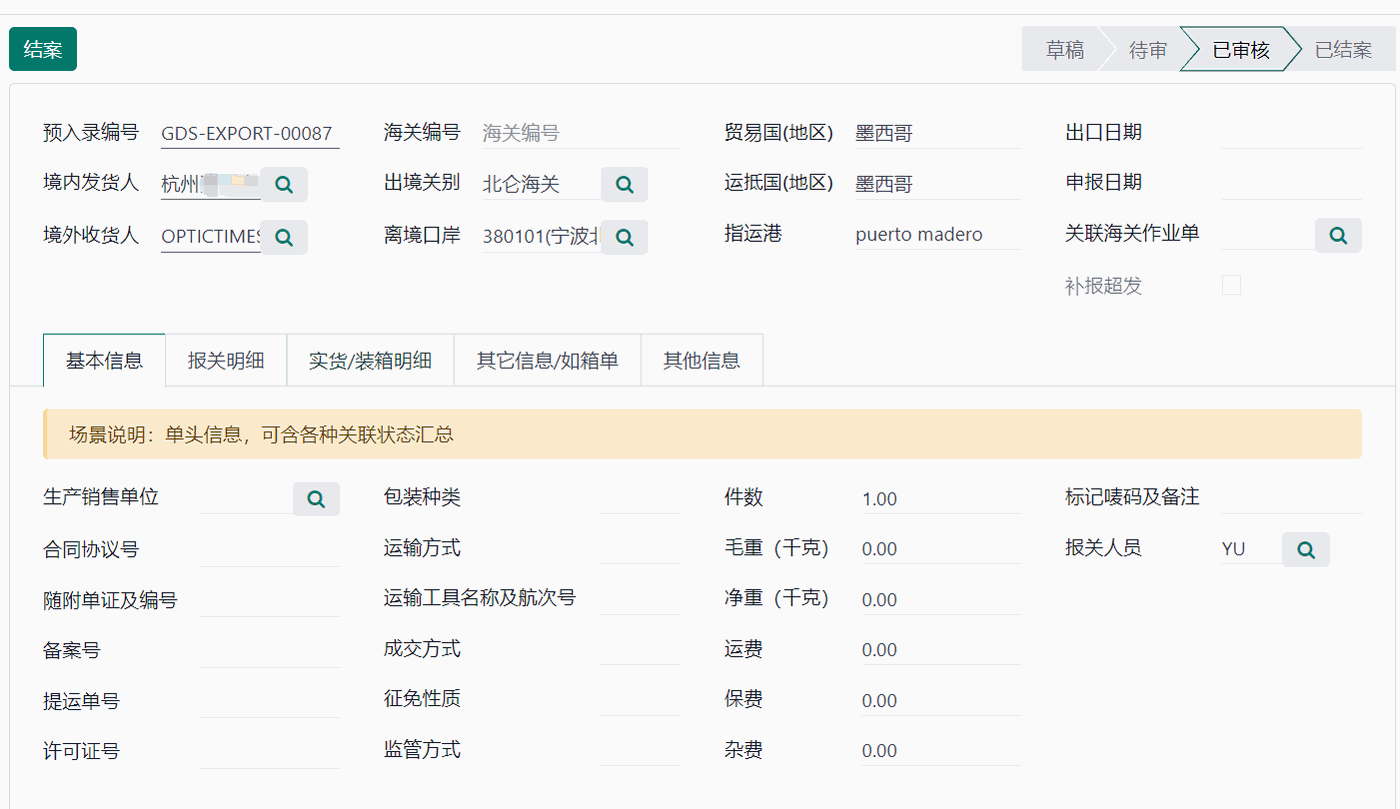
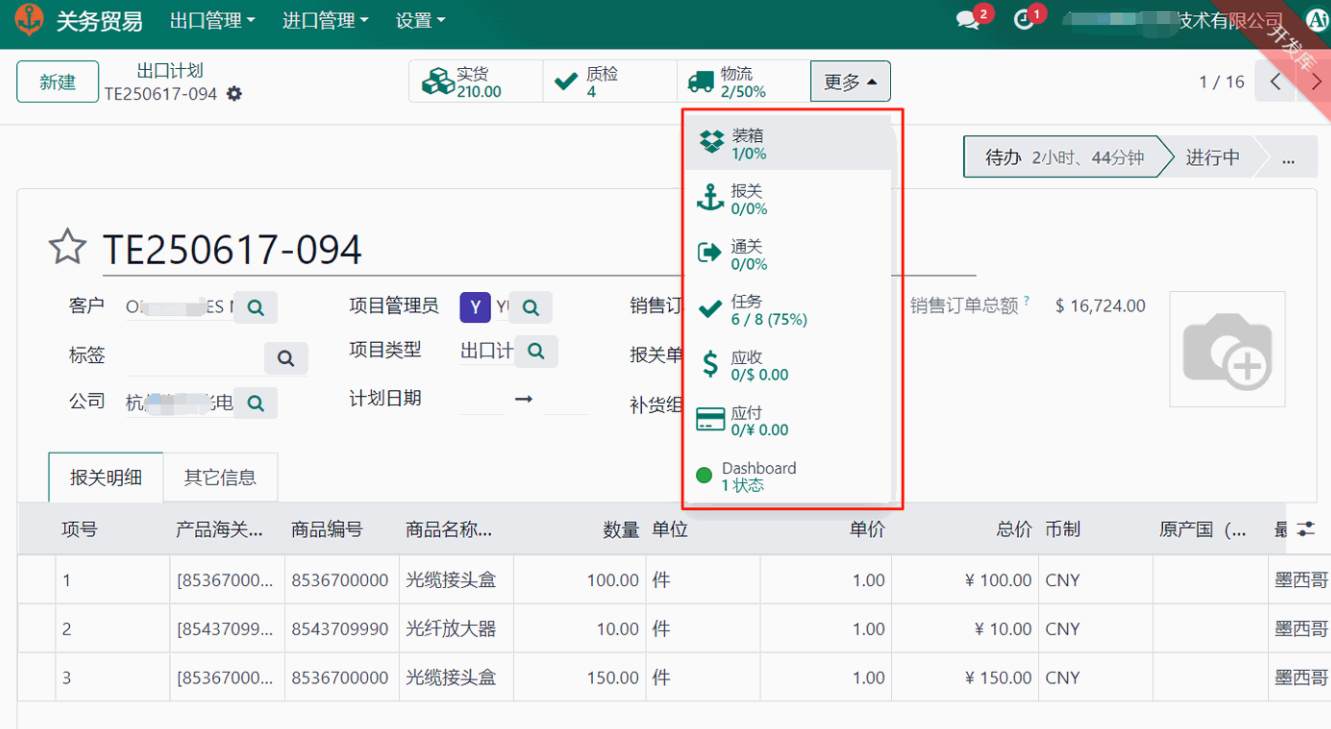
Guangzhou Odu Intelligent has developed an integrated ERP solution based on Odoo 18 specifically for the import and export industry, effectively addressing the industry's unique pain points such as complex business processes, high compliance requirements, and multi-currency and multi-language collaboration. As shown below, support for FOB and CIF, customs declaration, export planning, etc.
Example: Support for FOB and CIF
Example: Customs Declaration
Example: Export Planning
II. Major Opportunities and Benefits Brought by the Independent Customs Operation
1. Maximizing the "Zero Tariff" Dividend:
- Import aspect: After the independent customs operation, the principle of "first-line liberalization" will be fully implemented. Except for goods on the negative list, enterprises importing goods into Hainan will basically be exempt from tariffs, import value-added tax, and consumption tax. This will greatly reduce the cost of importing raw materials, equipment, consumer goods, etc., enhance profit margins and international competitiveness. It is particularly beneficial to industries such as high-end manufacturing, biomedicine, R&D and design, and luxury retail.
- Processing value-added tariff exemption: Enterprises are encouraged to engage in processing and manufacturing in Hainan. For goods processed in Hainan using imported materials with value-added exceeding 30%, import tariffs are exempt when entering the mainland (only import value-added tax and consumption tax are required). This provides strong impetus for establishing processing and manufacturing bases in Hainan and developing business models such as "both ends outside" or "one end inside, one end outside."
2. Trade Liberalization and Facilitation:
- "First line" efficient liberalization: The entry and exit of goods between Hainan and overseas will adopt a more convenient and efficient management model (such as "direct release"), customs clearance procedures and regulatory processes will be greatly simplified, significantly shortening clearance time and reducing logistics costs.
- "Second line" safe and efficient control: The supervision of goods entering and leaving between Hainan and the mainland will be optimized to ensure compliance with mainland market access rules while improving efficiency. For eligible enterprises and goods, circulation will be smoother.
- Negative list management: Import and export restrictions or prohibitions are only imposed on a very small number of goods involving national security, social order, and other fields; other goods have a very high degree of import and export freedom.
Trade Facilitation Upgrade
Customs clearance efficiency: Import and export declaration compressed to 30 minutes (2023 pilot data), "single window" covers the entire process;
Capital flow: Allows cross-border trade in services to be settled in foreign currencies, mitigating exchange rate risks;
Bonded repair: Supports global repair operations for large equipment in Hainan (e.g., aircraft engines, precision instruments)
3. Low tax rate environment:
- Corporate income tax incentives: Enterprises in encouraged industries enjoy a preferential corporate income tax rate of 15% (far below the standard 25% rate in the mainland), attracting companies to establish headquarters, R&D centers, and high-value-added production in Hainan.
- Personal income tax incentives: The portion of actual personal income tax burden exceeding 15% for high-end and urgently needed talent is exempted, which helps attract international talent and enhance corporate talent competitiveness.
- Simplification of VAT and consumption tax: After the island-wide customs closure, Hainan will launch sales tax reform, simplifying turnover taxes such as VAT and consumption tax, which is expected to further optimize the corporate tax burden structure.
Restructuring of tariff costs
Policy tools
Specific content
Examples of enterprise benefit scenarios
"Zero-tariff" list
Import tariffs exempted on self-use production equipment, raw and auxiliary materials, and vehicles
Auto importers save 15% in tariffs; chip manufacturers reduce raw material costs
Tariff exemption on processing value-added
Goods containing imported materials and parts that undergo processing in Hainan with value-added exceeding 30% are exempt from tariffs when sold to the mainland
Biopharmaceutical companies transport semi-finished products to Hainan for processing and then sell domestically, avoiding 20% tariffs
"First-line liberalization"
Free flow of goods between Hainan and overseas (except for the negative list)
International commodity traders achieve zero-tariff transit storage
4. Facilitation of cross-border capital flows:
- The free trade account system will become more mature, cross-border trade settlement, investment and financing will be more free and convenient, reducing corporate exchange costs and exchange rate risks, and improving capital operation efficiency.
5. A hub for developing new types of offshore international trade:
- Hainan will become an ideal platform for conducting new types of international trade such as offshore trade, entrepot trade, cross-border e-commerce, and bonded repair and remanufacturing. Enterprises can leverage Hainan's open policies and geographical advantages to integrate global resources and expand into international markets.
6. A strategic springboard into the Chinese mainland market:
- For foreign enterprises wishing to enter the vast Chinese mainland market, establishing a presence in Hainan can leverage policies such as zero tariffs and low tax rates to produce or assemble products, and then enter the mainland through the "second line" (subject to taxation as required), which may offer cost and time advantages compared to direct imports from overseas (especially when combined with the processing value-added tax exemption policy).
III. Challenges and Adjustment Needs
1. Increased compliance and regulatory requirements:
- "Second line" supervision: Goods entering the mainland from Hainan are subject to customs supervision, and enterprises must accurately declare and comply with mainland laws and regulations (such as rules of origin, safety standards, inspection and quarantine, etc.). The cost of violations can be high.
- Data and information sharing and risk prevention and control: The closed customs operation relies on a powerful information system for data sharing and risk assessment. Enterprises need to adapt to a more transparent and intelligent customs supervision model and ensure that data is authentic and accurate.
- Processing value-added rules: To enjoy the processing value-added tax exemption, enterprises must strictly meet the requirement of value-added of 30% or more and establish account books and accounting systems that meet customs supervision requirements, increasing management complexity.
Pressure from regulatory upgrades
Supervision
New requirements
Enterprise response costs
"Second line control"
Goods from Hainan entering the mainland are treated as imports and require customs declaration and tax payment
Increases compliance costs for related-party transactions with mainland subsidiaries
Processing value-added verification
Customs conducts penetrating audits of the "30% value-added rate" (verifying the authenticity of R&D/labor costs)
Need to upgrade ERP system and connect with customs, increasing cost per declaration by approximately ¥2000
Credit Management
Corporate credit rating is directly linked to customs clearance efficiency (D-level enterprises are subject to 100% inspection).
The risk control system must comply with AEO standards.
2. Changes in operating cost structure:
- Logistics cost trade-off: Although the cost of "first-line" imports has dropped significantly, if products are mainly sold to the mainland, the logistics cost and time for entering the mainland from Hainan's "second-line" may be higher than importing directly from mainland ports. Enterprises need to re-optimize their supply chain layout.
- Local factor costs: The costs of labor, land, energy, etc. in Hainan may be higher than in some mainland regions and require comprehensive evaluation.
- Information system investment: To adapt to the new customs supervision model and trade rules, enterprises may need to invest in upgrading information systems such as ERP and WMS, and equip them with professional personnel.
3. Intensified market competition:
- Hainan's preferential policies will attract a large number of domestic and foreign enterprises, potentially leading to fierce competition in some industries. Enterprises need to have unique core competitiveness.
- Under the zero-tariff environment, parallel imports may increase, posing challenges to brand owners' pricing strategies and channel management.
4. Cost of policy understanding and adaptation:
- The Hainan Free Trade Port policy system is complex and still being dynamically improved. Enterprises need to continuously invest resources in studying policies, interpreting detailed rules, and responding to possible adjustments. The specific operational details and stability of policy implementation are points of concern.
5. Industrial chain support is still being improved:
- Compared with mature regions such as the Pearl River Delta and Yangtze River Delta, Hainan's industrial chain support and professional service capabilities (such as high-end logistics, professional financial and legal consulting) still need improvement, which may increase the operational difficulty for some enterprises.
IV. Three-step strategic plan for large enterprise action framework:
1. Reconstruction of production capacity layout
- Establish high value-added processing bases in Hainan (enjoy duty-free domestic sales)
- Relocate production lines dependent on low-tariff raw materials to Hainan (e.g., high-end food, medical devices)
2. Construction of offshore hub
- Obtain qualification as a pilot enterprise for new offshore international trade
- Establish a cross-border cash pool (using FT accounts to achieve integrated domestic and foreign currency management)
3. Compliance System Upgrade
- Obtain Customs AEO Advanced Certification (inspection rate reduced by 70%)
- Deploy a blockchain traceability system (to meet processing value-added verification)
V. Strategic Recommendations for Different Types of Enterprises
1. Import-oriented enterprises (especially high-end consumer goods, equipment, and raw materials):
- Opportunity: Benefit directly from zero tariffs and significantly lower costs. Consider setting up a procurement center, distribution center, or retail store in Hainan.
- Challenge: Monitor changes to the negative list and prepare for possible parallel import impacts. If the target market is mainland China, the cost of "second-line" entry must be weighed.
2. Export-Oriented Manufacturing Enterprises:
- Opportunity: Leverage zero-tariff imports of raw materials and equipment, lower tax rates to reduce operating costs, and combine processing value-added policies to make Hainan a global production base.
- Challenges: Need to meet processing value-added requirements and establish a compliance system. Assess whether local supply chain support meets production needs.
3. International Traders (Offshore Trade, Entrepot Trade):
- Opportunity: Hainan is an ideal platform for new types of offshore trade, offering a highly free trade environment and convenient cross-border finance.
- Challenge: Requires a deep understanding of and compliance with offshore trade regulations, along with strong risk control capabilities.
4. Logistics and Supply Chain Companies:
- Opportunity: Hainan's development into an international shipping and aviation hub will bring substantial business growth. The key is to provide logistics solutions that efficiently connect the "first line" and the "second line."
- Challenge: Requires investment in upgrading infrastructure (such as bonded warehouses and multimodal transport) and adapting to new customs supervision models.
5. Service trade enterprises:
- Opportunities: The customs closure drives the opening up of cross-border trade in services, such as professional services and digital trade. Use low tax rates to attract talent.
- Challenge: Pay attention to the specific restrictions of cross-border data flow rules and the negative list for trade in services.
VI. Conclusion
The Hainan independent customs operation is a major practice of China's highest-level opening-up, opening unprecedented policy dividend space for import and export enterprises, especially in reducing costs, improving efficiency, and expanding new business formats. Zero tariffs, low tax rates, and trade liberalization and facilitation are its core attractions. However, enterprises must clearly recognize the accompanying challenges such as increased compliance requirements, reconstruction of operating models, intensified competition, and policy adaptation costs. The key to success lies in:
- In-depth policy research: accurately grasp policy details and applicable conditions.
- Strategic layout: based on your own business characteristics (target market, products, supply chain), evaluate the necessity and best model for layout in Hainan (regional headquarters, production base, trading platform, logistics center).
- Strengthen compliance capabilities: invest resources to establish internal risk control and compliance systems that meet the regulatory requirements of the free trade port.
- Optimize supply chain: redesign and integrate the supply chain, balancing Hainan's policy dividends with the actual operating costs in other regions.
- Embrace innovation: actively explore opportunities in new business formats such as offshore trade, bonded repair and remanufacturing, and cross-border e-commerce.
- Seek professional support: leverage the help of professional consulting, legal, tax, and customs service agencies.
"Customs closure is not isolation, but a higher-level open interface." Large enterprises need to complete the trinity layout of "Hainan production capacity + offshore finance + intelligent risk control" before 2025. As long as they seize the opportunity points of 'tariff exemption on processing value-added, tax incentives for offshore trade, and cross-border data flow' and add risk firewalls, 'authenticity audit of processing value-added, compliance costs of second-line supervision, and intensified international competition', they can transform policy dividends into sustainable competitiveness.