Introduction: The "Involution" Dilemma in Manufacturing and the Digital Breakthrough
In 2025, global manufacturing is facing triple pressures: rising costs (raw materials + labor + tariffs), compressed delivery cycles (e-commerce driven), and rigid quality traceability (surging recall costs). According to a McKinsey survey, 73% of manufacturing enterprises list "cost reduction and efficiency improvement" as the primary goal of manufacturing digital transformation. Odoo 19, as the "digital hub" of enterprise operations, with its modular architecture, open-source ecosystem, and smart manufacturing adaptability, is becoming the "cost-effective choice" for digital transformation of small and medium-sized manufacturing enterprises. This article will reveal how Odoo ERP helps manufacturing enterprises achieve a leap of "30% cost reduction + 50% efficiency improvement" through three dimensions: core function analysis, quantified benefit breakdown, and industry case evidence, providing practical reference for cost reduction and efficiency improvement solutions for manufacturing enterprises.
I. How Does Odoo ERP Directly Address the Cost Black Hole in Manufacturing?
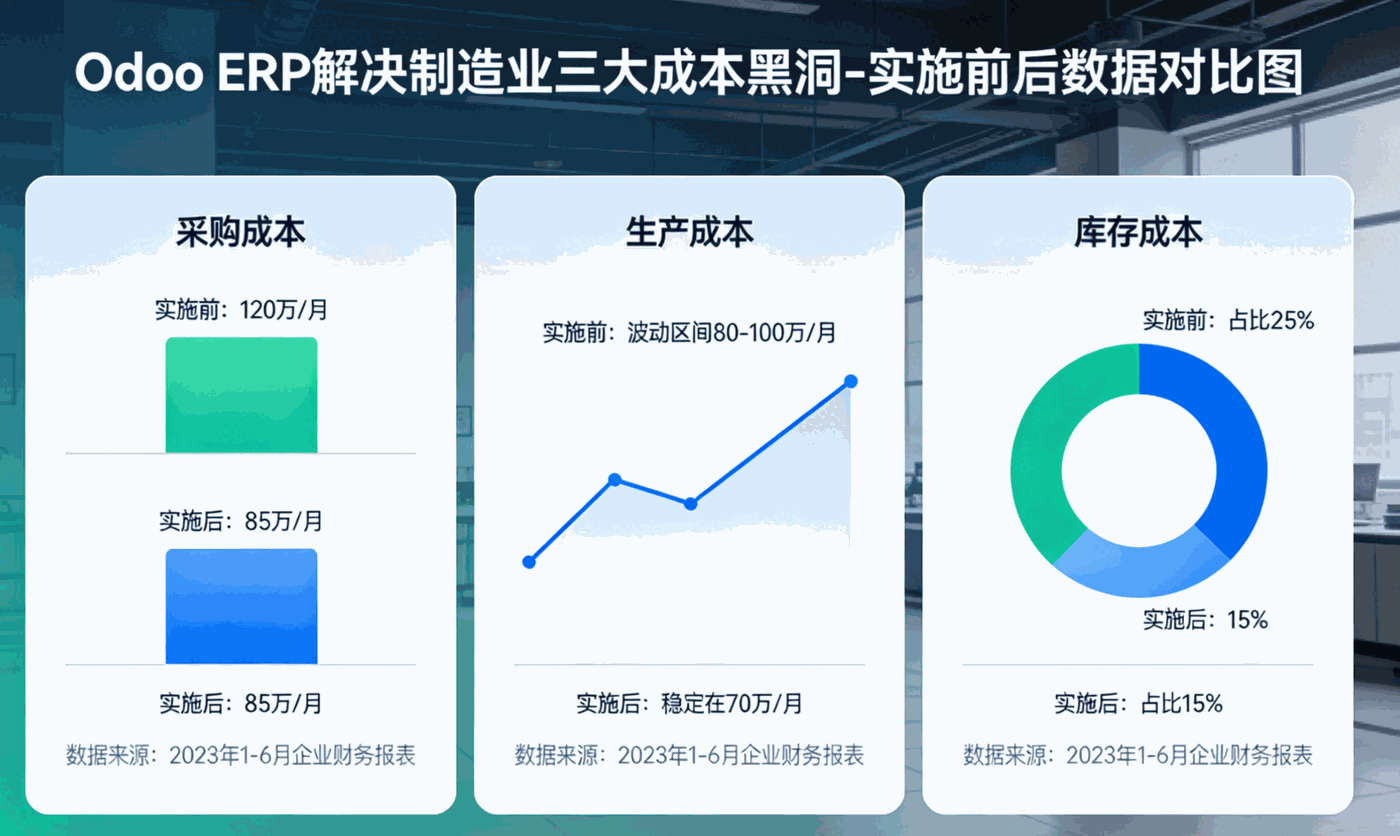
1.1 Inventory Backlog: From "Capital Grave" to "Flowing Blood"
- Pain Point :
Traditional manufacturing enterprises rely on manual inventory counting, with inventory accuracy below 70%, resulting in capital occupation exceeding 30% and inventory turnover consistently below the industry average.
- Odoo ERP Solution :
Intelligent MRP System : Automatically calculates BOM material requirements, combines supplier lead times and capacity to generate precise procurement plans.
Real-time Inventory Dashboard : Multi-warehouse visualization + safety stock alerts, reducing overselling risk by 70%.
- Case Study :
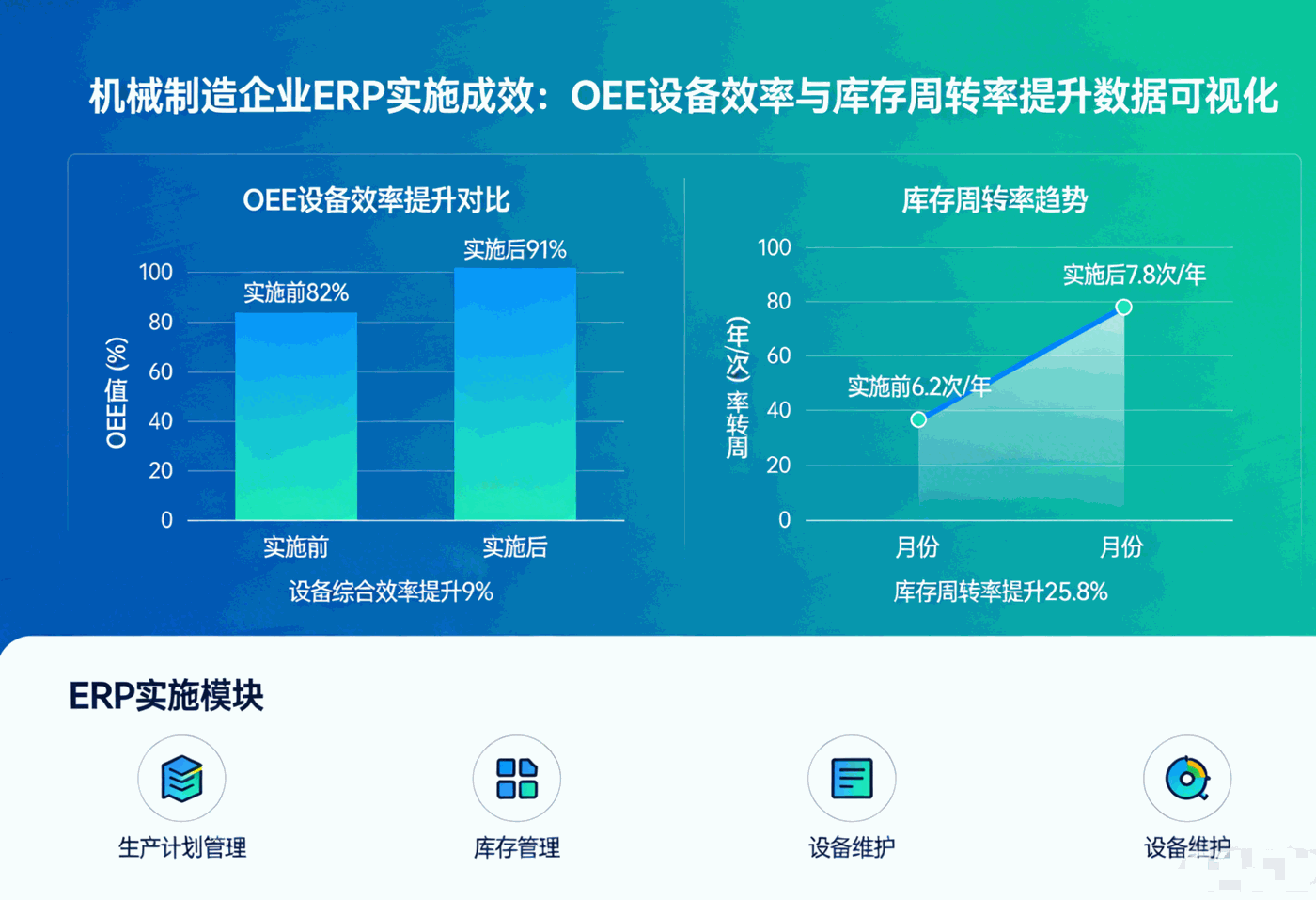
After Guangzhou Rong** Printing Co., Ltd. applied the Odoo ERP inventory management module, inventory turnover increased from 4 times/year to 7 times/year, and capital occupation decreased by 2 million yuan.
1.2 Production Waste: From "Experience-based Scheduling" to "Data-driven Optimization"
- Pain Point :
Equipment idle rate is as high as 25%, process waiting time accounts for 40% of the production cycle, and OEE equipment efficiency is only 68%.
- Odoo ERP Solution :
OEE Equipment Analysis : Real-time monitoring of utilization rate, yield rate, and downtime.
Scan-to-report + IoT Sensors : Reduce paper document flow by 50%.
- Data :
After implementation at Guangzhou Rong** Printing Co., Ltd., OEE increased from 68% to 82%, and labor cost per unit decreased by 15%.
1.3 Quality Out of Control: From "After-the-Fact Remediation" to "In-Process Interception"
- Pain Point :
Rework rate exceeds 15%, customer complaint costs account for 5% of profit, and quality traceability relies on manual search.
- Odoo ERP Solution :
Quality traceability chain: Scan codes to bind batches and work orders, locate responsible persons within 10 minutes.
SPC automatic inspection: Anomalies trigger rectification processes, reducing quality costs.
- Case Study:
Guangzhou Rong** Printing Co., Ltd. used the Odoo ERP quality traceability system to reduce the defect rate from 8% to 3%, saving 300,000 yuan annually.
II. Efficiency Improvement: A Paradigm Revolution from "Human Governance" to "Digital Governance"
2.1 Planning and Scheduling: From "Firefighting Adjustments" to "AI Intelligent Simulation"
- Traditional Dilemma:
Planners handle an average of 3-5 urgent insertions per day, with a delivery rate of less than 60%, relying on manual experience.
- Odoo ERP Innovation:
Advanced scheduling engine: Automatically generates plans based on order priority, equipment load, and material availability.
Dynamic adjustment: Respond to sales order changes within 10 minutes.
- Results:
Guangzhou Rong** Printing Co., Ltd. reduced order delivery cycle from 15 days to 9 days, increasing capacity utilization by 25%.
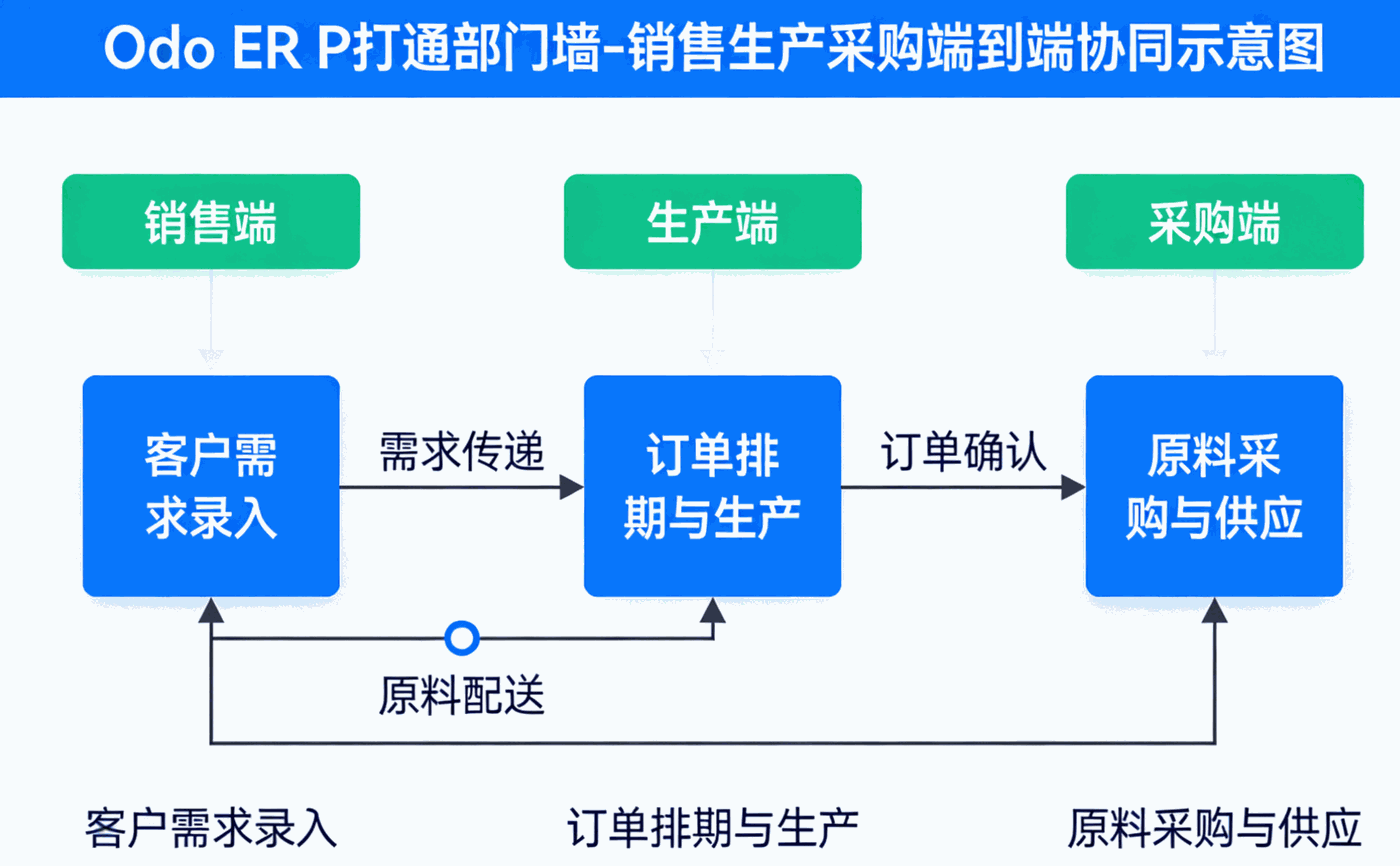
2.2 Collaboration Efficiency: From "Departmental Silos" to "End-to-End Integration"
- Pain Point :
Sales-production-procurement data is fragmented, and cross-department communication takes up 30% of time.
- Odoo ERP Integration:
Unified master data: Global sharing of customer/product/BOM.
Automated workflow: Sales orders automatically trigger production orders + purchase requests.
- Case Study:
Dongguan Jia** Furniture Manufacturing Enterprise increased collaboration efficiency by 40% and project profit margin by 5 percentage points.
III. Industry Benchmark Cases: Digital Transformation Evidence
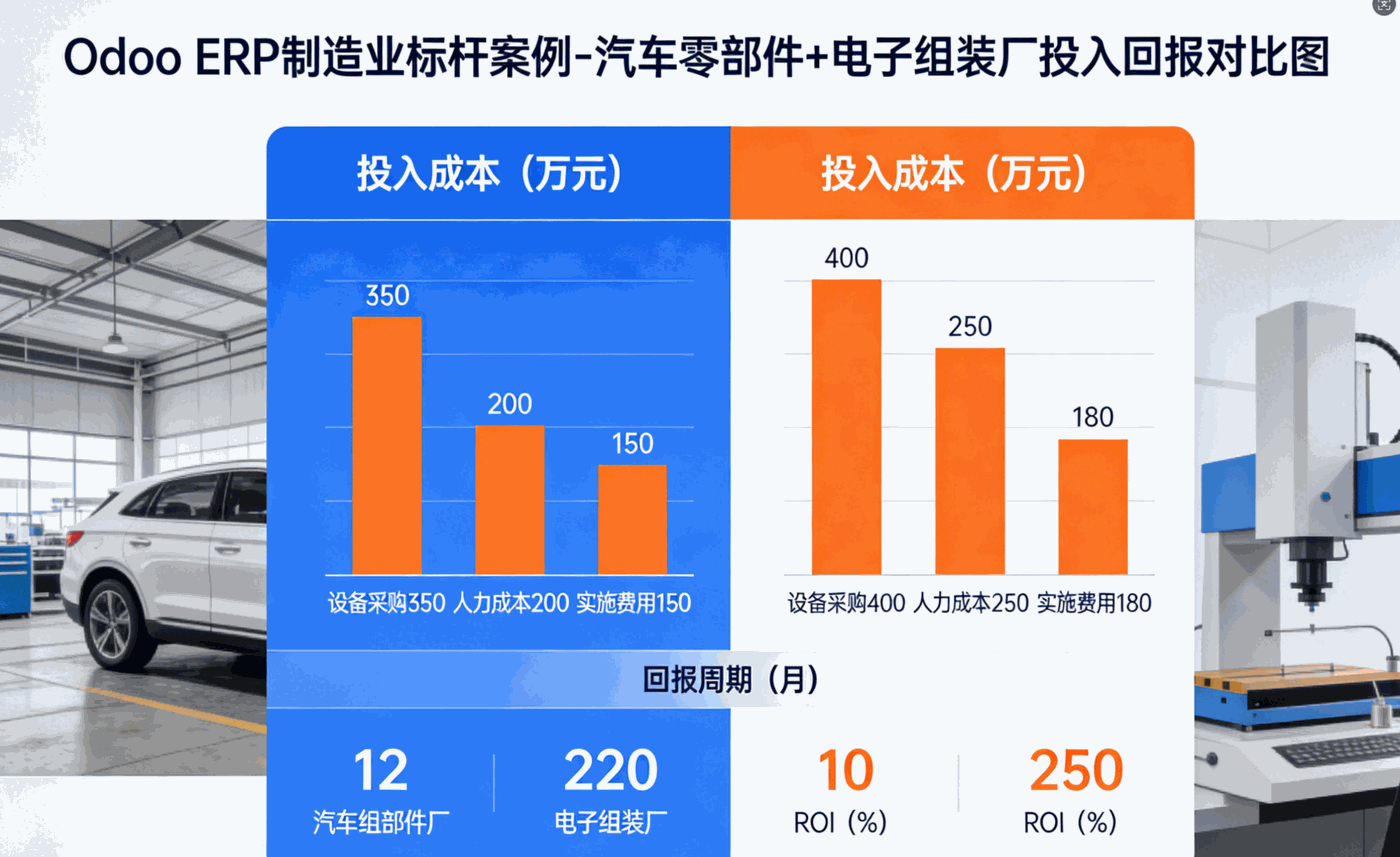
3.1 Auto Parts Enterprise: 3 Million Investment, 12 Million Return
- Background:
Annual revenue of 500 million yuan, facing pressure from multi-variety small-batch production.
- Odoo Application:
Production management module accurately matches delivery dates, increasing inventory turnover by 150%.
Quality traceability reduces claim losses by 50%, and cost accounting enables order-level profit analysis.
- Results:
Reduced costs by 18 million yuan in 6 months, increasing per capita output by 60%.
3.2 Electronics Assembly Plant: Transformation from "OEM" to "Brand"
- Transformation Pain Points:
OEM profit margin less than 5%, need to meet customized requirements.
- Odoo Empowerment:
PLM manages product lifecycle, and intelligent scheduling shortens delivery cycle by 40%.
E-commerce module directly connects to Amazon, with omnichannel inventory synchronization.
- Results:
Shenzhen Mo** Technology Co., Ltd. own brand revenue accounts for 45%, with gross profit margin doubled.
IV. Implementation Path: From "System Deployment" to "Business Model Transformation"
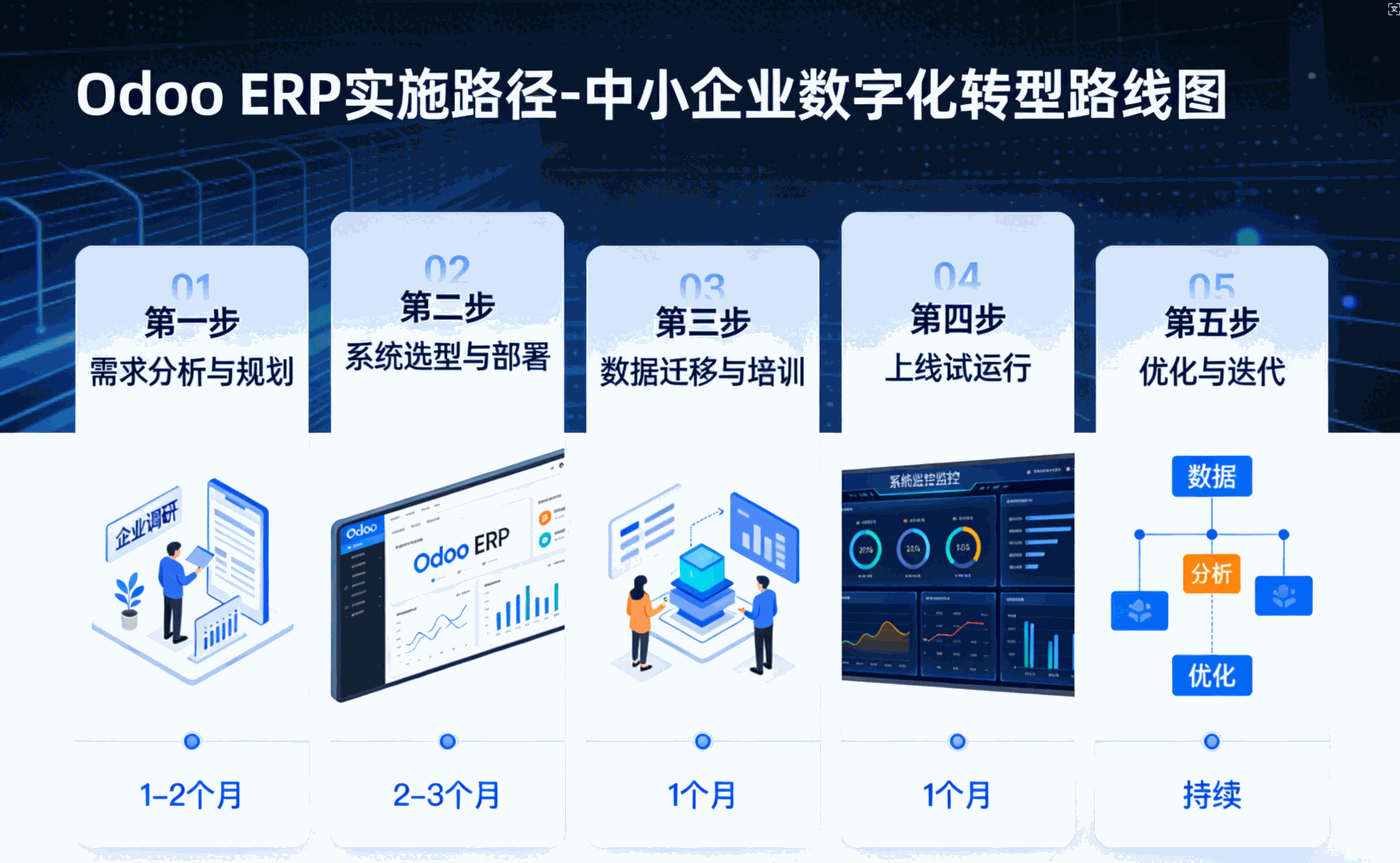
4.1 Three-Phase Implementation Model
- 1. Foundation Phase (1-3 months)
Map core processes (production, inventory, finance).
Deploy core modules (MRP, Inventory, Accounting).
- 2. Deepening Phase (4-6 months)
Extend Quality/Maintenance modules, integrate MES/WMS.
Launch cost accounting (automatic allocation of labor and material costs).
- 3. Evolution Phase (7-12 months)
Launch BI dashboards, explore integration of AI scheduling and smart manufacturing.
4.2 Key Success Factors
- Management commitment: Incorporate into KPI assessments, ensure full employee participation.
- Data governance: Cleanse historical data, establish master data standards.
- Agile iteration: Monthly evaluation and optimization, avoid "heavy implementation, light optimization".
V. Future Trends: Deep Integration of Odoo ERP and Smart Manufacturing
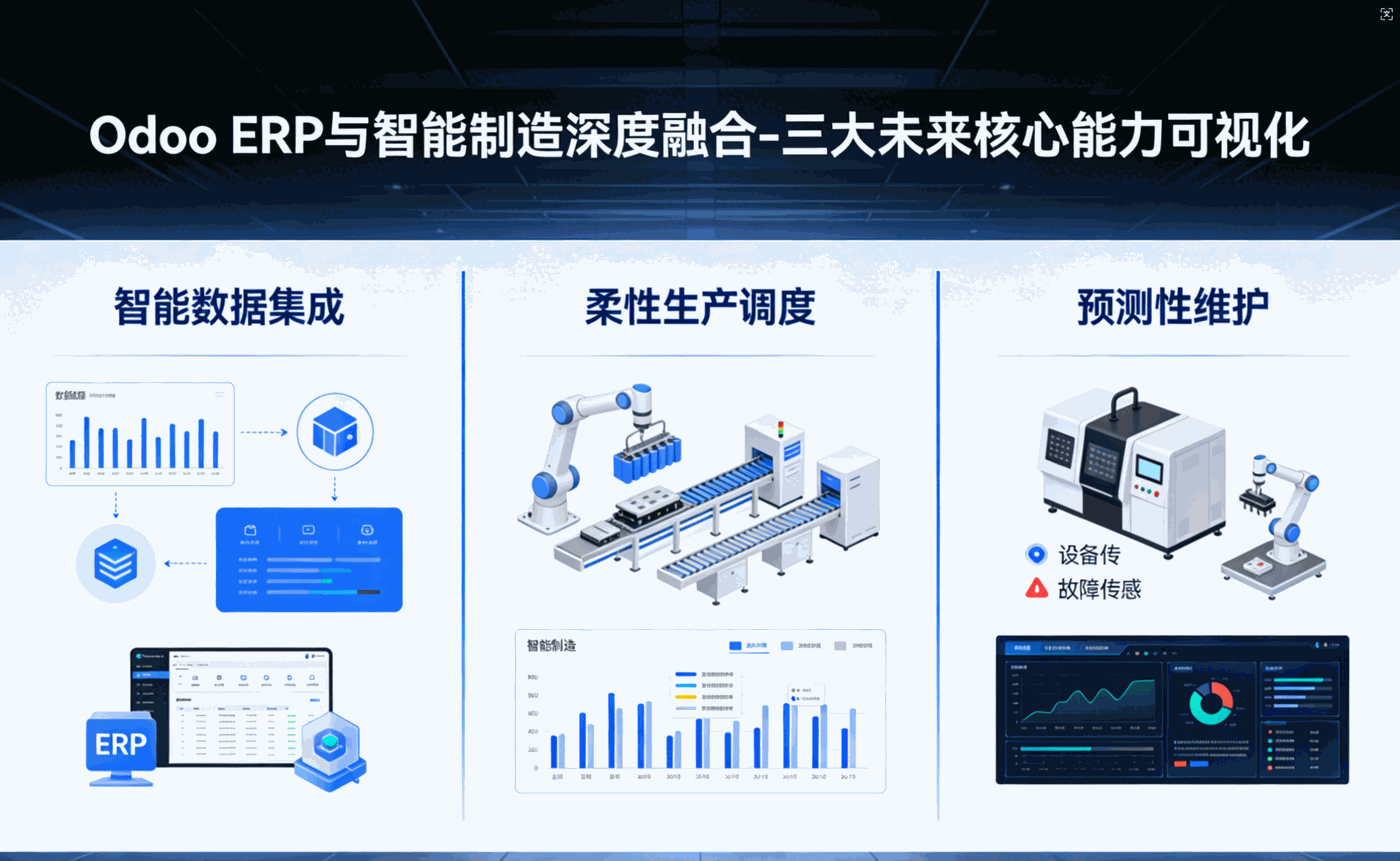
- 1. Predictive Maintenance: Sensor data provides 14-day advance failure warnings, reducing downtime losses by 30%.
- 2. Adaptive Scheduling: Dynamically adjust plans to cope with market fluctuations.
- 3. Digital Twin: Virtual factory simulation strategies to assist decision-making.
Non-Standard Manufacturing Enterprises: Fix These Three Gaps First
The problem for non-standard enterprises is often not a lack of systems, but that orders, design, and the shop floor are disconnected. Orders are tracked in Excel, design changes are passed along verbally, and on-site installation and replacement parts are chased by phone.
First, make the project number run through sales, design, procurement, production, and installation; then route changes through the same approval flow; finally, allocate labor hours, outsourcing, and leftover materials to project costs. Only after these three gaps are closed will AI scheduling and predictive maintenance have something to build on. Cost reduction with non-standard manufacturing ERP starts with reducing rework and waiting for materials.
Conclusion: The Path from "Manufacturing" to "Smart Manufacturing"
Under the dual pressure of cost and competition, manufacturing enterprises need to achieve organic growth through digital transformation. With its open-source flexibility, suitability for small and medium-sized businesses, and smart manufacturing scalability , Odoo ERP is helping enterprises make the leap from "experience-driven" to "data-driven." Contact us now to get the free trial version and the industry solution white paper , and start your journey to lower costs and higher efficiency!