The term "Xinchuang" originates from the "Information Technology Application Innovation Working Committee." 2020 marked the starting point for the comprehensive promotion of the Xinchuang industry. The advancement of the Xinchuang industryBackgroundlies in the fact that in the past, most of China's IT underlying standards, architectures, products, and ecosystems were formulated by foreign IT commercial companies, which gives rise to many underlying technical,information security, and data storage method restriction risks. The global IT ecosystem landscape will evolve from the past "unipolar" to the future "bipolar," and China must gradually establish its own IT underlying architecture and standards. The IT industry ecosystem built on its own IT underlying architecture and standards is the main connotation of the Xinchuang industry. From the perspective of industrial development, Xinchuang has currently become the key to the country's economic digital transformation and the promotion of industrial chain upgrading, and it is also a long-term plan adopted for the development and upgrading of China's IT industry.
In the past few years, the domestic enterprise information management system market has developed rapidly. Companies such as Kingdee, Yonyou, and Huawei have all launched their own ERP solutions to help enterprises better plan and manage resources. In this highly competitive market, you have a better choice—the Odoo ERP system built on open-source technology.
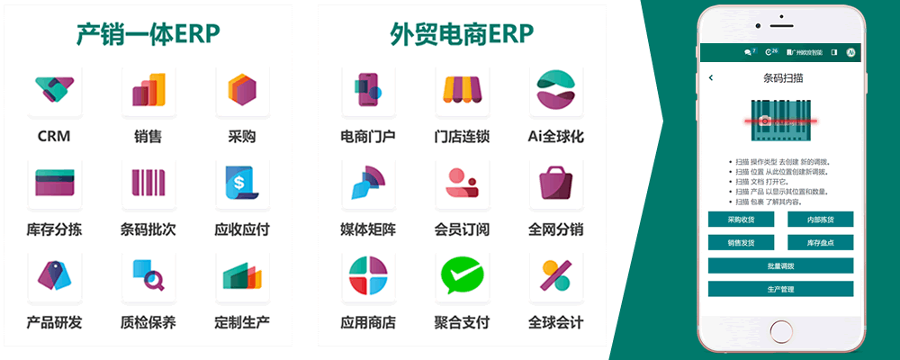
Odoo is a highly integrated, fully open-source enterprise application software suite that comprehensively covers various business needs. With its modular design concept, it has created over 3,000 functional modules, covering sales, purchasing, inventory, manufacturing, project management, and many other fields, and can be customized and extended according to specific enterprise needs.
Compared with traditional ERP vendors such as Kingdee and Yonyou, Odoo has obvious advantages
1. Completeness: Odoo provides a complete enterprise management solution, including sales, purchasing, inventory, finance, and various other modules, which can meet the needs of most enterprises.
2. Openness: As open-source software, Odoo allows users to view and modify its code. Anyone can participate in Odoo's development. This gives Odoo high flexibility and customizability, allowing it to be customized and extended according to specific enterprise needs. This means you are no longer limited to the functions and processes set by the software provider; you can flexibly adjust according to your own needs or choose a service provider that better suits your enterprise's development.
3. Flexibility: Thanks to Odoo's modular design concept, it can adapt to operational processes of varying complexity levels for companies of any size, from small to large.
4. Community support: Odoo has a large and active community. No matter what problems you encounter or what new features you need, you can likely find answers or get help in the community. At the same time, there are many third-party plugins available in the community. In addition to the third-party marketplace on the official Odoo website where global users can purchase plugins, Guangzhou Odu Intelligent has also developed[Odoo Chinese App Market]. So you can choose suitable plugins at any time.
5. Ease of use: Compared with other ERP systems, Odoo is easier to use. It has a friendly interface and clear, simple logic.
6. Cost-effectiveness: Because it is open-source software, using the basic version of Odoo requires no additional payment. Even its enterprise version (with more features) is much cheaper than other similar products. Compared with other paid ERPs, Odoo offers a higher return on value.
7. Globalization: Odoo has been translated into many languages and is widely used globally, capable of supporting global operations.
8. Cloud services: Odoo also provides cloud services, so you can start using it without setting up your own server. Odu Intelligent's Odoo clustering solution,
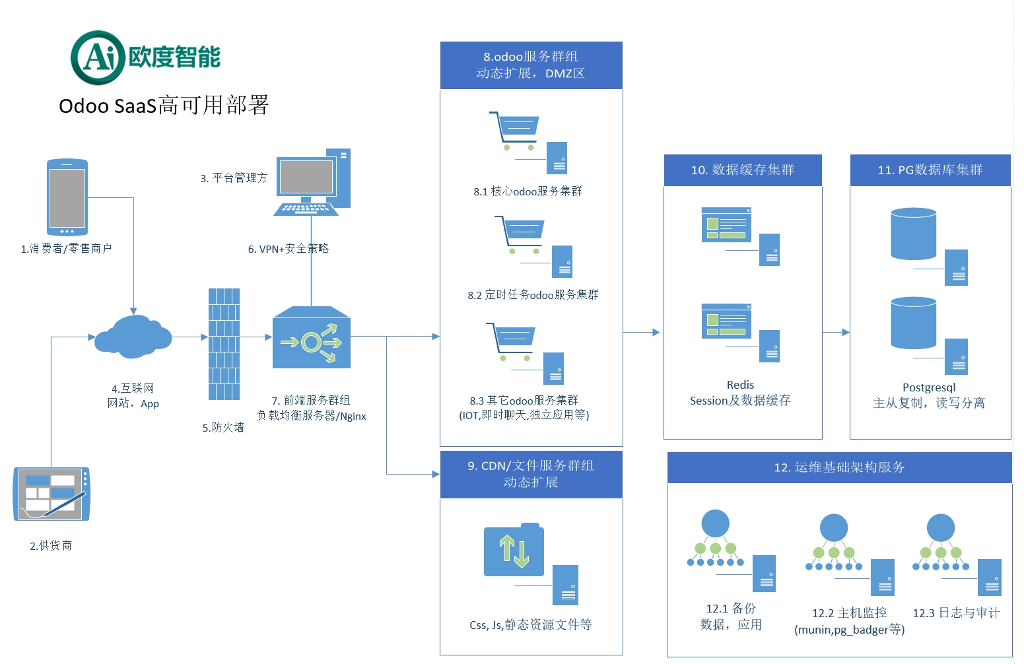
Odoo provides enterprises with a one-stop solution through its powerful and flexible framework, which is one of the reasons for its growing popularity in the market.
Domestic Operating Systems and Databases
Odoo can be fully built and deployed on Linux, with Ubuntu being the optimal choice. In Xinchuang projects, NeoKylin, Ubuntu Kylin, Deepin, and UnionTech UOS can all perfectly support Odoo.
At the database level, PostgreSQL has become the leader among open-source relational databases. Among domestic Xinchuang databases, PG-based databases such as Kingbase, Huawei GaussDB, Tencent TBase, and Alibaba PolarDB are all compatible with PG database commands. When deploying Odoo, only a certain amount of custom development is needed to use Odoo on domestic Xinchuang databases. Odoo Smart has already completed Odoo compatibility with Xinchuang databases in several state-owned enterprise projects, fully meeting the localization and security requirements of Xinchuang.

Xinchuang Security, Classified Protection Compliance
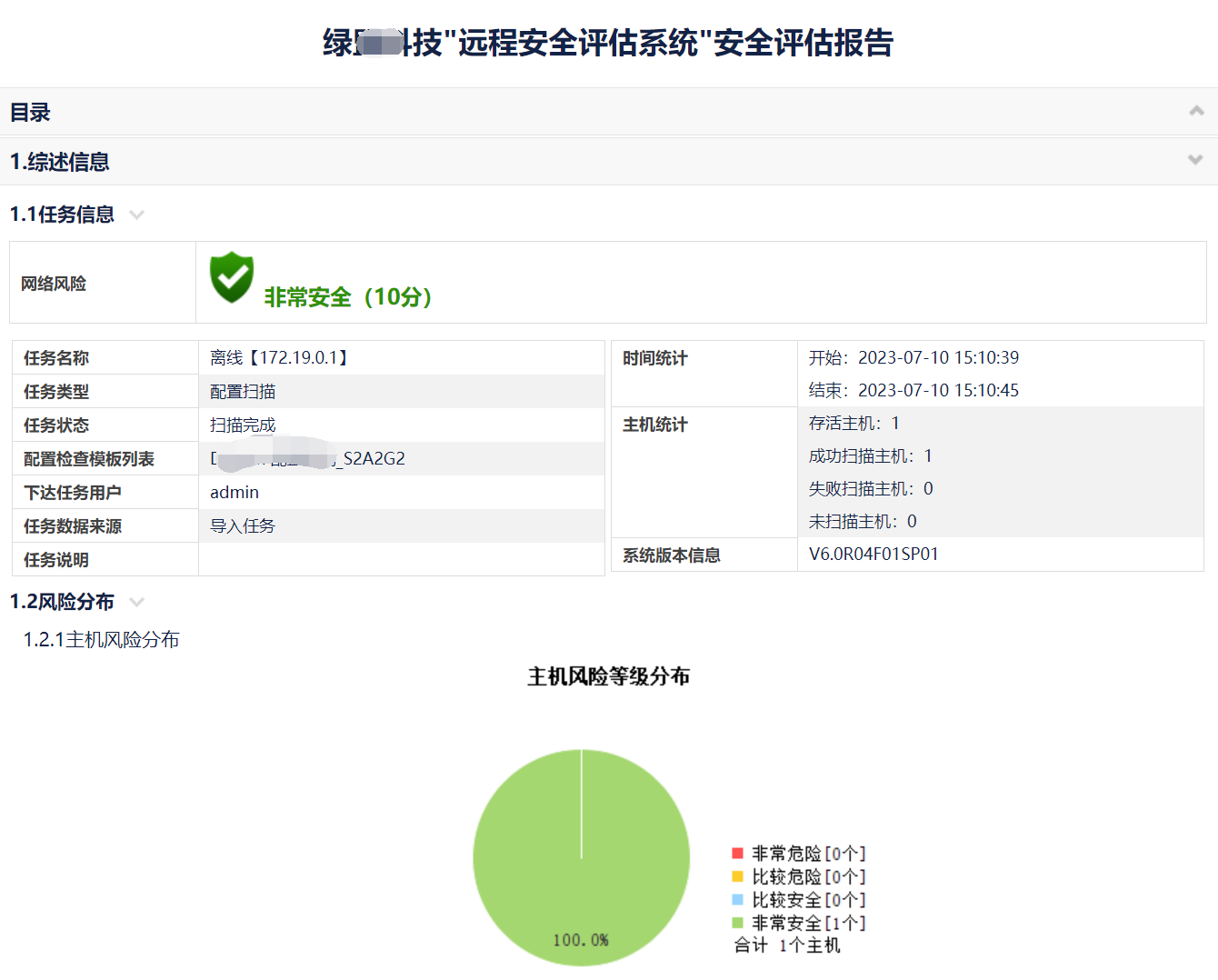
Odoo is a fully open-source platform, and the joint contributions of 12 million users and tens of thousands of developers worldwide enable it to respond quickly and provide robust support for security requirements. We have fully passed testing for Classified Protection Level 2 and Level 3 requirements and continue to provide support.
At the same time, we have also made common functions into standardized modules. For simple domestic Xinchuang requirements, such as password security/anti-penetration requirements for Level 2 Classified Protection, simply installing the module can meet these security requirements. Features include
One-click enforcement of password security policies. Enforce password security, set password length and strength, including uppercase/lowercase letters/numbers/special characters/combination rules.
Password expiration, password retry time, prohibition of reusing historical passwords, and other requirements.
One-click completion of multiple security controls. Odoo file security controls, such as allowing only image, PDF, Word, and Excel file uploads, Odoo file permission checks in the operating system, cross-site scripting (XSS) restrictions, anti-XSS penetration. Remote login whitelist and blacklist. Fixes for some CVE vulnerabilities, etc.
Overall, after completing domestic Xinchuang localization, open-source Odoo not only has the functional characteristics of traditional ERP software but also possesses advantages such as openness, flexibility, and community support, and further enhances its intelligence by integrating AI technology. It is a better open-source Xinchuang ERP solution beyond Kingdee, Yonyou, and Huawei, and is also better suited for bidding work on projects for enterprises and public institutions.