The implementation of business-finance integration in Odoo is mainly achieved by generating all relevant accounting entries. This has the following important implications for enterprise users:
1. Accuracy: Automated generation of accounting entries can greatly reduce human errors and improve data accuracy.
2. Efficiency: Automatically generating accounting entries not only saves time and labor of manual entry, but also quickly processes large amounts of data.
3. Transparency: All transactions are recorded in the system and corresponding accounting entries are automatically generated. This not only facilitates management decision-making but also facilitates auditor review.
4. Standardization: The system generates accounting entries according to preset rules, ensuring the standardization of internal control and process execution.
5. Traceability: Every transaction and every operation leaves a trace and forms a documented record, making it easy to query and track the original transaction source when needed.
6. Risk control: By generating all relevant accounting entries through the system, financial risks caused by manual input are effectively prevented.
In Odoo, the generation of all accounting entries in the sales module is an automated process. This process includes the following steps:
Create sales order (generate draft invoice) -- Confirm sales order (invoice updated to pending issuance) -- Create bill and receive payment (issue advance payment or full payment invoice) -- Ship goods (inventory valuation entry) -- Transportation invoicing/installation invoicing (payment receipt entry) -- Final payment

This article uses a common scenario in the home furnishing manufacturing industry as an example to explain how the production supply chain automatically generates financial entries.
Scenario:
Create a sales order for 1000 dressing chairs + installation fee of 1000 yuan
30% advance payment, issue invoice
After transportation and installation, issue invoice for freight and installation fees
Collect final payment
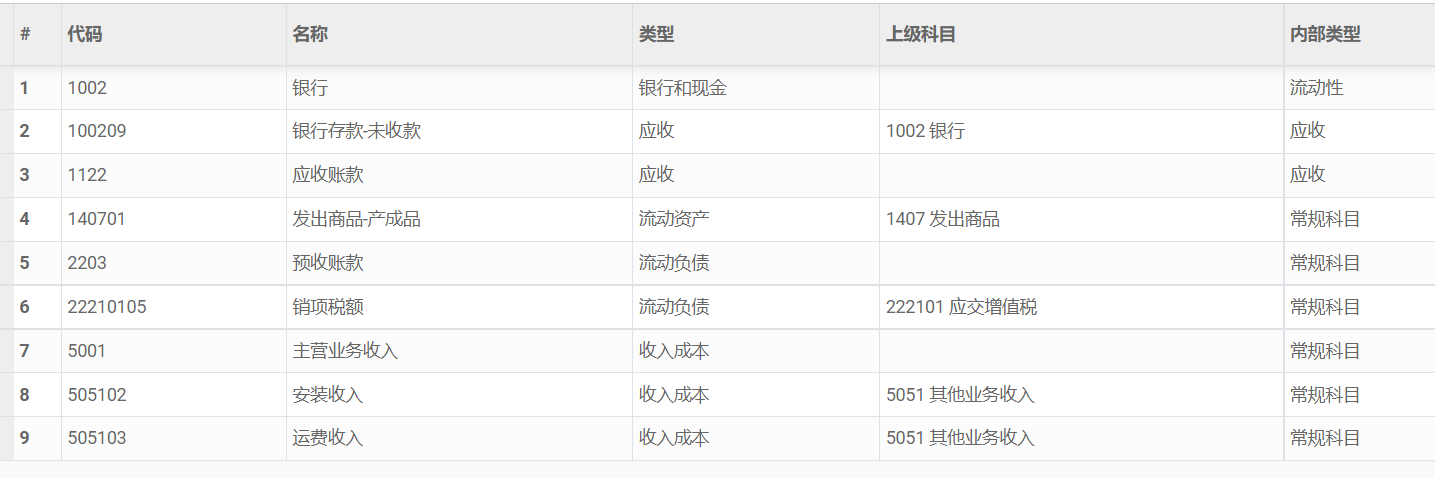
1. We set up accounting accounts for relevant entries
2. Set up accounting entries for the customer

3. Create a new product specifically for advance payment
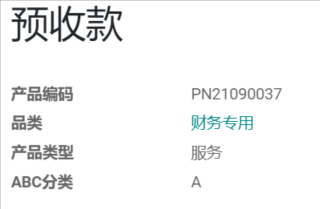
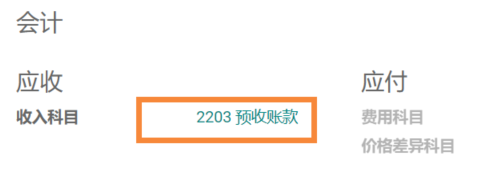
4. Set up relevant accounting attributes for the product
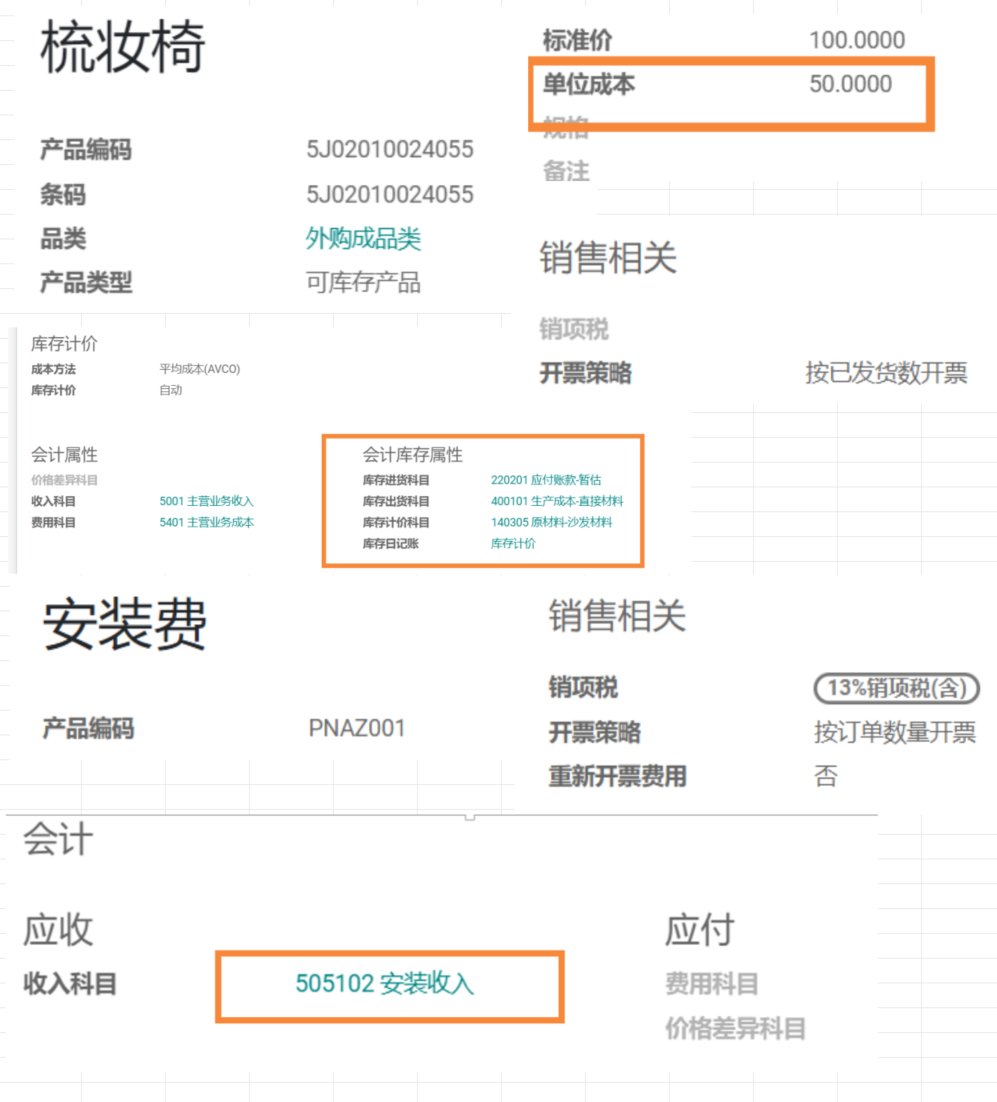
5. Confirm the sales order, receive 30% advance payment, generate entries,
Debit bank deposit - uncollected, credit bank

Debit advance receipts, credit bank deposit - uncollected

6. Ship goods, generate inventory valuation related entries
Debit inventory goods, credit goods shipped

7. Delivery, installation, and generation of installation revenue entries

8. Entries related to payment collection and invoicing

8. Final Payment Collection

9. Full overview of vouchers
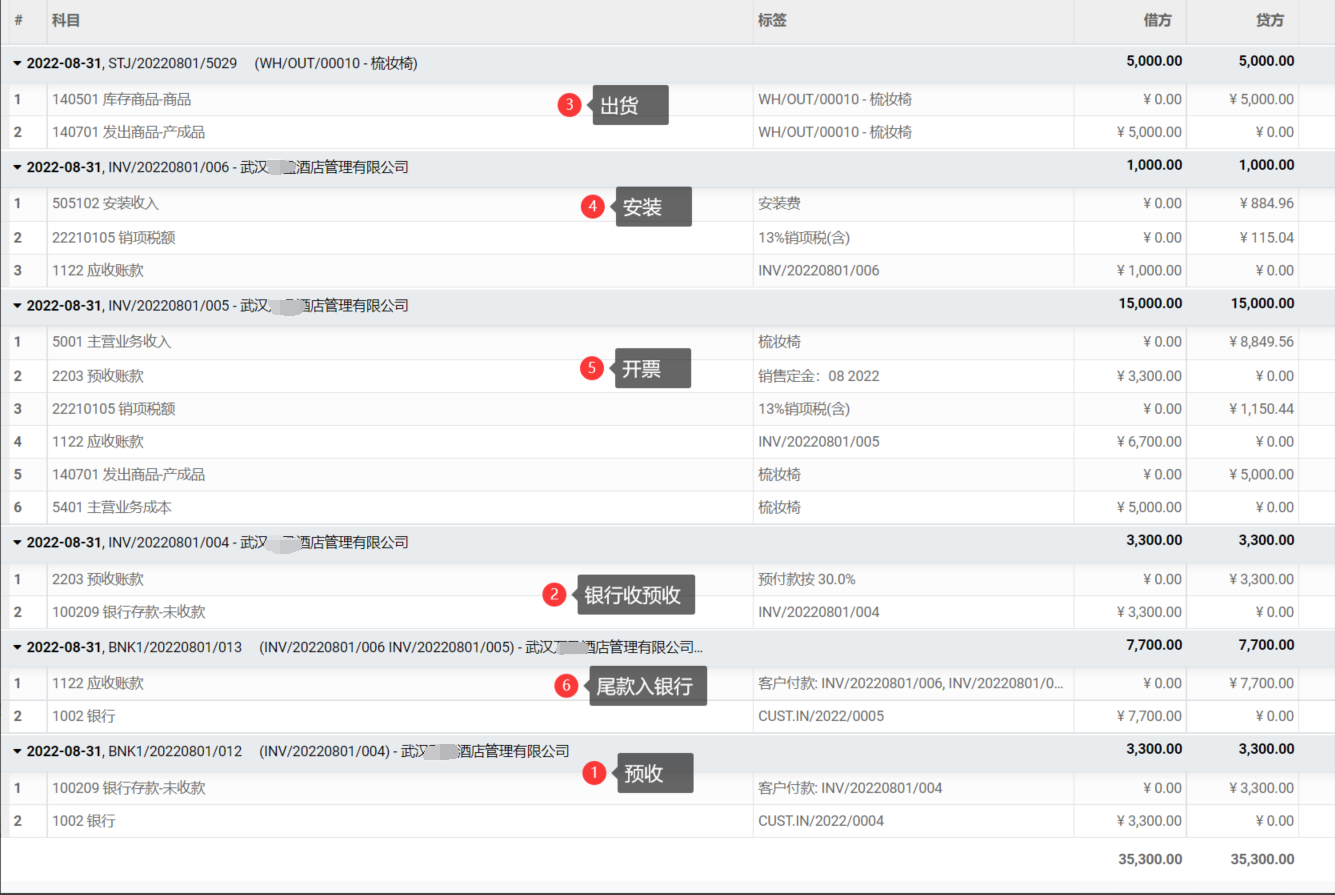
The above are all the vouchers involved in the sales process. After configuration, they are all automatically generated by the system. No manual tedious work is required.
Generating all relevant accounting vouchers through the system effectively prevents financial risks caused by manual input. At the same time, completely, detailedly, timely, and correctly reflecting economic activities is the information foundation necessary for enterprise management to make scientific decisions on business operations and for investors to evaluate enterprise value. Achieving business-finance integration in Odoo and generating all relevant accounting vouchers is an indispensable part of improving enterprise operational efficiency and management level and enhancing competitive advantage.