Company Y, located in Panyu, Guangzhou, is a jewelry and jade manufacturing company whose products are mainly sold to Europe and the US. It originally used Microsoft Dynamics CRM for supply chain management. After an IT system selection process, it decided to use and implement a customized Odoo open-source ERP as its core ERP for production, finance, and inventory management, replacing the original Microsoft Dynamics CRM and a certain financial software.
As consumers' demand for personalization and high quality continues to rise, the jewelry industry faces more challenges and opportunities. Jewelry itself focuses on weight and the one-item-one-code characteristic, and combined with customization requirements, this places higher demands on information in the jewelry industry. How can you stand out in fierce market competition? How can you effectively manage the supply chain and custom production processes? Let a customized open-source ERP help you.
1. Introduction
2. Advantages of the Odoo Jewelry ERP System
3. Features
3.1 Supply Chain Management
3.2 Order Tracking and Inventory Control
3.3 Jewelry Customization and Flexible Manufacturing Management
4. Our Company's Current Pain Points and the Need for Integrated Production and Sales, and Integrated Business and Finance
5. The Important Role of Improving Enterprise Efficiency and Reducing Costs
6. Conclusion
1. Introduction
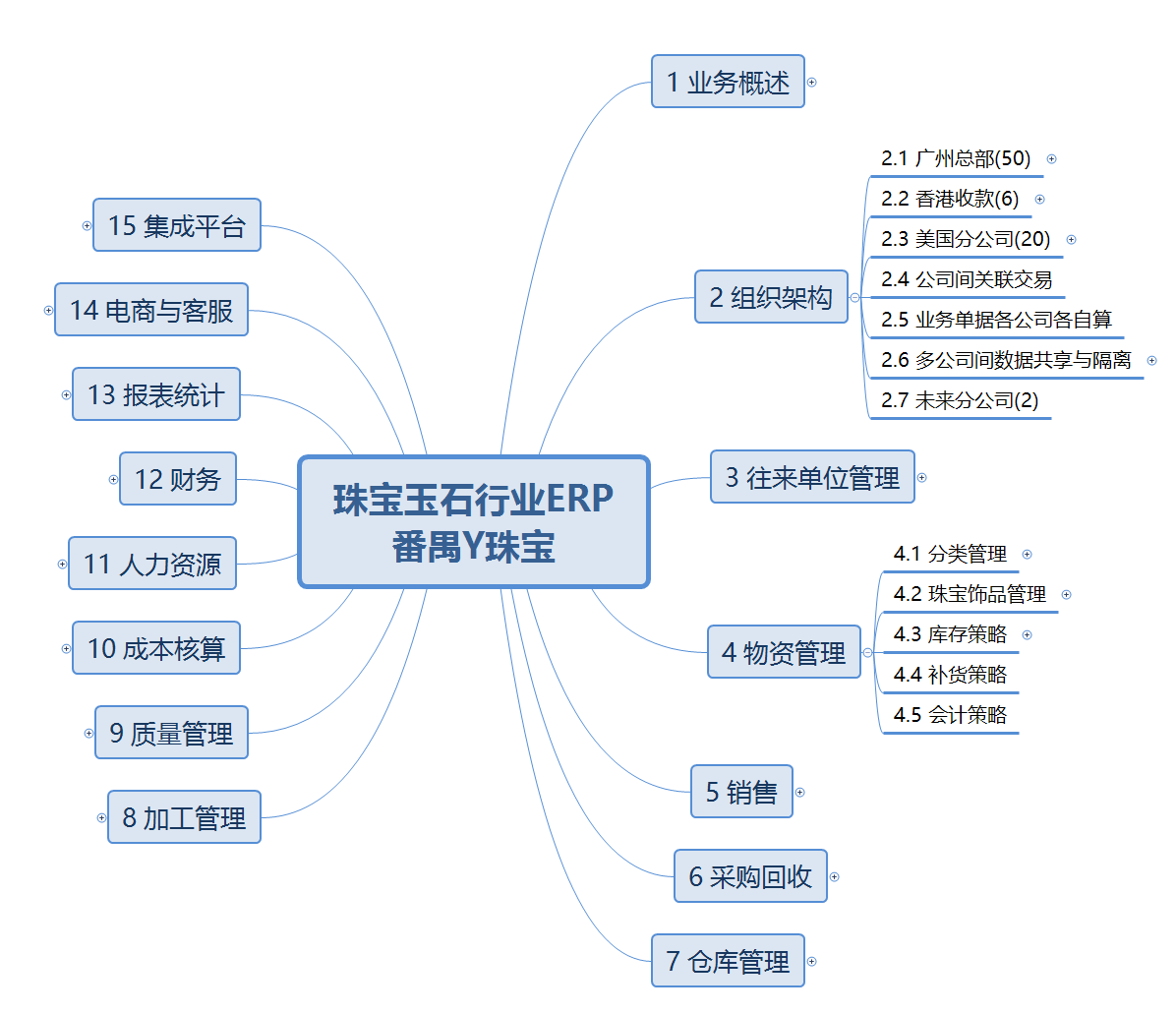
As competition in the jewelry industry intensifies, how to effectively carry out production management, supply chain collaboration, and customer demand response has become a focus for major enterprises. Odoo ERP, as an open-source and powerful enterprise resource planning software, is attracting increasing attention. This article will introduce the advantages and features of developing a jewelry ERP system with Odoo, and discuss how the system can achieve core functions and improve enterprise efficiency.
2. Advantages of the Odoo Jewelry ERP System
Compared with traditional ERP software, Odoo has the following significant advantages:
- Highly integrated: covers multiple modules such as finance, purchasing, and sales;
- Easy to extend: supports custom development to meet the needs of different industries;
- User-friendly: the interface is concise and clear, and easy to operate.
- Open source: can be continuously customized as the business grows, and you can enjoy powerful functions without paying extra fees;
Based on the above features, Odoo has been widely applied in the jewelry industry.
Core functions of user concern:
- Product Development
- Process Flow
- Supply Chain Management
- Engineering Management
- Production Planning
- Outsourced Processing
- Quality Management
- Multi-company Transactions
- Human Resources and Administration
- Financial Management
3. Functional Features
In response to the needs of jewelry users, Odoo has specifically designed a comprehensive solution—Odoo Jewelry ERP. It mainly includes the following aspects:
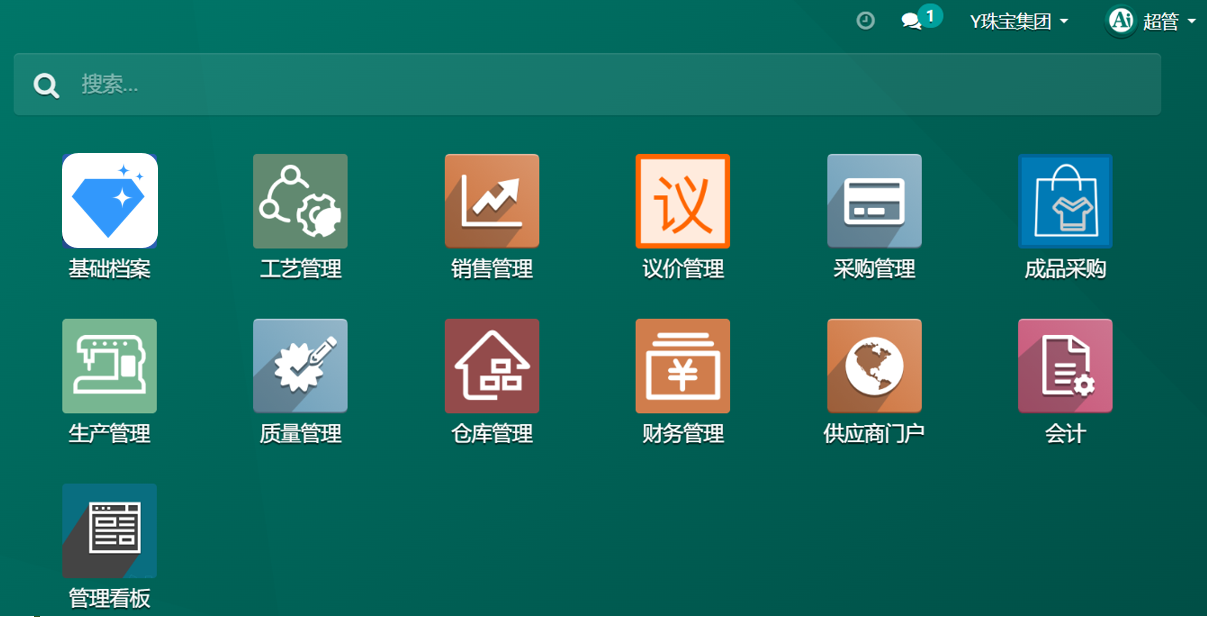
3.1 Supply Chain Management
By integrating purchase orders and material requirements planning (MRP), it enables precise monitoring of raw material procurement and scrap loss during processing; at the same time, it establishes a stable and flexible global supplier network to ensure smooth raw material sourcing channels.
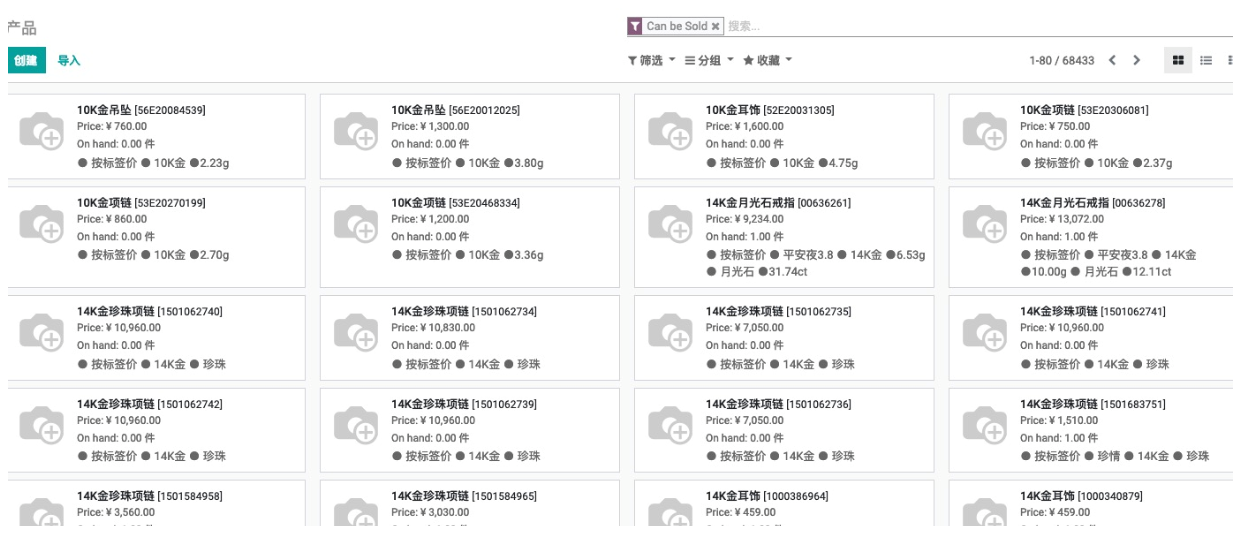
3.2 Order Tracking and Inventory Control
With intelligent warehousing technology, order status can be tracked in real time upon order generation, ensuring timely response to customer needs; meanwhile, refined inventory management strategies reduce inventory costs.
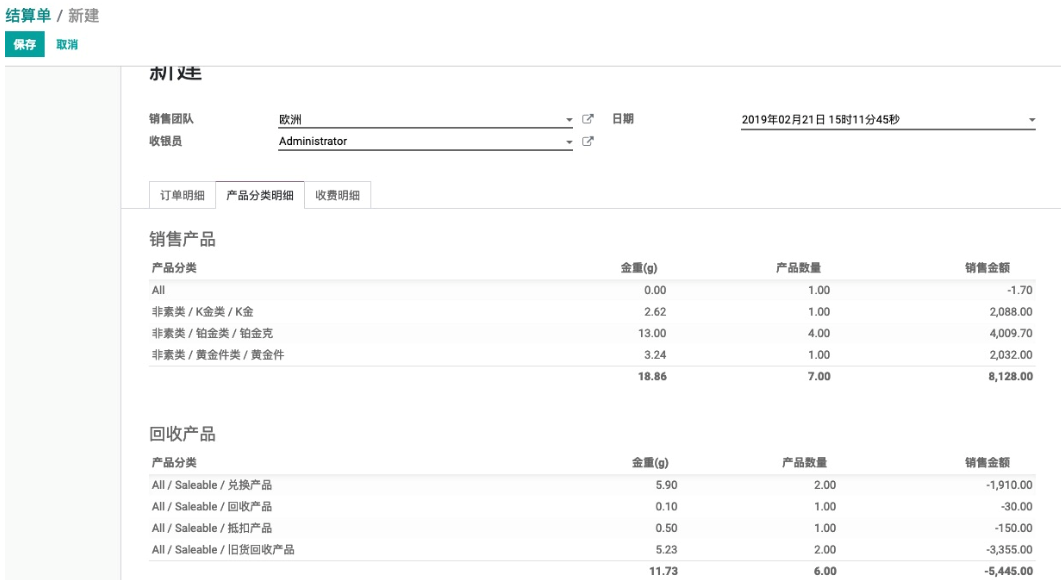
3.3 Jewelry Customization and Flexible Manufacturing Management
Odoo Jewelry ERP supports multi-level customization and personalized design of products, and closely integrates them with production planning. In addition, the system features flexible manufacturing capabilities, enabling rapid adjustment of production lines to meet changing market demands.
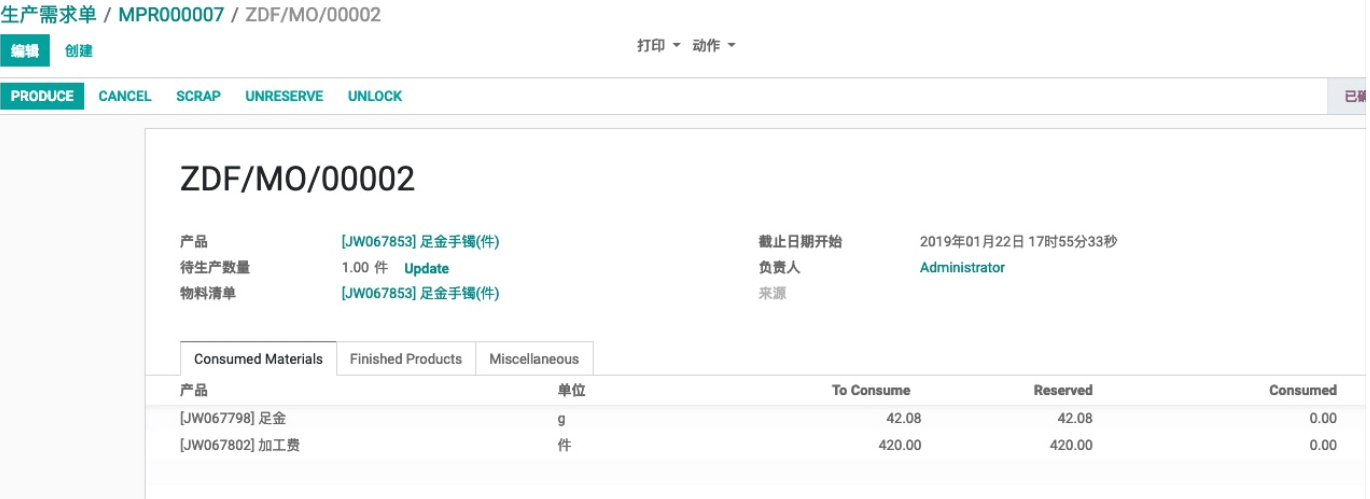
4. Current Pain Points, Integration of Production and Sales, and Integration of Business and Finance Requirements
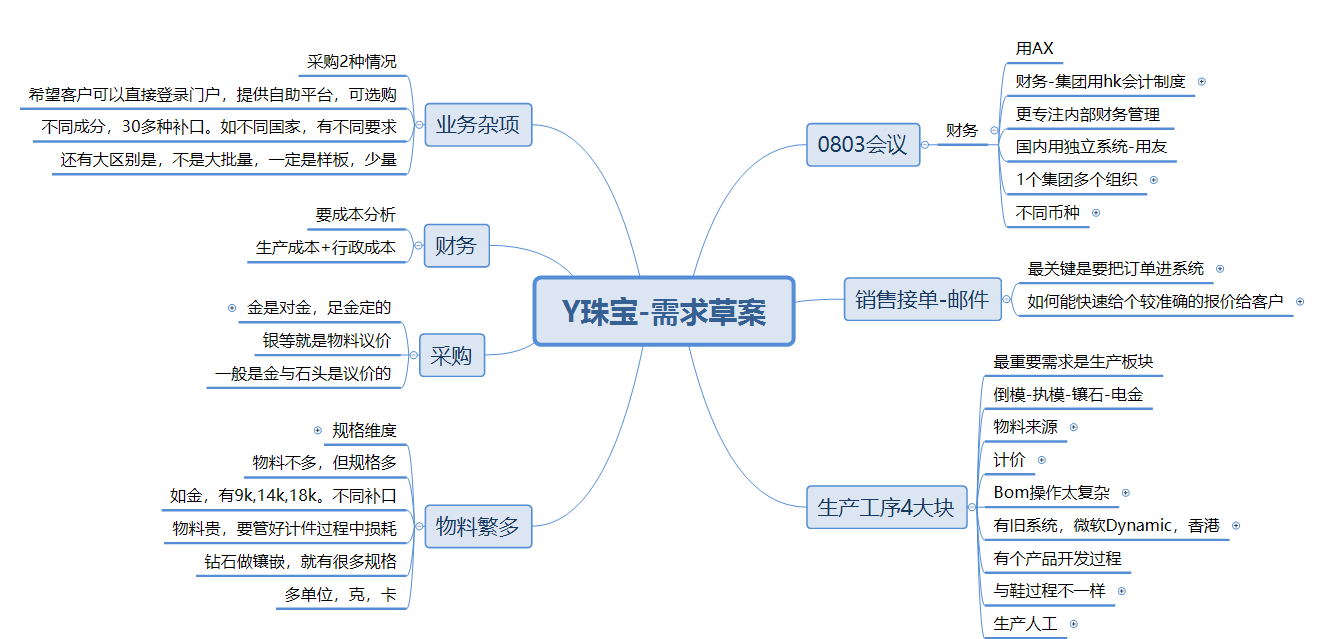
Through on-site research at Company Y, we have identified the main requirements, some of which are listed below:
5. The important role of improving enterprise efficiency and reducing costs
By implementing the Odoo jewelry ERP system, enterprises can effectively integrate resources across departments, optimize workflows, and improve information transmission speed. This not only helps improve employee work efficiency and reduce labor costs, but also reduces expenses in areas such as raw material procurement prices and accelerating capital turnover.
Non-standard jewelry customization is one item one code plus a fixed price
Jewelry orders often have one style per piece, and gold weight, stone weight, labor costs, and old material recycling must be recorded separately. In the system, serial numbers are used to manage individual pieces, BOM records metals, diamonds, and accessories, processes record mold making, stone setting, and polishing, and costs are written back based on actual materials and labor costs.
When customers change styles, whether old materials can be deducted and how labor costs are recalculated must also be reflected on the same order. In the jewelry industry, non-standard manufacturing ERP first clarifies one item one code and labor costs, then discusses production scheduling.
6. Conclusion
In summary, in today's highly competitive jewelry industry, Odoo jewelry ERP has proven its powerful and flexible functional characteristics. It has demonstrated good performance in core areas such as supply chain management, order tracking, and custom production. Therefore, for companies seeking to improve operational efficiency and reduce costs, choosing Odoo ERP will be a wise decision with long-term value.
============= Supplement: Problem Resolution List ======
Finance |
Use AX | |||
| Finance - Group uses HK accounting system | Key | |||
| More focused on internal financial management | ||||
| Domestic use independent system - Yonyou | ||||
| 1 group with multiple organizations | 1 sales order created in 2 organizations | |||
| Basic information sharing | ||||
| Independent cost accounting | ||||
| At least 2 subsidiaries under the group, plus 1 e-commerce company | ||||
| Different currencies | Domestic sales | Domestic procurement, RMB | ||
| Processing with supplied materials | One production workshop | |||
Sales order taking |
The most critical thing is to enter orders into the system | BOM is very important | ||
| More changes occur during the early order process | ||||
| Some customers keep changing | ||||
| Frequent changes, such as color changes | ||||
| Changes during production are not significant | ||||
| How to quickly provide a relatively accurate quotation to customers | Different customers have different requirements | Different quotations | ||
| Different order formats | ||||
| Customers basically reject formats that do not meet their requirements | ||||
| Currently, a self-developed Portal generates the format | ||||
| Generally, Excel format is provided to customers | ||||
Production processes |
The most important requirement is the production module | |||
| Casting - Filing - Stone Setting - Electroplating | ||||
| Material Source | Gold | |||
| Stone | ||||
| Accessories | ||||
| Pricing | By Material + Labor Hours | |||
| BOM operation is too complex | No one can remember the material codes alone | |||
| Has an old system, Microsoft Dynamics, Hong Kong | Slow, cannot be changed flexibly | |||
| Processes do not match common situations | ||||
| There is a product development process | ||||
| Different from the shoe process | Product cycle is not long, basically all materials are prepared in advance | |||
| Check material inventory first, purchase only if insufficient | ||||
| Rarely purchase by order, mostly purchase by inventory | Even if purchasing by order, it is by percentage | |||
| For example, when buying stones, Grade A is required | The purchased result is A-D, and screening and grading are done after purchase | |||
| Therefore, the procurement results are basically unrelated to production and will be used for multiple production orders. | ||||
| Production labor | Different materials mean different process prices. | |||
| Process prices are related to materials; there are many manual processes and less machine involvement. | ||||
| Throughout the overall production process, the process requirements are very high. | ||||
| Not only ERP, but more importantly MES. | ||||
| Scrap materials are very important; dust must be collected, and handwashing water must also be collected. | ||||
| The factory is nearby; the entire group in Guangzhou has over 300. | ||||
| There are outsourced production lines. | Pure outsourcing: provide materials, outsource processes. | |||
| Fully outsourced, but in reality, our company provides materials to the supplier through another company. | ||||
| Material monitoring is extremely strict, down to 0.00x grams. | ||||
| Numerous materials, specification dimensions. | Gold | Color; color and joint are one-to-one. | ||
| Joint | ||||
| Fineness, 9k, 14k | ||||
| Accessories | Similar to gold | |||
| Stone | Category, ruby | |||
| Cut surface | Grid | |||
| Polished | ||||
| Shape | Round | |||
| Oval | ||||
| Size - * is specification | 8*6 | |||
| 6*4 | ||||
| Grade | A-D | |||
| Optimization treatment, only 2 specifications | ||||
| Few materials, but many specifications | ||||
| For example, gold has 9k, 14k, 18k. Different alloys | ||||
| Materials are expensive, need to manage loss during piecework | ||||
| Diamond setting has many specifications | ||||
| Multiple units: gram, carat | ||||
Purchasing |
Gold is priced against gold, based on pure gold | Only process price is set | ||
| Gold price must be the same-day price, according to the day's market price | ||||
| Silver etc. are material negotiated prices | ||||
| Generally, gold and stones are negotiated prices | ||||
Cost |
Requires cost analysis | |||
| Production costs + administrative costs | ||||
Miscellaneous business items |
Two procurement scenarios | |||
| We hope customers can log in directly to the portal, providing a self-service platform for selection and purchase. | ||||
| Different compositions, over 30 types of solder. Different countries have different requirements. | ||||
| Another major difference is that it's not large-scale production; it's always samples, small quantities. |
The products currently sold are mainly divided into 2 types: plain gold and inlaid items.
Plain gold pricing falls into 2 types: fixed price, and the other is based on the gold market price * weight, plus a labor fee
Labor fees are divided into 2 types: labor fee by weight, and labor fee by piece
Inlaid items are all fixed price
Branded goods, such as China Gold, Chow Tai Fook, and similar brands, regardless of plain gold or inlaid items, are all fixed price
They are priced at a fixed price
For self-sourced goods, the factory mainly earns the labor fee. Usually, you go to the factory's showroom to select products. The selected products are weighed together
and the number of pieces is recorded. Labor fees differ for different types of products. So settlement with the factory is mainly divided into metal
+ diamonds + labor fee. In the settlement of metal and diamonds, recycled old material must also be deducted. This part is relatively complex and will affect
the calculation of product cost
For self-sourced goods, after returning to the company, they must be weighed separately to check whether the number of pieces and weight match those on the supplier's list.
This requires defining each product.
For recycled old material, inlaid items must be split into metal + diamonds
At the time of sale, there will also be old material recycling. The recycling price directly offsets the sale
Sales commission
Cost analysis