“Smart Scenic Area” refers to the highly integrated combination of scientific management theory withmodern information technology, creating a low-carbon, intelligent scenic area that achieves harmonious development between people and nature. It can more effectively protect the ecological environment and provide visitors with higher-quality services.
With the internet as the medium and the deep integration of digital technology and information and communications technology with the cultural and tourism industry, Odoo empowers smart cultural tourism to create a brand-new industry form.
With the arrival of the 'era of independent travelers,' tourism demand has become increasingly diverse. Traditional travel service providers and scenic area managers face a growing urgency for data integration. For example, travel agencies' upstream and downstream service providers and scenic area owners, beyond using OTA channels such as Ctrip and Douyin, increasingly want their own controllable online distribution and internal management platforms. On one hand, they connect online and offline channels; on the other, they achieve integrated business and finance, integrated e-commerce, and an efficient combination of increasing revenue and reducing costs. Guangzhou Odoo Smart, drawing on its experience in the tourism industry and actual customer projects, has launched customized online travel distribution platforms and internal management platforms.
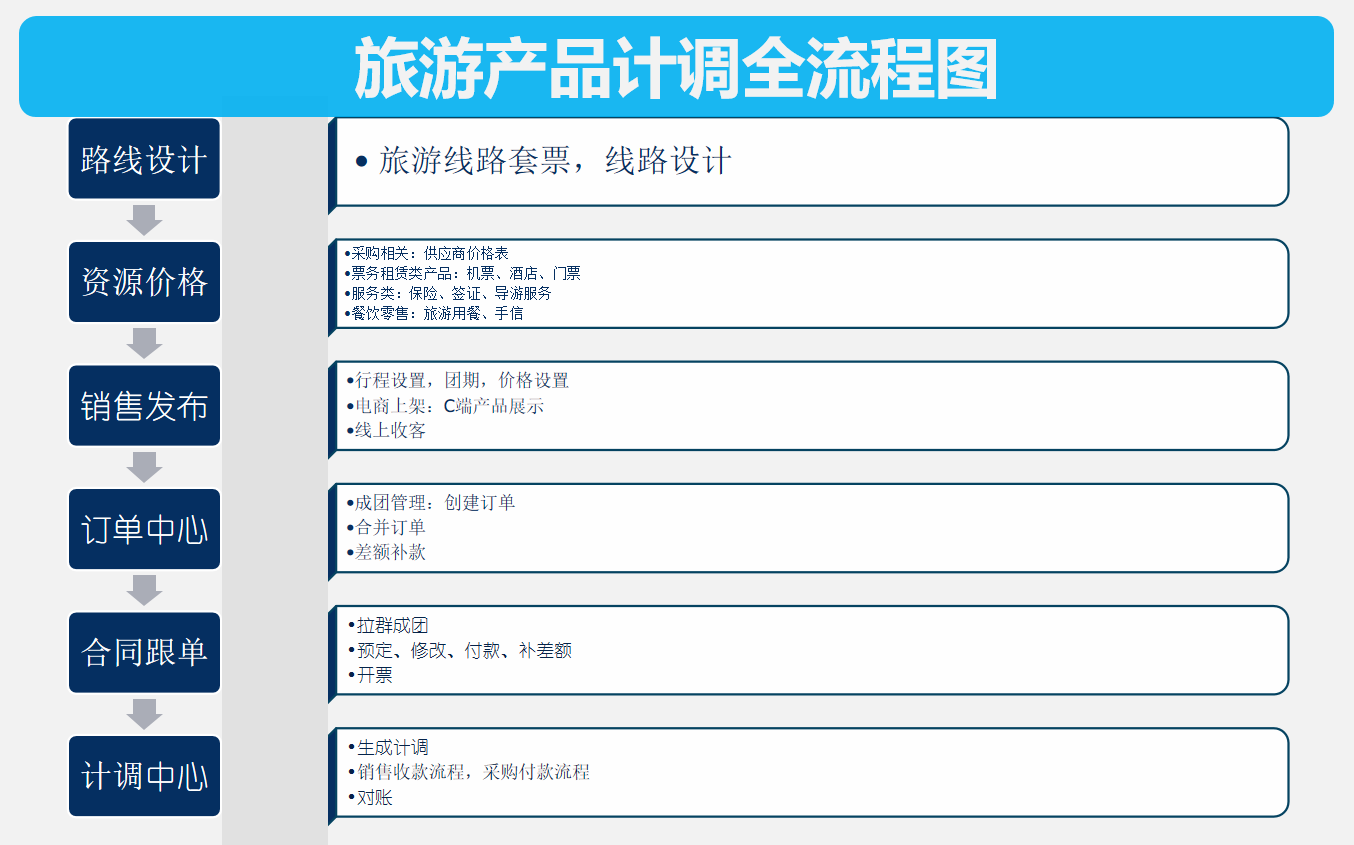
1. Comprehensive Management Scenarios for Travel Agencies and Tour Operators
A smart cultural tourism management platform built on Odoo, the open-source ERP with the largest user base in the world. It combines a mobile front end with a management back end. It integrates tour group management, online e-commerce for flights and hotels with back-end settlement management, online and offline scenic area ticket management, automatic procurement for resource planning, automatic reconciliation of financial settlements, and visitor flow and user analytics. For tourism groups, it provides a smart service platform covering all elements, all scenarios, and the full lifecycle.
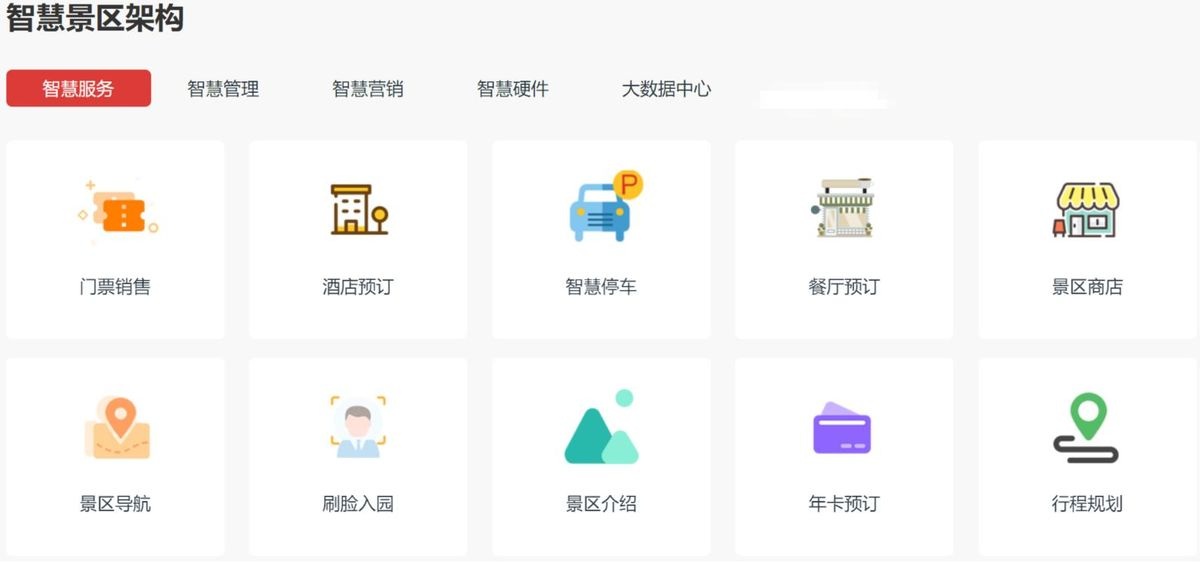
2. Smart Scenic Area Consumption Scenarios
Today's consumers are accustomed to booking and purchasing tickets online in advance and planning their itineraries for all consumption activities. All consumption scenarios are handled on mobile devices. Due to factors such as untimely, incomplete, and insecure data interoperability on third-party platforms, travelers choose to use a scenic area's own smart portal to obtain better comprehensive services. For example, portal websites, mini programs, and apps. A scenic area's own platform needs to integrate the area's resources for dining, accommodation, transportation, sightseeing, shopping, and entertainment, and incorporate commonly used traveler functions such as ticket turnstiles, traffic management, and smart parking. This improves the scenic area's comprehensive management and operational capabilities, thereby better serving visitors.
Solves the pain points of traditional scenic area management:

Access without barriers using QR codes and facial recognition

The system offers comprehensive functionality, managing all business scenarios and the entire workflow of the tourism industry.
Dashboard

Sales Data Analysis

Comprehensive travel agency operations management features, with a per-group management interface that follows a single order through to completion, making it easy to coordinate all data

An online store that supports instant ordering with multiple plans and attributes, and supports WeChat Pay, Alipay and other payment methods.

Financial management interface designed for travel agencies and scenic spots

Dispatch & Supply Chain - Full-Cycle Order Tracking Management
In the tourism industry, the supply chain for the commonly used 'flight + hotel' package has its own industry-specific characteristics. Travel agencies typically require tourists to pay in advance, for example one month ahead, because the components of the package such as hotels, flights, and visas all need to be purchased in batches in advance. Airlines and hotels, in turn, often require travel companies to make purchases within designated time periods; for example, the 'New Year peak season' rule allows booking only half a period in advance. Therefore, time-sensitive order tracking management, commonly known as travel operations coordination, becomes extremely important. In Odoo's full supply chain management, the relevant timing and tracking management functions are highly complete, and through Odu Intelligence's optimization, we can easily achieve comprehensive operations coordination management.
The approach to globally scheduling the supply chain model unique to the tourism industry in ERP, namely MTO (automatically generated per order) with designated sales intervals, designated procurement intervals, and designated delivery intervals.
So how can this scenario be implemented in Odoo 18, 17, 16, 15, 14, and 13? Let's analyze it using the following example:
In the following example, we treat the travel route as a package product and combine resources through BoM. For more detailed and optimized processing, please refer to our odooAi travel route/smart attraction management solution.
- 14-day Europe tour flight + hotel package, departing on December 30;
- Price: Adults 13,000 yuan, Children 8,000 yuan;
- Product composition: Adults include flight + hotel, children only include flight;
- November 22: Tourist places order -- system generates sales order
- December 15: Travel agency purchases -- system generates purchase order;
- December 23: Deliver travel voucher -- system generates delivery order;
1. Set up product prices and composition
In travel product management, we can set up various products, and then use flight + hotel + car rental + attraction tickets, etc. to form package route products.
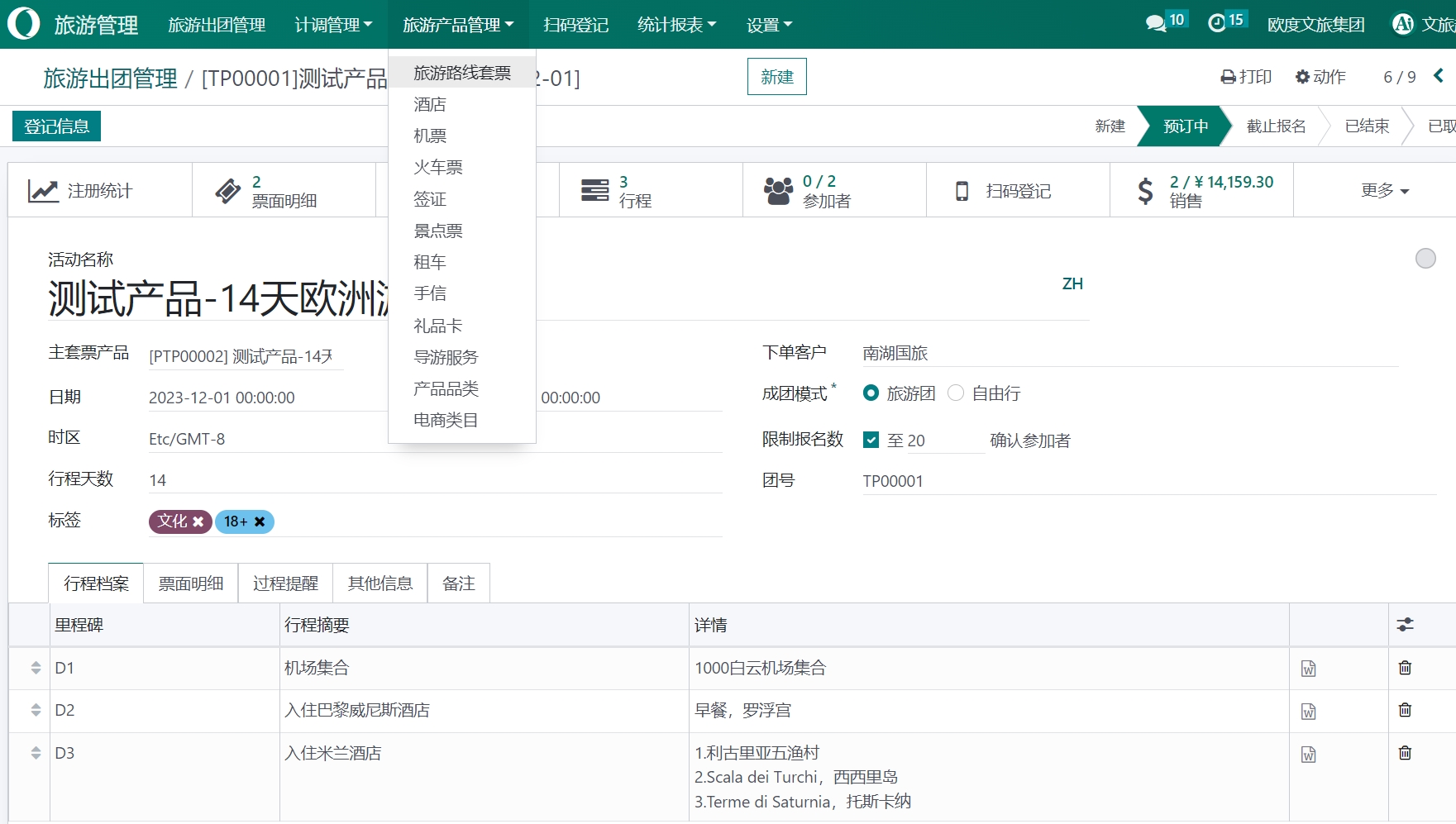
Adult price includes flight + hotel 13,000 yuan, child price only includes flight 8,000 yuan
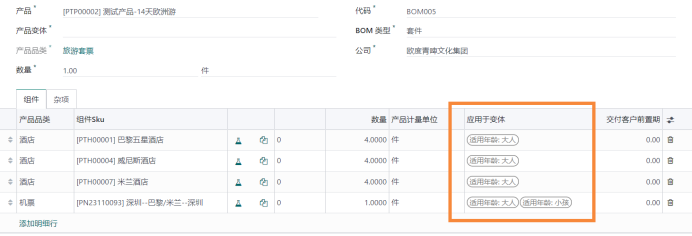
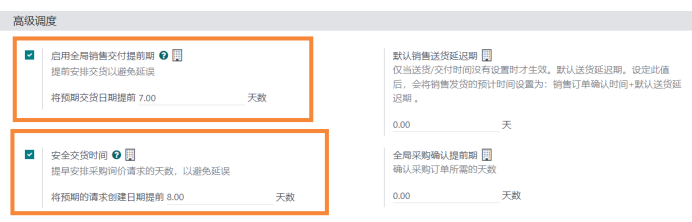
2. Set up global advanced scheduling to automatically run orders and achieve the following effects:
After generating a sales order, automatically generate a purchase order; 7 days before the departure date, automatically generate a delivery voucher; 8 days before the delivery voucher date, automatically generate a purchase order.
3. Customer places an order on the website, one adult and one child
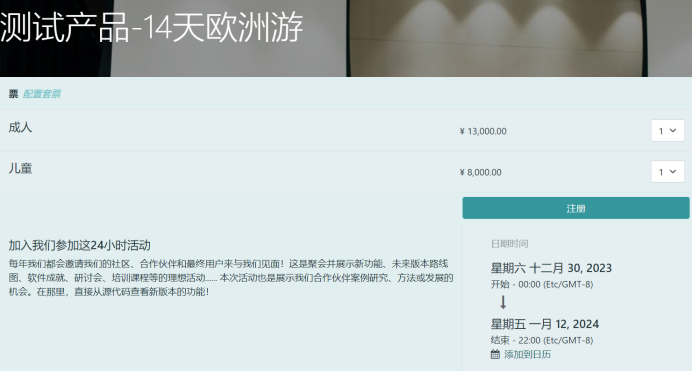
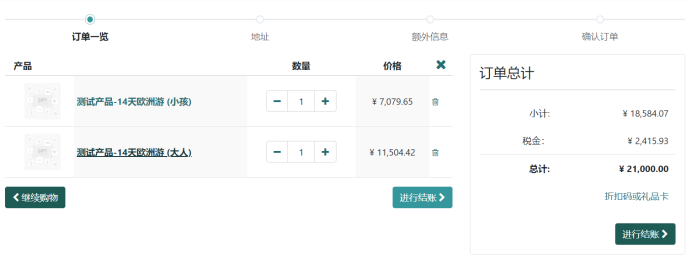
After order confirmation, pay directly online via WeChat or Alipay.The mobile app supports an independent self-operated mini-program with integration. Integration with Douyin and Ctrip orders is under development.
4. Confirm the order and schedule the travel date as December 30.
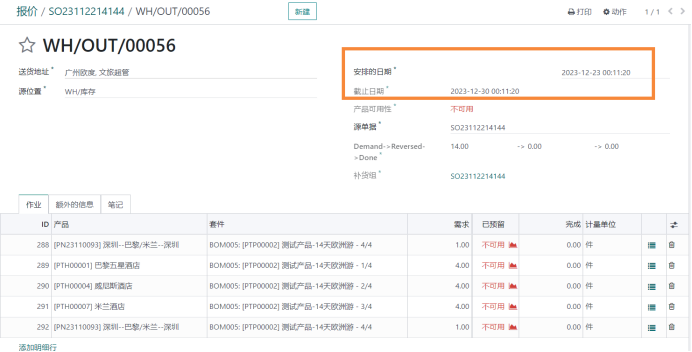
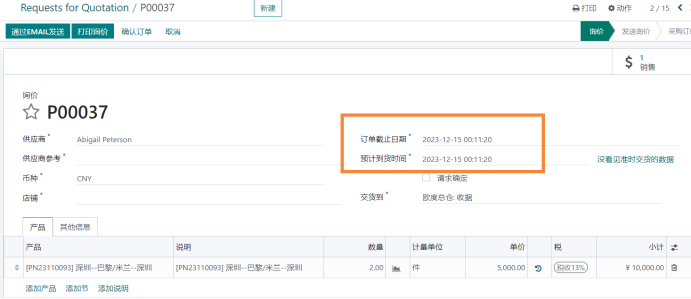
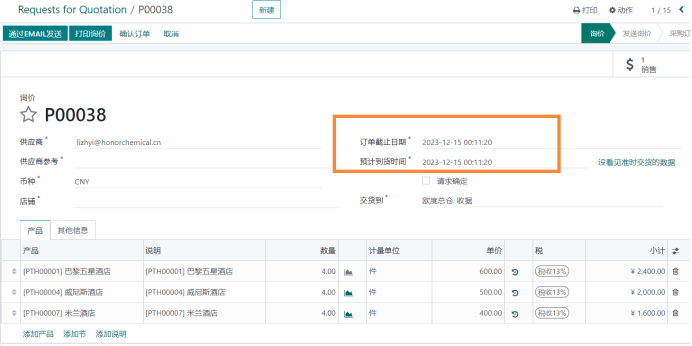
5. The system automatically generates delivery vouchers and purchase orders

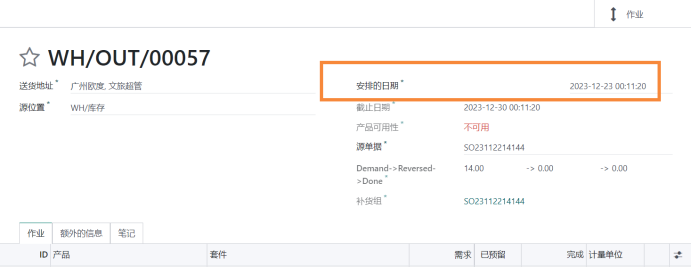
Two purchase orders are automatically generated for purchases from different suppliers, with the deadline automatically set on December 15
Delivery vouchers for tourists are automatically scheduled for December 23.
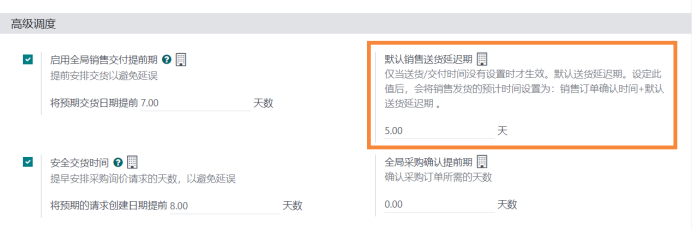
6. Default Sales Delivery Lead Time
Can be applied to regular, frequently departing tour groups
For example, for small weekend groups that require booking 5 days in advance, this feature can be used.
7. Automated financial settlement, cost and profit carryover

The case display feature is developed by Guangzhou Odu Intelligent based on the Odoo framework. For details, please consult customer service.
Full-process management - itinerary design, operations, finance
Fully Implement Travel Agency Tour Group Management
The Odoo Smart Travel solution is suitable for tourism parks, travel agencies, airline ticket agents, hotels and restaurants, and other travel service providers, comprehensively managing the supply chain and operations progress tracking related to tour groups.
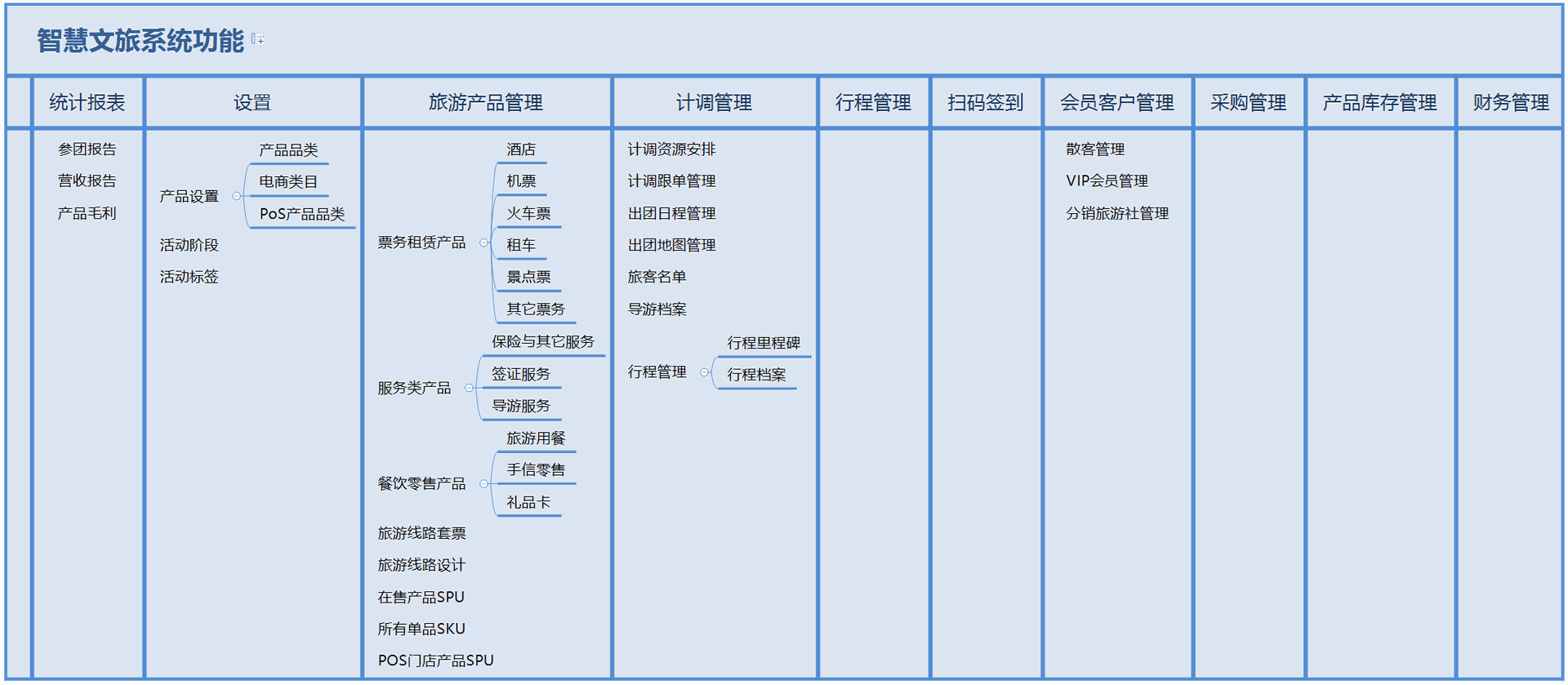
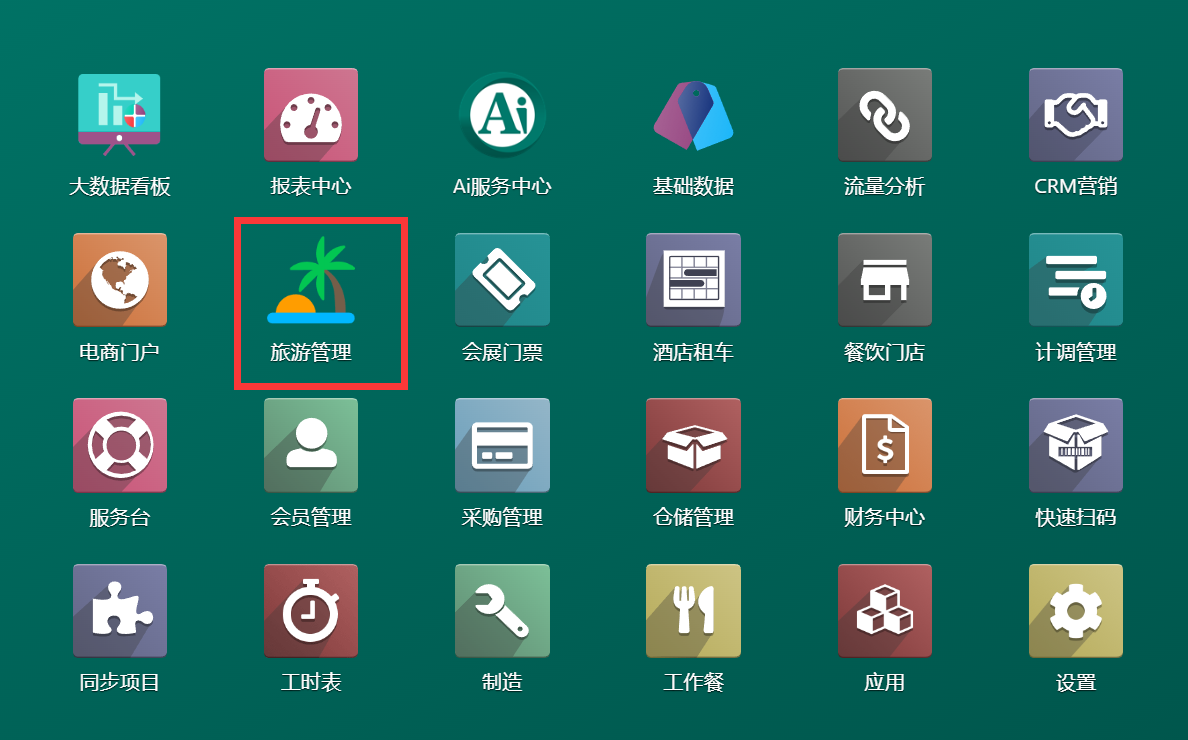
1. Basic Settings
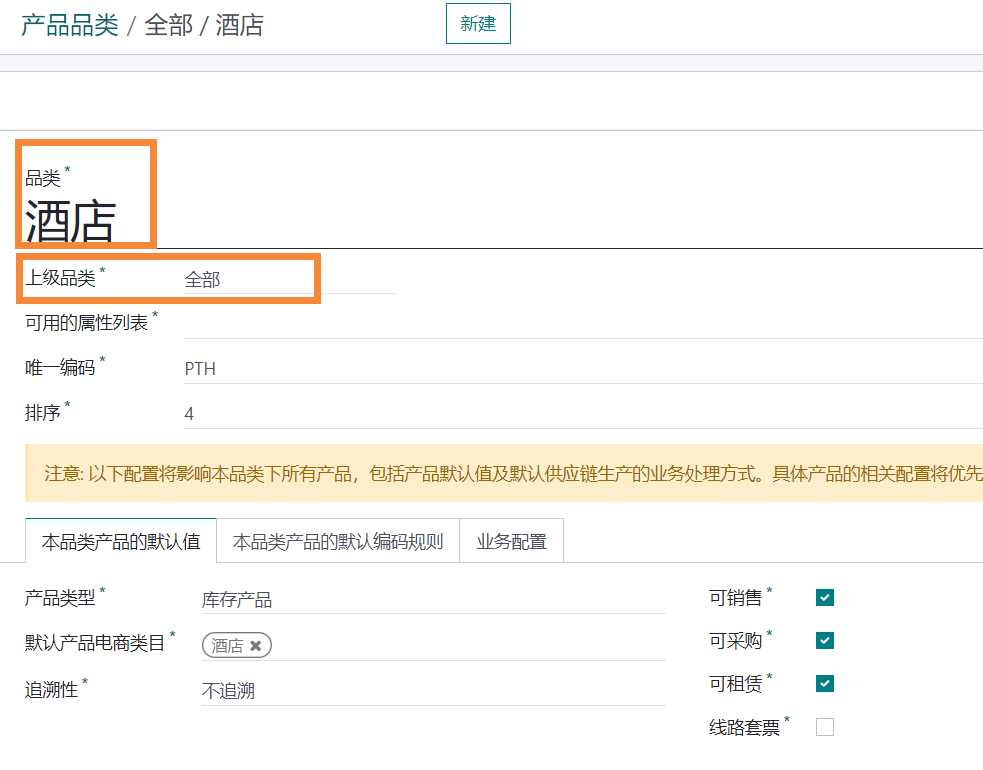
1.1. Category Settings
Entry: Tourism Management--Settings--Product Categories
All are currently set up; you can add new ones or make changes as needed.
The items framed in the following figures are all required fields
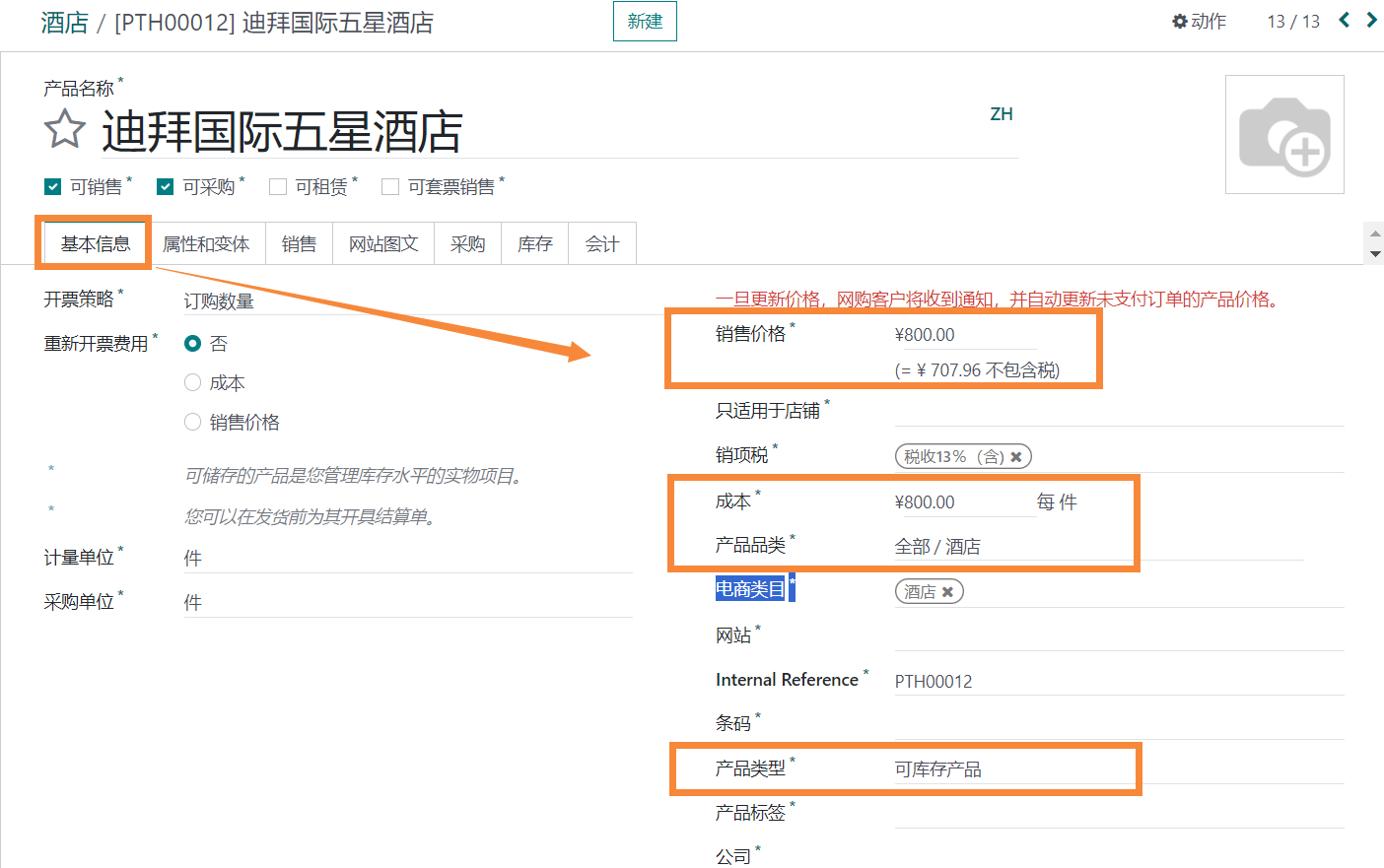
1.2. Product Settings
Entry: Tourism Management--Tourism Product Management--Ticketing and Rental Products
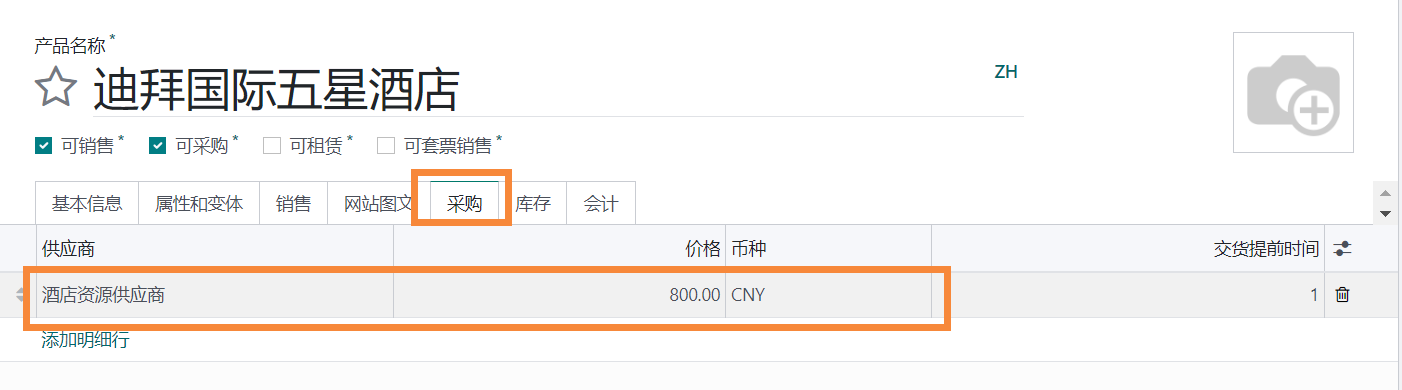
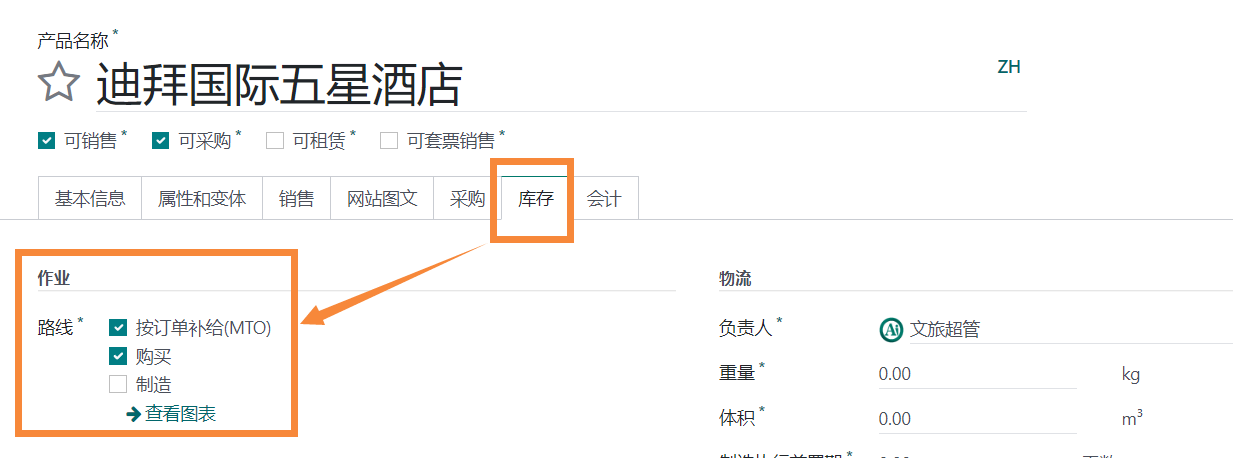
All products involved in tourism routes, such as air tickets, hotels, visas, attraction tickets, and meals, are part of the route composition. You must first create these products and select the [Product Category] and [Product Type].
The items framed in the following figures are all required fields
Basic Settings
Purchase Price Settings
Replenishment Route
2. Tourism Route Design
Step 1: Entry: Tourism Management--Tourism Product Management--Tourism Route Packages
First create a new product, for example [Premium Dubai. 5 Nights 6 Days Reference Itinerary], select [All / Tourism Route Packages] for product category, and select [Replenish by Order] for inventory route.
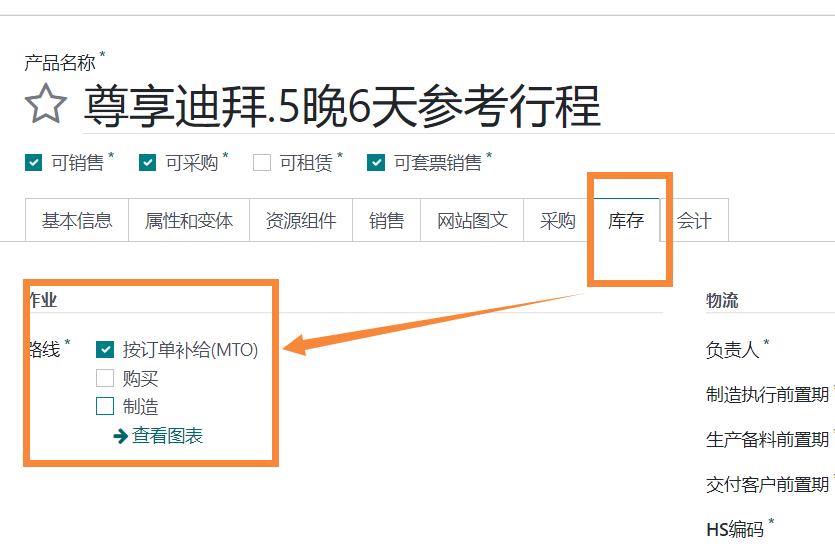
Step 2: Add components to the product, i.e., air tickets, hotels, visas, etc.
Entry: Tourism Management--Tourism Product Management--Tourism Route Design
Fill in as shown in the figure
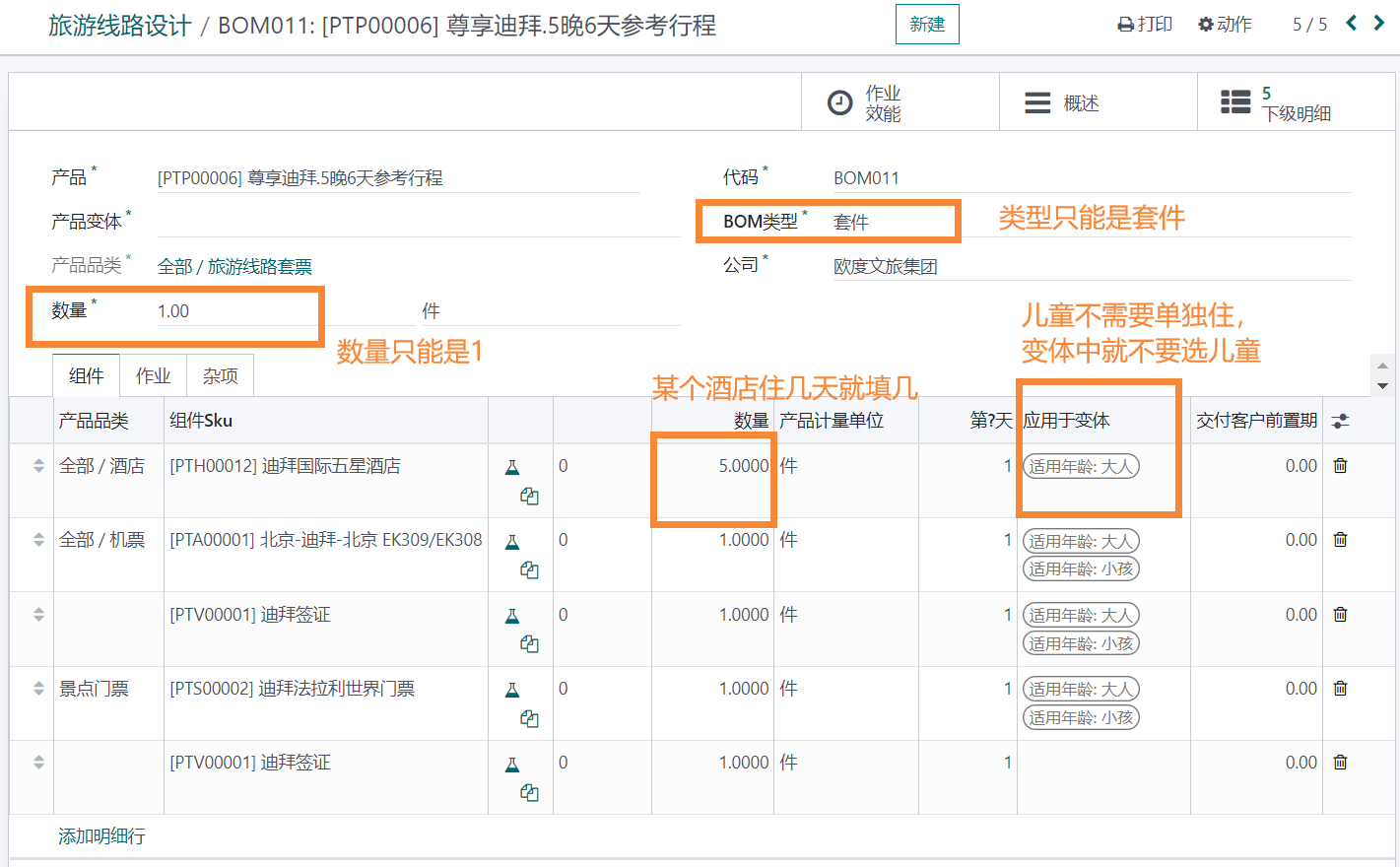
3. Resource Pricing
3.1. Basic Price Settings
SeePurchase Price Settings in [1.2]
3.2. Supplier Price List
4. Sales Publishing
4.1. Set Up Products
Path: Tourism Management -- Tour Departure Management
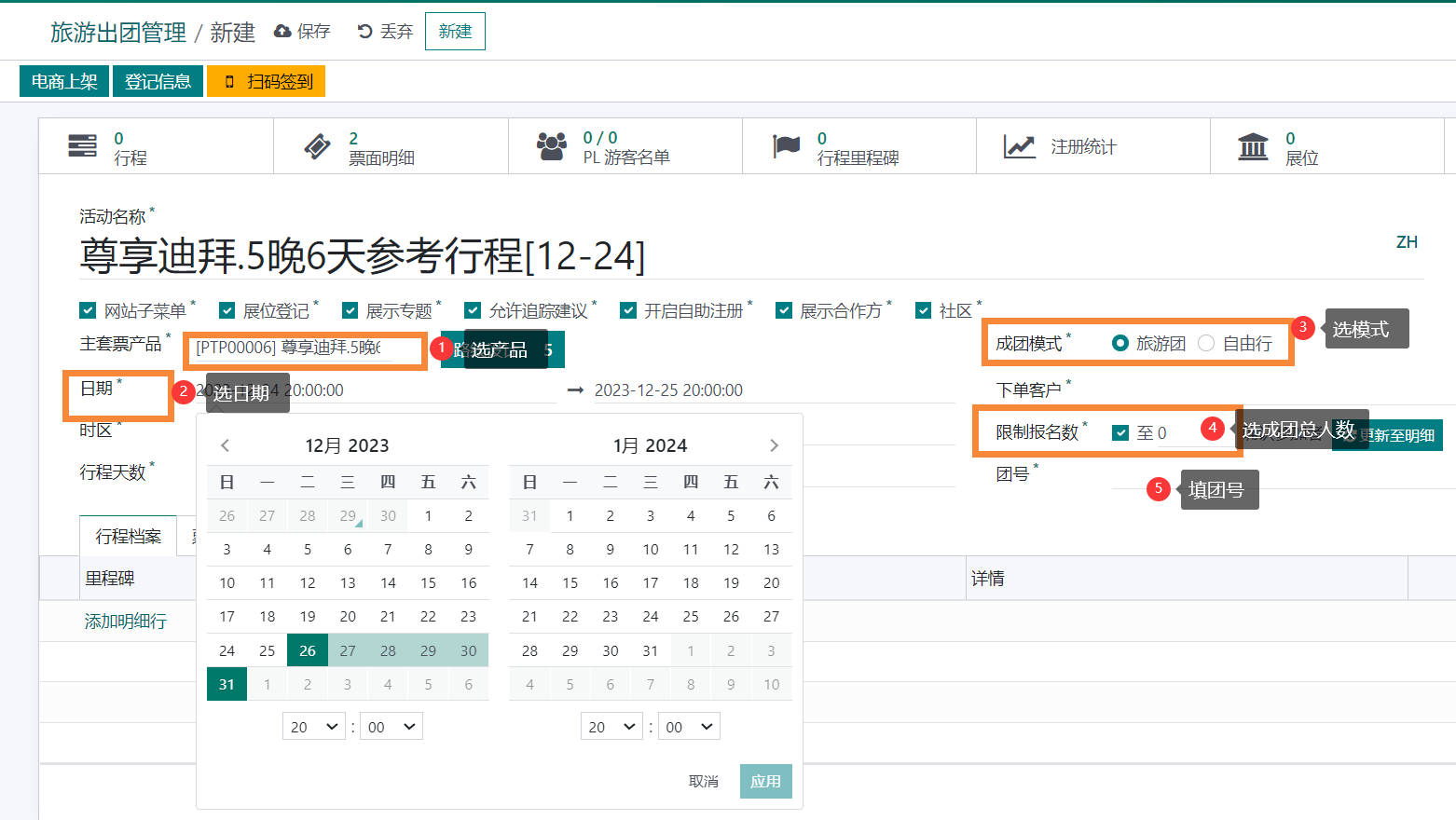

Different Prices for Adults and Children

4.2. Publish Products
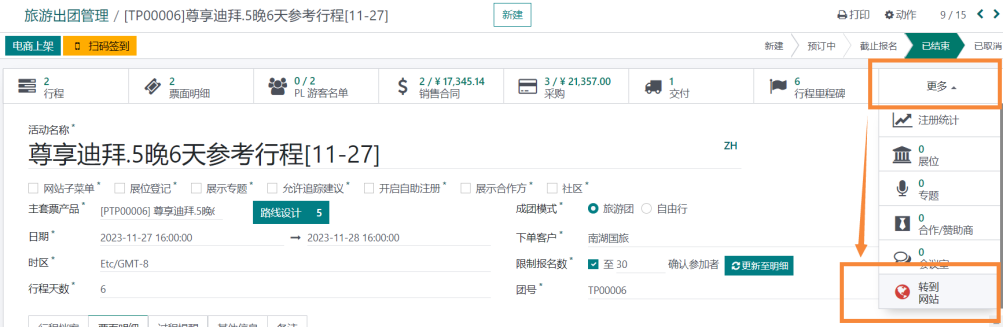
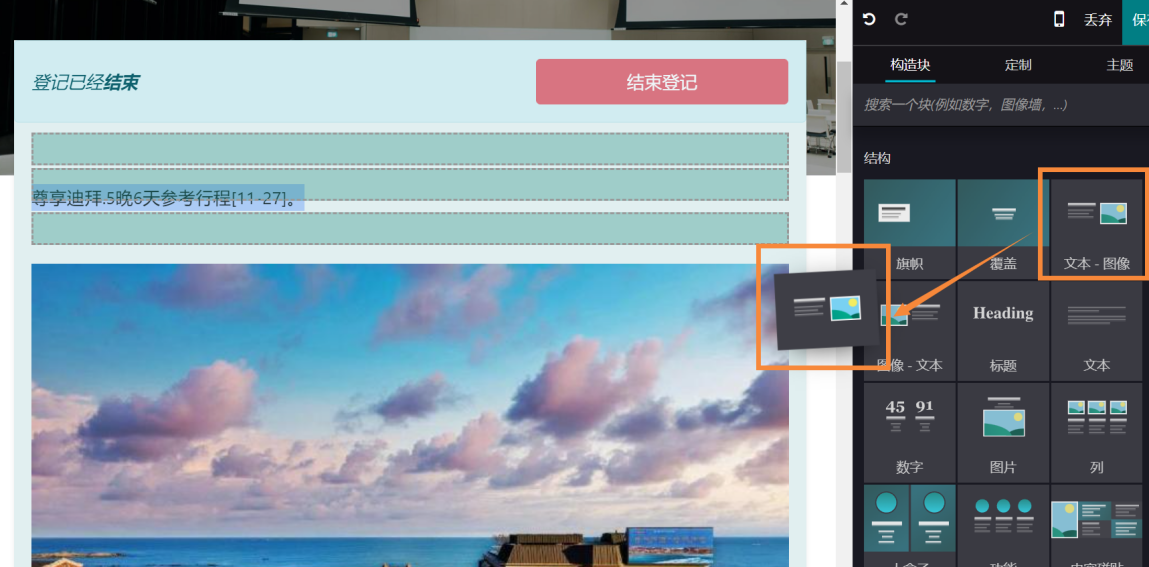
Publish products on the website and edit the displayed images and text 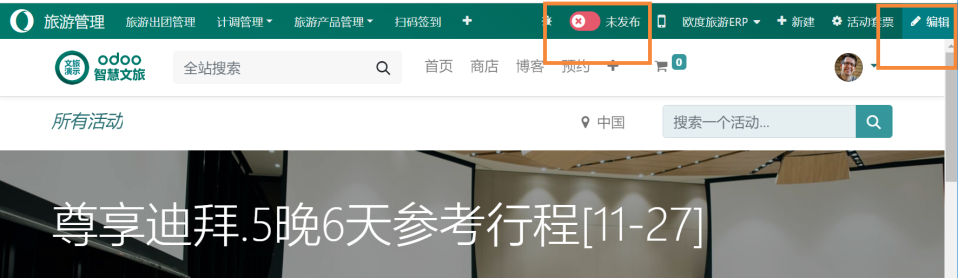
To edit images and text, simply drag the module onto the page
5. Order Center
Path: Tourism Management -- Tour Departure Management -- Select the tour to manage
In the registration information section, select [Existing Sales Order] (e.g., purchased through the website) or manually create a new one for the customer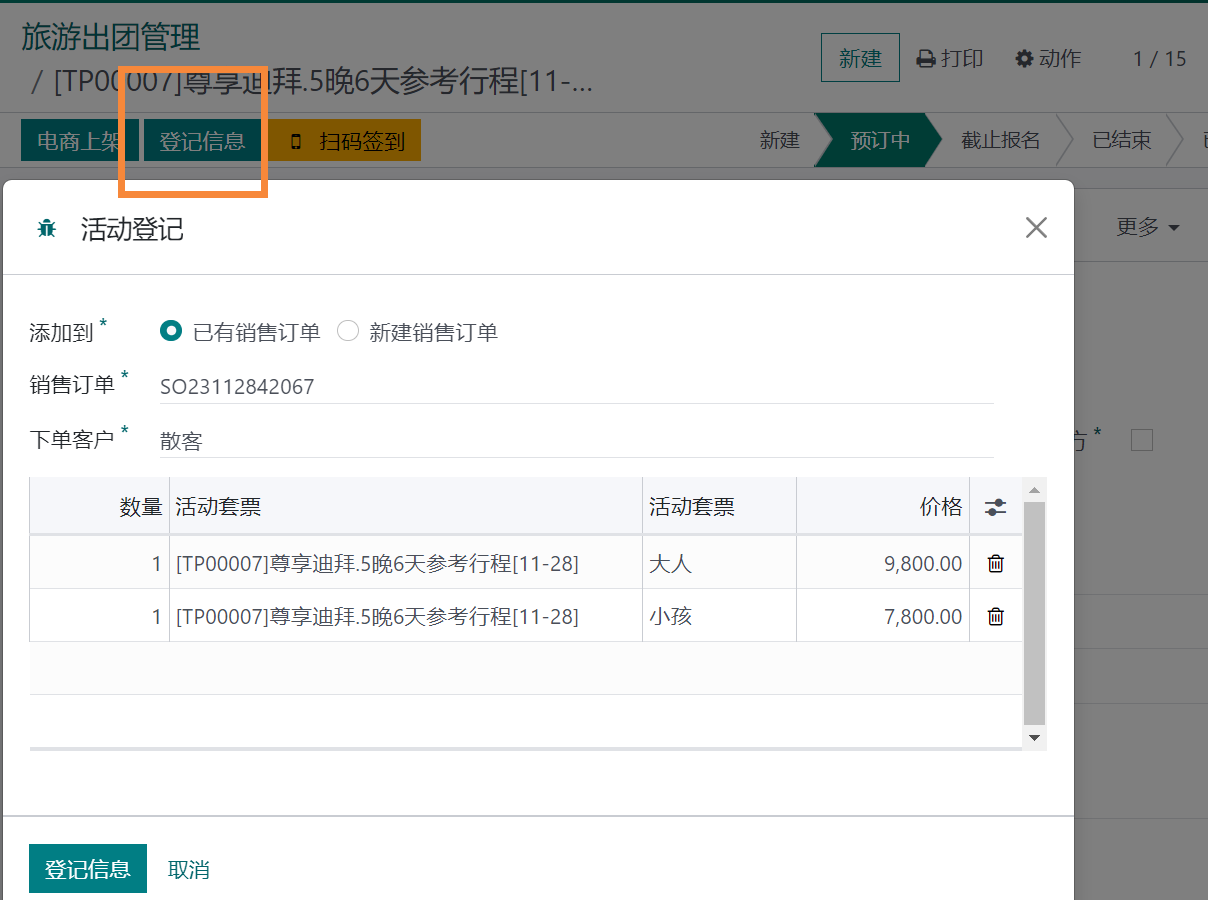
6. Contract Follow-up
Path: Tourism Management -- Tour Departure Management -- Select the tour to manage -- View a customer's sales contract
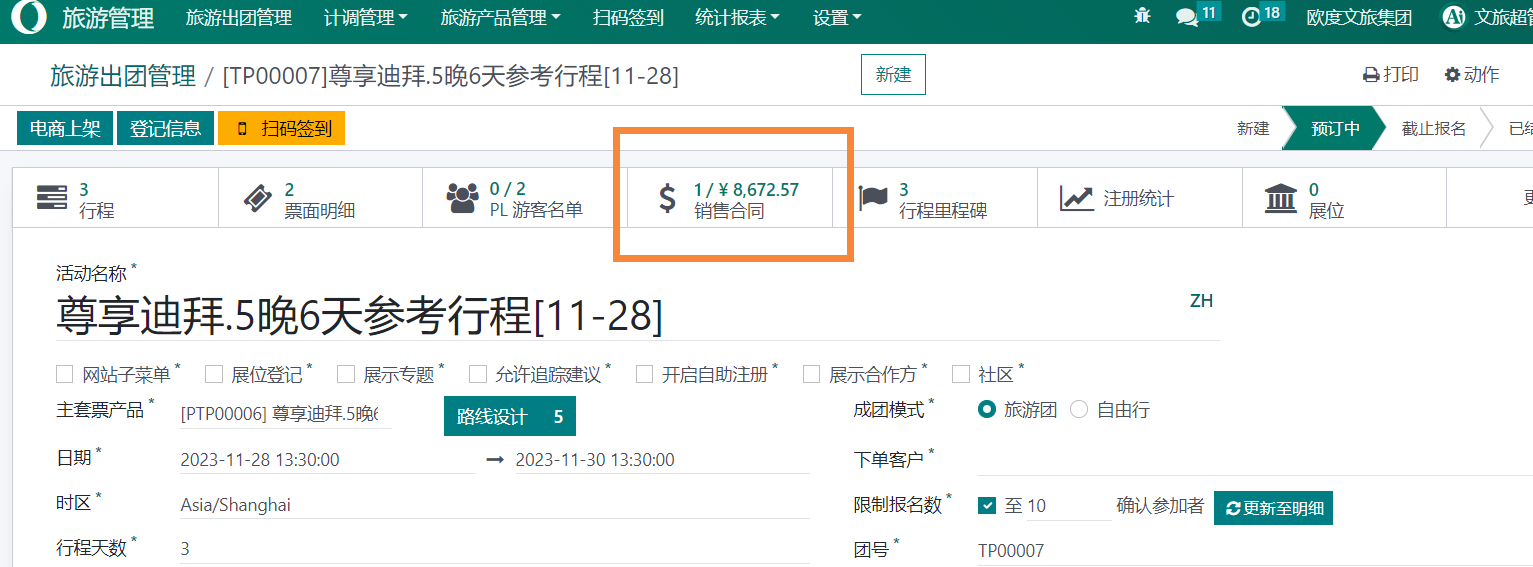
Click Activity to schedule follow-up on the customer's travel arrangements 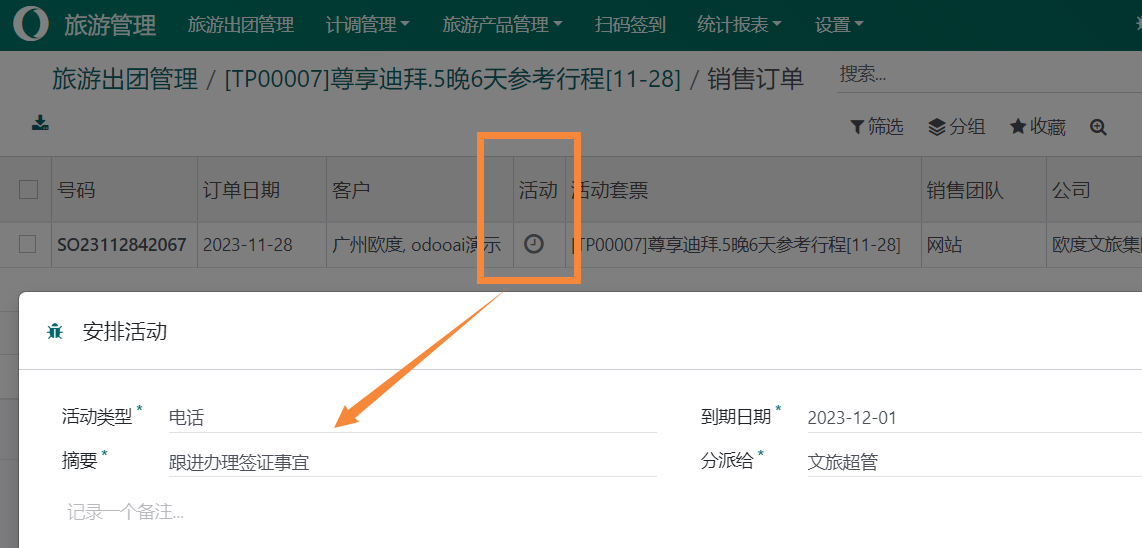
7. Operations Center
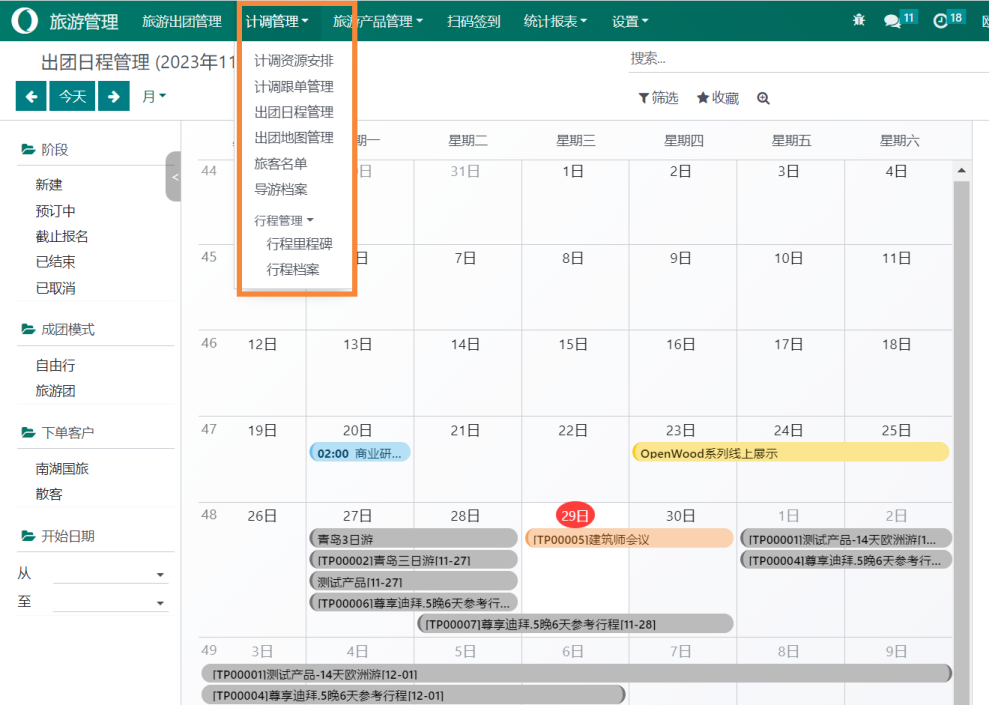
Path: Tourism Management -- Operations Management
All operations-related schedules are managed here and are automatically generated by the system based on the data in [Tour Departure Management].
8. Visual LED large-screen multimedia exhibition hall
