Introduction
Global industry is undergoing a transformation from traditional manufacturing to digital intelligent manufacturing. In the steel industry, digitalization is mainly manifested as: more and more steel enterprises are setting up e-commerce trading and logistics platforms to integrate demand, optimize supply, and tap new business opportunities from data; leading enterprises that dare to "eat crab" are introducing advanced big data analytics to achieve quality stability and efficiency improvements that manual experience cannot reach.

The following is from an odooai customer case: Company B business overview

Company B is an international group with global operations, serving the steel industry in 60 countries. Headquartered in Singapore, it is renowned for its quality, technical expertise, and service. Products and services: Engineering and solutions company. Providing reliable customized solutions worldwide. Product range includes products for various application fields such as centrifugal casting, static casting, forging, and sintering. Company B is a typical multinational enterprise operation model: overseas companies interface with customers, Hong Kong and Singapore companies handle order collection and finance, and the production supply chain is in mainland China factories.
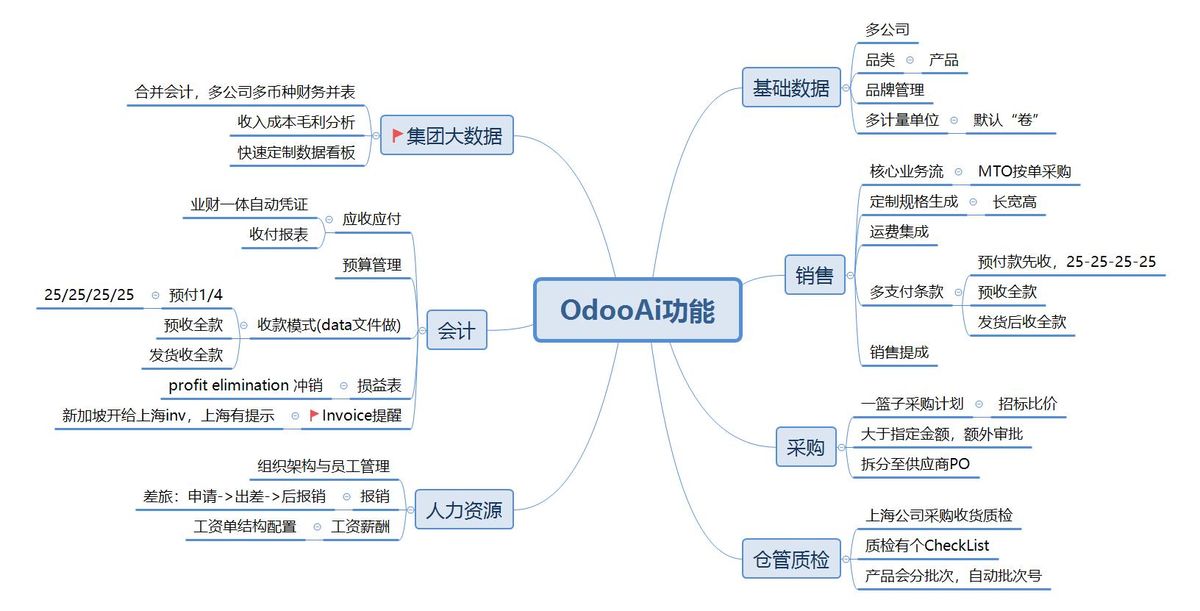
Company B is currently using odoo and is upgrading to the latest Odoo18 system. The group uses Odoo full-featured ERP, with multi-company and multi-organization structure support, and has fully launched sales, purchasing, warehouse management, supply chain management, quality inspection, global accounting, and human resources functions.
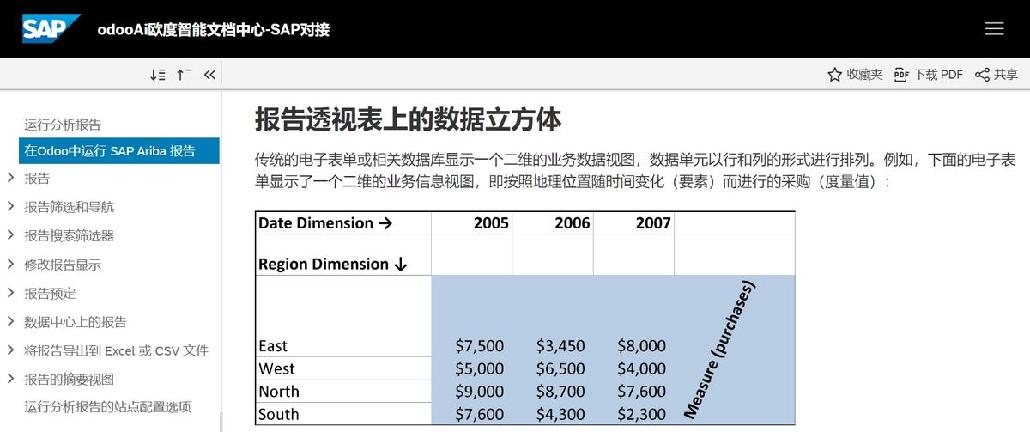
Interface integration with SAP Ariba
SAP Ariba is the world's largest procurement cloud service platform, and currently the vast majority of global bulk trade procurement is executed on Ariba. Public data shows that by 2017, its transaction volume reached 1.6 trillion, and Ariba's annual transaction volume is almost equal to the combined transactions of Alibaba, JD.com, Amazon, and eBay. With SAP's leading position in enterprise ERP, basically all global core enterprises procure on Ariba, including 95% of the Global 100, 85% of the Global 500, and 76% of the Global 2000 customers. Guangzhou Odoo Intelligent has quickly completed business integration and business-finance automation using Odoo according to actual customer needs.
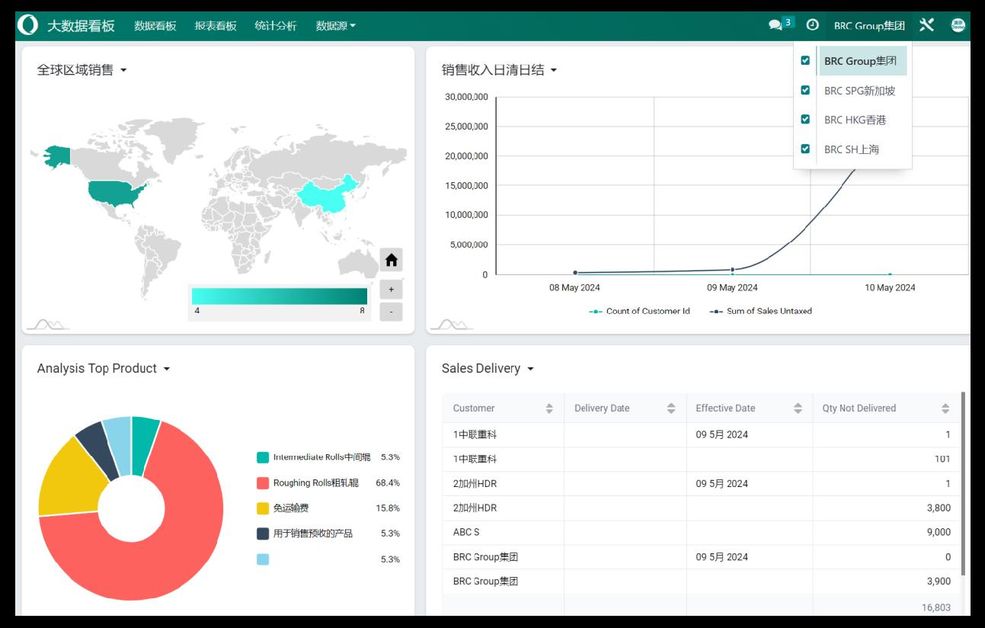
Global group management cockpit - multi-company, multi-currency, multi-business
Global company integration: independent data for each subsidiary; hierarchical data for each business department; multi-language, multi-currency, multi-time zone; automatic local currency general ledger.
BI data center: built-in full-business chart templates; AI realizes automatic data charts; multi-dimensional data presentation; visual configuration.
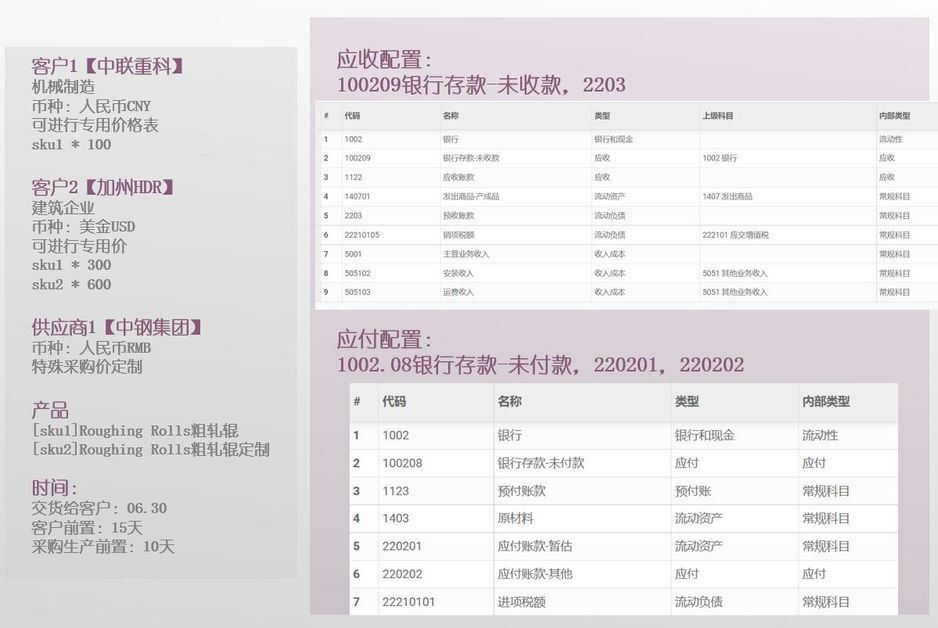
Automated related-party transactions
Group headquarters:
- Customer portal order placement Sale Order (SO)
Headquarters salesperson places order SO
Payment collection and bookkeeping
Replenishment calculation generation: Linked [SH] Purchase Order
According to inventory rules and purchase price list
Purchaser confirms order
Payment Accounting
- Affiliated Company Shanghai SH:
Automatically generate SO from head office PO
Replenishment calculation generates Purchase Order
According to inventory rules and purchase price list
Generate PO to downstream [Sinosteel Group]
Receipt, Delivery
Receipt/Payment Accounting
Global Group - Report Center - Quick Configuration
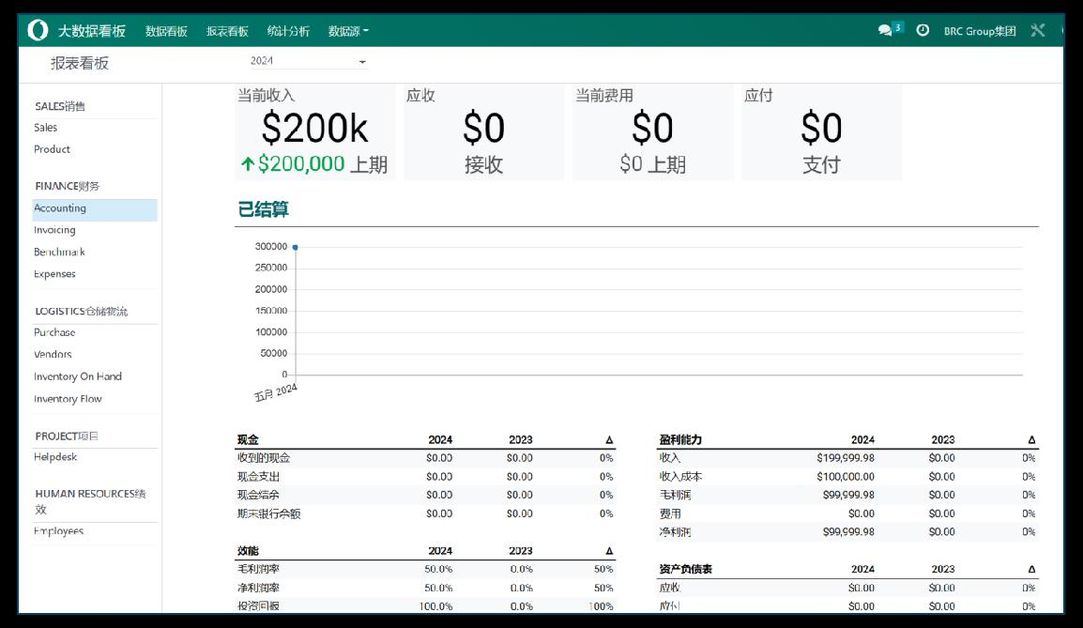
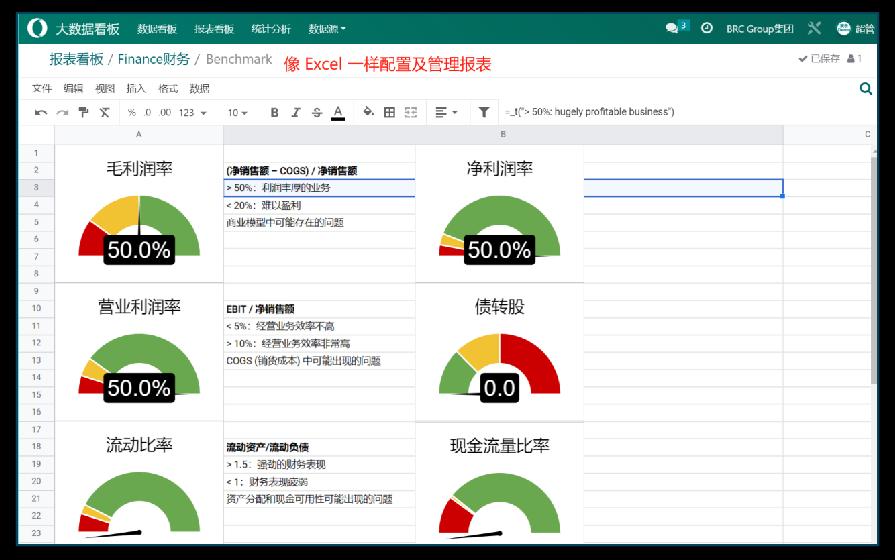
Centralized Report Center: Complete report design as required; Adjust quickly like Excel; Rich styles; Charts and KPIs
Fully automatic report generation: Automatic data collection and statistics; Set calculation methods to automatically Sum, Total, Count, etc.
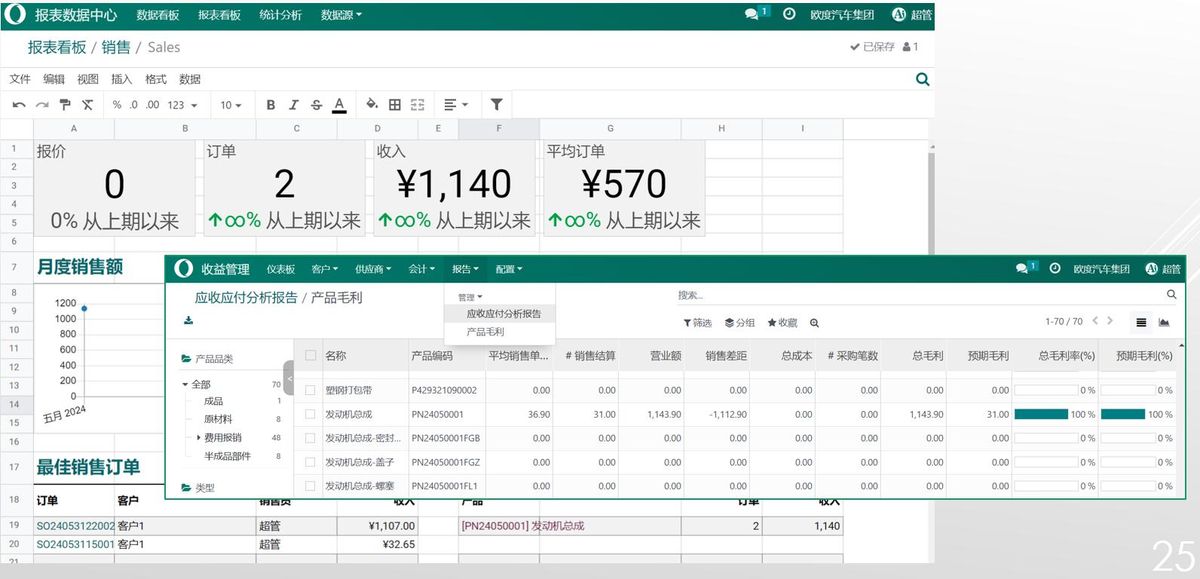
Built-in multiple reports: Sales gross profit and cost statistics; Purchase category summary; Sales category summary; Sales and purchase ranking; Product ranking; Project execution table
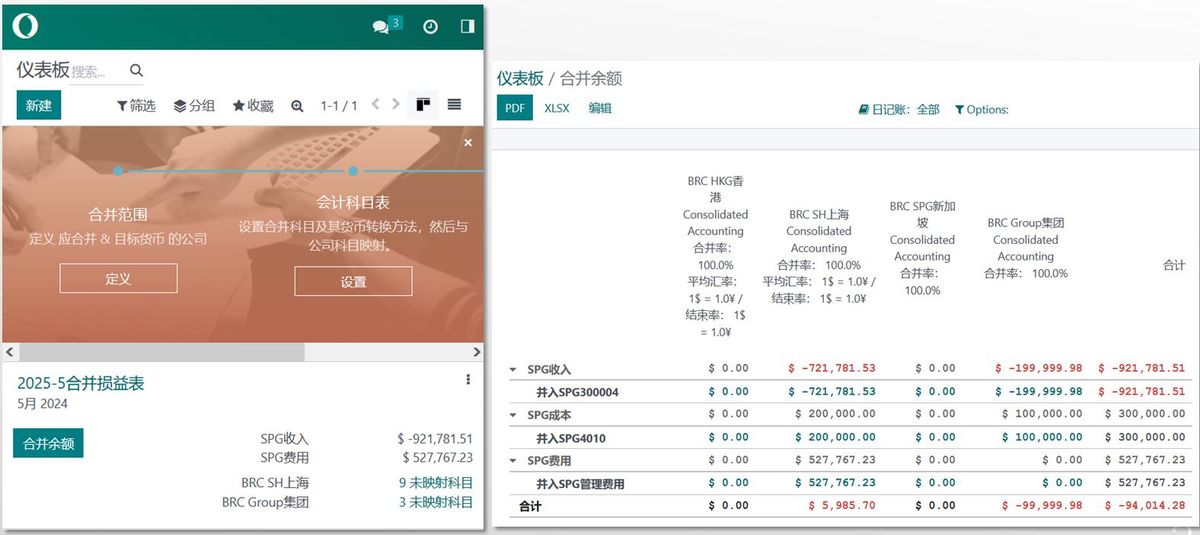
Global Group - Multi-company Financial Consolidation
Quickly consolidate multiple companies' finances into the head office financial report, with customizable configuration
Global Group - Excel-style Reports - Cost and Gross Profit Analysis
Human Resources HR - Payroll and Expense Reimbursement
Payroll: Configure salary structure; Calculate salaries regularly; Generate payslips
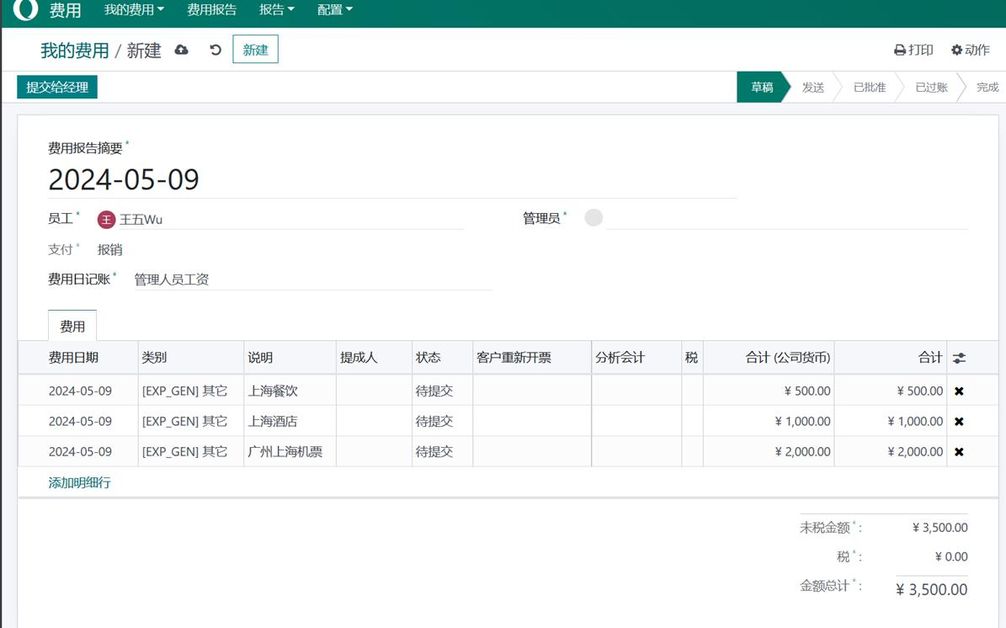
Reimbursement: Enter reimbursement items (customizable OCR scanning); Generate reimbursement reports; Review and pay; Automatically generate vouchers; Review and record; Automatic financial reports; Integrated with budget management

Employee reimbursement
Pain Points of Digital Transformation in Steel Enterprises
Insufficient core technical capabilities The information infrastructure and the foundation for digital transformation in the steel industry are relatively weak. Currently, key software, underlying operating systems, development tools, and other technical fields are basically monopolized by foreign countries, and core patents are lacking. | Lack of authoritative data standards The steel industry generates and utilizes a large amount of data every day, such as business management data, equipment operation data, and external market data. However, there are many types of industrial equipment and complex application scenarios. Different environments have different industrial protocols, and data formats vary greatly. Without unified standards, it is difficult to achieve compatibility and to convert data into useful resources. |
High steel logistics costs The logistics cost ratio in the steel industry has reached 11%, which is 2 percentage points higher than other domestic industries and 5 percentage points higher than counterparts in Japan and the United States. The biggest pain points are scattered logistics layout, complex backgrounds, large quantities, chaotic order, and inconsistent standards. There is an urgent need to establish a standardized, networked, and digital system with sufficiently efficient operations and a sufficiently large scale to provide support. | Multiple tiers across the industry chain The steel production process is complex. Even a single process may involve multiple industrial control systems, manufacturing execution systems, etc., and data sources are highly dispersed. In addition, the steel supply chain is very long, and the problem of multiple levels has long existed, exacerbating conflicts and resource waste. |
Severe overcapacity and a pronounced imbalance between supply and demand The steel market clearing mechanism and the survival-of-the-fittest mechanism have not been established. The unreasonable allocation of supply and demand information in the industry leads to market failure, and production enterprises cannot access market demand faster, more truthfully, and accurately, nor can they effectively match it. | Full-Scale Digital Rollout Blocked Many steel enterprises have been very successful in initial pilot projects for digital transformation, but they face numerous challenges when rolling out comprehensively. How to move beyond the pilot stage, achieve full-scale rollout, and break through bottlenecks is one of the keys to digital ecosystem transformation. |