

Open source MES/ERP device integration: PLCs, barcode scanners, printers, and weighing scales are plug-and-play, capturing real-time factory floor data to automatically update production progress and inventory.
Related solutions:Open Source ERP + Open Source MES Integration · Free Trial
IoT Made Easy
The IoT Box lets you connect external devices to your Odoo database.

Easy Setup
No time wasted, plug and play. Connect the IoT Box and the required devices to the database, no technical expertise needed.
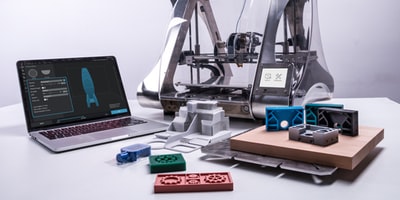
Fully Integrated
With the IoT Box, devices are fully integrated with your existing business processes, boosting your productivity.

Standard Connections
Devices can connect via Wifi, Bluetooth, USB, or HDMI.
1. Connect
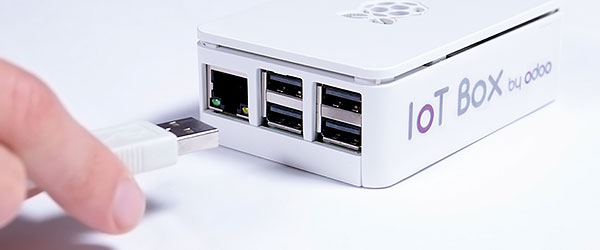
Detect Devices
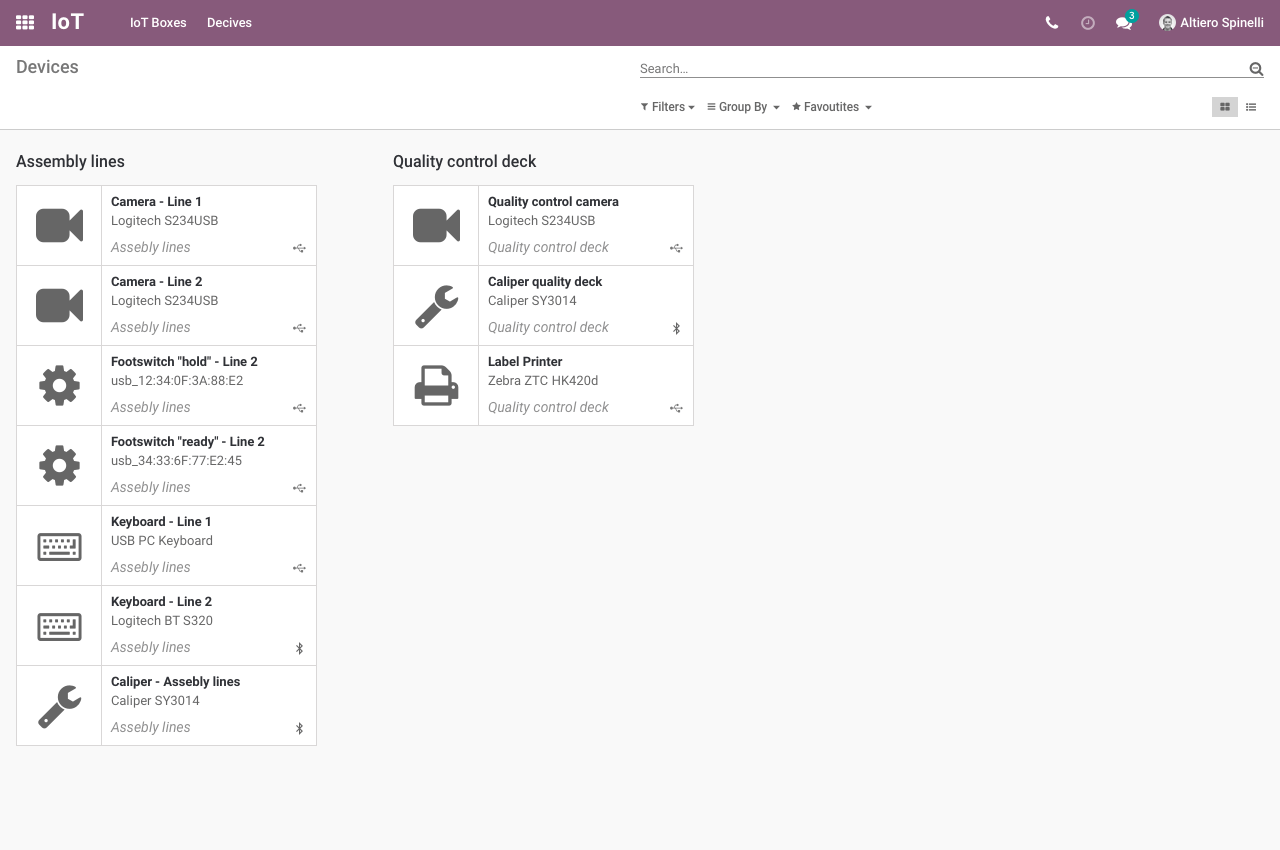
Link Actions
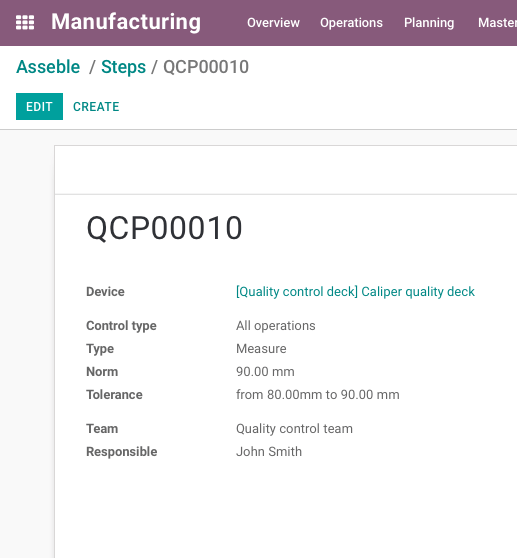
4. Start Using!
Boost productivity with ease!
Perfect integration
Discover how the IoT Box helps you integrate relevant devices into your business processes
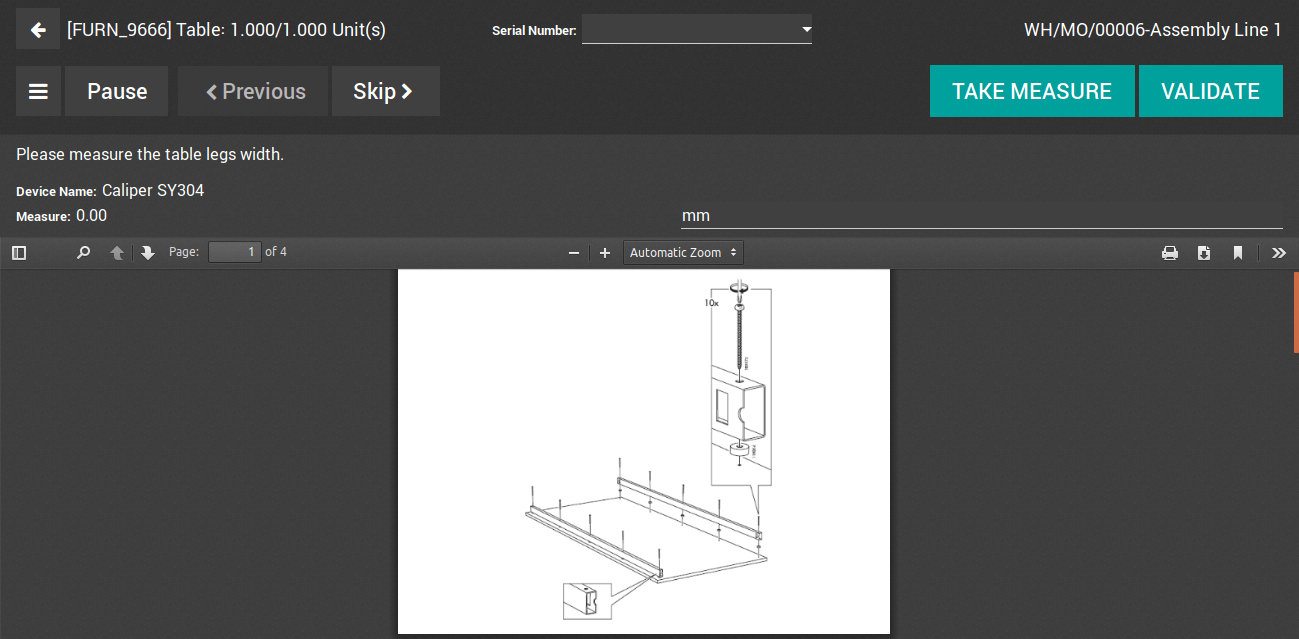
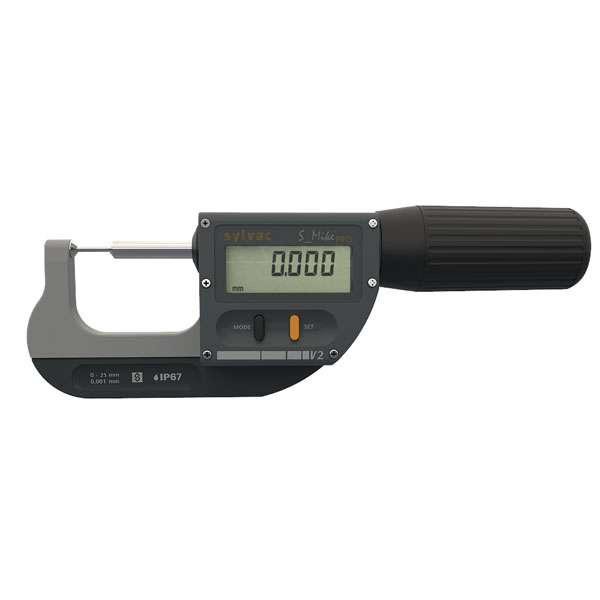
Add any measuring tool...
...such as digital calipers, micrometers, thickness gauges, height gauges, etc. Measurements are linked to the product you are working on, and you can choose to continue or reject at each step.
View measurements instantly, avoiding the risk of errors and extra time when manually copying measurement results.
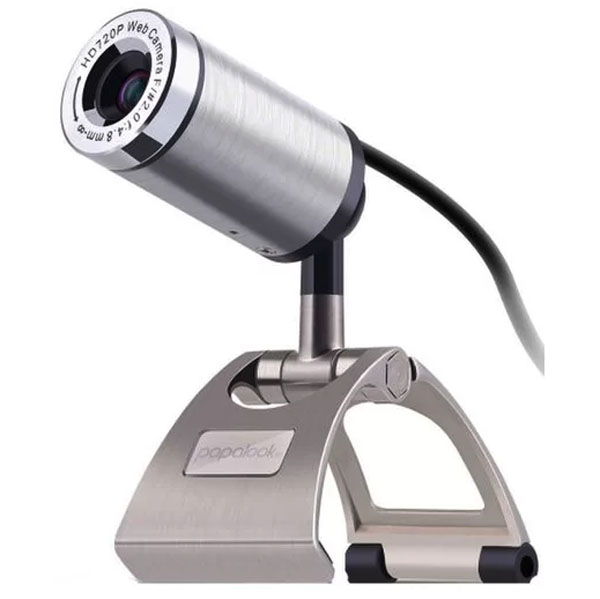
Use images to verify quality, record issues, or implement audit requirements.
Take a photo with one click and continue working!
Everything seamlessly connects each of your work steps - no more wasting time connecting devices and moving documents.
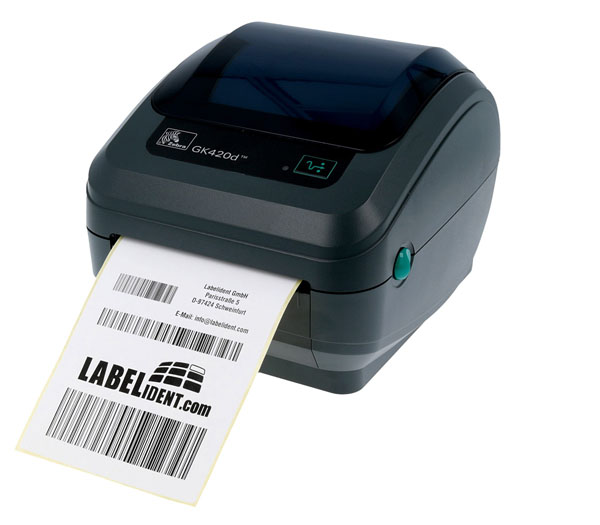
Link batch and serial numbers to reports.
Print product labels and generate a new serial number at the same time - this feature can be set before or after producing your product.
Use barcodes to help you create an automated warehouse.
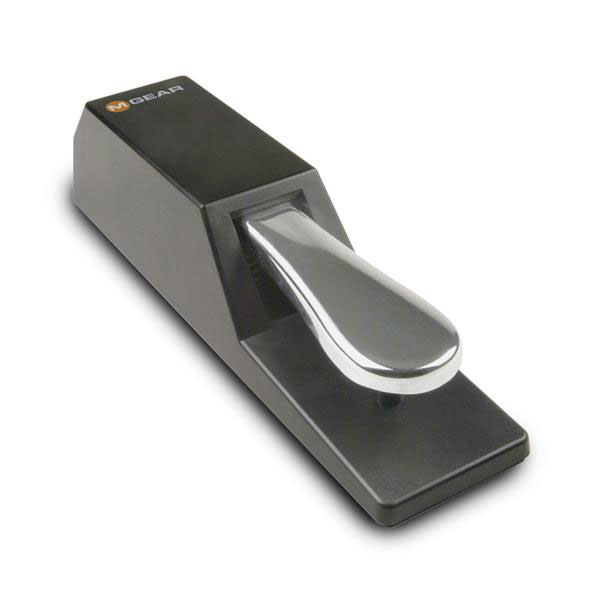
Simplify manufacturing processes and improve production efficiency with a foot switch.
Automate tasks at hand without switching back and forth between keyboards.
Any foot switch with a USB connection is ready to use out of the box.
Pricing
IoT Box subscription fee US$ 20.00/month/box。
With this subscription, you will get an IoT Box for free.

Fully integrated with all Odoo apps
Manufacturing MES

Comprehensive Work Center Control Panel Solution
Store Chain PoS

Easily create invoices from POS transactions to Odoo Accounting.
Quality Traceability
QC

Define quality control points and easily trigger quality alerts.
From Device Connectivity to OEE: What the IoT Box Actually Collects in the Factory
The Odoo IoT Box is an edge gateway placed in the workshop or warehouse. It connects downward to PLCs, barcode scanners, scales, label printers, industrial cameras, gauges, and sensors, and upward writes data into Odoo's work orders, inventory, quality control, and equipment maintenance.
Common protocols include OPC UA, Modbus TCP/RTU, MQTT, serial RS232/485, and Ethernet; when legacy equipment lacks a network port, it can be connected via an edge gateway or IO module. During network outages, the edge device can cache data locally and upload it once the connection is restored, preventing production line downtime.
- Work Order Reporting: Scan to start and complete, and output, scrap, and labor hours are automatically written back
- Equipment status: running, stopped, fault, changeover, supporting OEE and downtime analysis
- Quality inspection tools: caliper, balance, and tester readings automatically enter quality inspection orders
- Label printing: instant printing of batch, serial number, location, and packaging labels
- Error-proofing: scan to verify material, workstation, and batch; immediate interception of wrong materials
Which PLCs are supported?
Connect to mainstream PLCs via OPC UA, Modbus, or edge gateways; specific models require point table mapping and on-site commissioning.
Can it be used offline?
The edge end can cache locally and upload after network recovery; critical workstations can retain offline scanning and printing.
Further reading:Odoo 20 New Features Overview: 58 Modules, 673 Capabilities
IoT Center and Open Source MES: What Can They Solve?
From the perspective of open source MES, the value of the IoT center lies not only in individual functions, but in integrating business data, processes, and reports into one.
- Open Source MES/Open Source ERP Equipment Integration: PLCs, scanners, printers, and weighing devices plug and play
- Real-time collection of factory floor data
- Automatically update production progress and inventory
Non-standard workshops have diverse equipment; integration must adapt to line changes
Non-standard workshops produce one batch today and another tomorrow; equipment, tooling, and inspection methods often change. The advantage of the IoT box is lightweight integration: scanners, electronic scales, foot switches, and cameras can be used as soon as they are plugged in. When changing lines, modify triggers and operations without developing separately for each device.
Work reporting, weighing, and quality inspection photos go directly into work orders, and project numbers follow along. On-site data is not about quantity, but about being able to continue collecting after line changes.
Frequently Asked Questions about IoT Center
What kind of enterprises is the IoT Center suitable for?
Suitable for enterprises that need "Open Source MES/Open Source ERP Equipment Integration: PLCs, scanners, printers, and weighing devices plug and play", especially teams that want to incorporate the IoT center into the open source MES system and integrate it with sales/purchasing/inventory/financial data.
Can the IoT Center integrate with other modules of open source ERP?
It can share a single set of data with modules such as sales, purchase, inventory, production, finance, and customer service, reducing duplicate entry; the specific integration scope is configured according to business scenarios during the implementation phase.
How do I get started with the IoT Center?
Free trial is supported. OdooAi provides requirement analysis, implementation and go-live, training, and secondary development, covering integrated industry and trade and cross-border compliance scenarios.
Related solutions:Open Source ERP + Open Source MES Integration · Free Trial